If you’re tired of traffic spikes that vanish, you’re not alone. One month you rank, the next month you don’t, and you’re left guessing what changed. Ads can patch the problem, but the meter keeps running, and costs usually rise over time. This is where search engine optimization provides a clear roadmap to lasting results.
SEO is different. Done right, it helps you drive organic search traffic from your specific target audience already searching for what you sell, week after week, without paying for every click. The hard part is having a clear plan you can follow, not a pile of random tips.
This guide gives you a simple, repeatable roadmap for 2026, built around intent, helpful content, fast pages, and clean tracking.
Key Takeaways To Increase Website Traffic With Search Engine Optimization
- Start with long-tail keywords based on intent, not just high search volume.
- Fix on-page basics so Google can read, and users can act.
- Publish helpful content that shows real experience and clear answers.
- Improve page speed, mobile optimization, and Core Web Vitals on key pages.
- Focus on backlink building from relevant real sites, avoid spam and link networks.
- Track queries and pages in Search Console, conversions in GA4.
- Update older pages before writing new ones, it’s often the fastest win.
What Is Website Traffic, And Why Organic Traffic Matters Most
Website traffic is simply the number of people who visit your site. Some come from Google. Some come from social. Others type your URL directly or click a link on another site.
What matters is why they arrived, and what they do next. Traffic that brings the wrong target audience won’t turn into leads, sales, or booked calls.
Organic traffic (visits from unpaid search results) tends to be the most consistent channel over time. A good page can keep sending qualified visitors for months, sometimes years, especially if you refresh it as your market changes.
Paid traffic can work, but it stops the moment you pause spend. Organic traffic usually compounds, because every strong page supports the next one. That’s why organic search traffic is the primary goal. It isn’t “rank for a keyword.” It’s to build a system that keeps producing demand.
Next, you’ll map your traffic sources, then follow a step-by-step SEO plan.
The main types of website traffic you should track
- Organic: People find you on Google or Bing, then click your unpaid result in the search engine results pages.
- Paid: People click paid advertising (search ads, display, social ads).
- Referral: People click a link to you from another website.
- Social media marketing: People click from posts on platforms like LinkedIn or Instagram.
- Email marketing: People click links from your newsletters or campaigns.
- Direct: People type your URL or use a bookmark.
Example: If you run a local IT company, organic traffic might come from “managed IT services near me,” referral traffic might come from a partner directory listing, and paid traffic might come from a short campaign to fill a slow month.
Why SEO traffic often converts better than other channels
SEO traffic often shows up at the right moment. People search when they need a solution now, or they’re close to choosing one.
It also builds trust. A strong, helpful page feels less “salesy” than an ad, and visitors can compare options at their own pace.
Think about the difference between browsing a social feed, where video content can also capture attention, versus searching “best ransomware protection for small business” or “cybersecurity audit near me.” The searcher is already focused, and that timing usually converts better.
How To Increase Website Traffic With SEO, A Step-by-step Plan
You don’t need a complicated system to increase website traffic with SEO. You need consistent execution on a few inputs: intent, page quality, site health, authority, and measurement. Use this sequence, and don’t skip steps.
If you want help implementing it, you can also compare Professional SEO services in India to see what deliverables should look like.
Do keyword research based on search intent, not just volume
Start by sorting keywords into intent buckets with keyword research focused on long-tail keywords:
- Informational: “how to,” “what is,” “guide,” “tips”
- Transactional: “pricing,” “services,” “best,” “near me,” “company”
To drive traffic to your website and get leads, mix these on purpose:
- How-to pages that build awareness
- Comparison pages that help decisions
- Service pages that capture buyers
Use Google Search Console to find queries you already show up for. Use Google Keyword Planner for rough demand. For competitor gaps, tools like Semrush or Ahrefs are useful references (see Ahrefs SEO basics if you need a quick refresher).

Optimize your pages with on-page SEO so Google and users can understand them
On-page SEO is your “make it obvious” step. You’re telling Google what the page is about, and you’re helping a busy reader scan and decide.
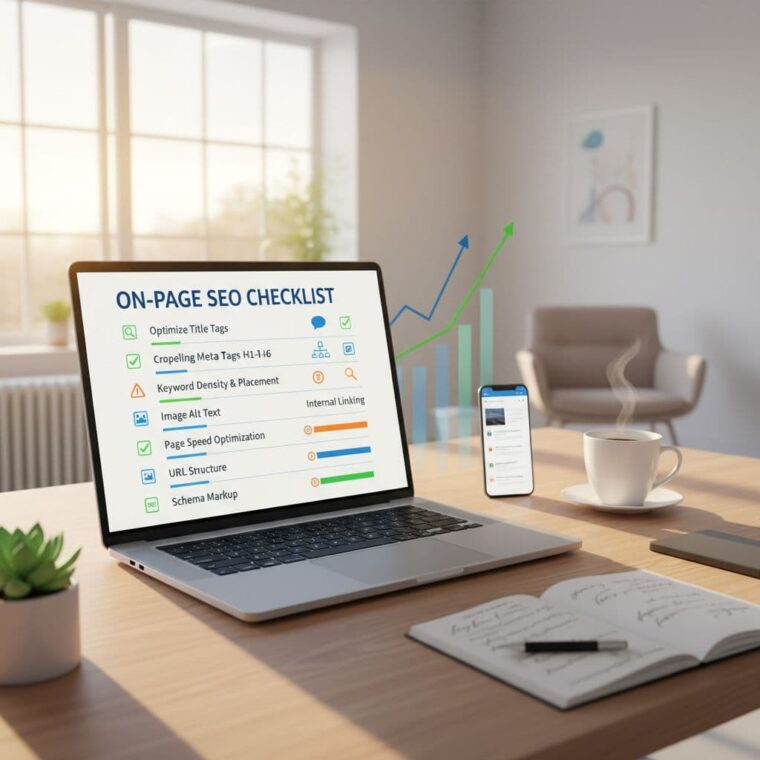
Quick checklist:
- Put the main topic in the title tags and H1, keep it readable
- Write a meta description that matches intent and promises an answer
- Use clear H2s that mirror real questions
- Keep URLs short and descriptive
- Add image alt text that describes the image (not keyword stuffing)
- Add 2 to 4 internal linking opportunities to related pages
- Refresh older posts to match what searchers want in 2026
If you’re planning broader work across channels, review the full suite of digital marketing services so your SEO supports your funnel, not just rankings.
Create helpful content that earns trust and builds topic authority
In 2026, “good enough” content doesn’t hold. People can tell when a page is thin, generic, or written to game rankings. Google usually can too.
As part of a broader content marketing strategy, write as if you’re answering a real customer on a call to create evergreen content:
- Show experience (screenshots, steps you actually use, real examples)
- Answer the full question, including limits and trade-offs
- Add proof when you can (quotes, data, sources), and optimize for featured snippets
Build simple topic clusters: one main page (pillar) and a few supporting pages that link back. This is one of the most reliable SEO strategies for traffic because it builds depth, not just more pages.

Fix technical SEO issues that block rankings and traffic
Technical SEO doesn’t need to be scary. Focus on issues that block crawling, slow pages, or frustrate mobile users.
Start with your biggest pages first: homepage, top service pages, top blog posts.
High-impact fixes:
- Mobile-friendly layout and readable fonts
- Faster load times (compress images, caching)
- Broken links and redirect chains
- Clean indexing basics (sitemaps, no accidental noindex, schema markup)
- Simple site structure, pages no more than a few clicks deep
Core Web Vitals matter because speed and stability shape real user behavior, not just scores.

Build authority with quality backlinks, not spam
A good backlink is a real site in your space, pointing to a page that deserves the mention.
Safe ways to earn links with backlink building:
- Guest blogging on real publications with editorial standards
- Digital PR (original insights, data, expert quotes)
- Partner mentions (vendors, associations, integrations)
- Resource pages and “recommended tools” lists
- Publishing original data others cite
Avoid paid link farms, private networks, and random directory blasts. If you want a deeper checklist, this off-page SEO guide is a solid reference.
Link building usually ramps after month 6, once your site is worth citing.

Track, test, and improve based on real SEO performance data
If you don’t measure, you’ll chase noise.
In google search console, watch queries, impressions, clicks, CTR, and indexing issues on search engine results pages. In google analytics, watch engagement and conversions (forms, calls, demos, purchases).
Monthly routine:
- Find pages with high impressions and low CTR, rewrite titles and descriptions.
- Find pages ranking 8 to 20, expand sections and improve clarity.
- Update internal links toward your best converting pages.
- Check conversions, then adjust topics based on revenue, not vanity rankings.
This is how SEO traffic growth becomes predictable.
How Long Does SEO Take To Increase Website Traffic
Search engine optimization is not instant, but it is measurable. A simple timeline helps you stay consistent.
- Months 1 to 3 (foundation): technical fixes, intent-based keyword plan, on-page cleanup, tracking setup.
- Months 4 to 6 (early wins): more keywords in the top 20, improving CTR, first steady lift in organic search traffic.
- Months 7 to 12 (stronger growth): more top 10 rankings, better backlinks, and compounding results from content updates.
Your results depend on competition, your site’s current health, and how helpful your content is. If you’re in a tough space and progress is slow, performing an seo audit can identify blockers or hire SEO expert support to move faster with fewer missteps.
Common SEO Mistakes That Quietly Kill Your Website Traffic
- Ignoring mobile and speed, fix layouts and images first.
- Neglecting high-quality landing pages, optimize them to avoid high bounce rates.
- Publishing thin or outdated pages, expand and re-publish with current details and user-generated content to add social proof.
- Targeting the wrong intent, match pages to what the searcher wants next.
- Posting too much low-quality AI content, keep humans editing and adding real examples.
- Skipping internal links, connect related pages so authority flows.
- Not tracking conversions, set up goals so traffic ties to leads.
- Chasing only high-volume keywords, mix in buyer terms and long-tail topics.
- Using spammy backlinks, clean up sources and focus on relevance.
Faqs About Increasing Website Traffic With SEO
How long does it take to increase website traffic with SEO?
Most sites see early movement in 3 to 6 months. Strong, consistent growth usually shows between 6 and 12 months. Competitive markets can take longer. While building SEO, supplement search efforts with webinars to engage audiences sooner.
Is SEO better than paid ads for traffic growth?
SEO is better for long-term, cost-effective traffic once it’s working. Paid ads are better for speed and short campaigns. Many businesses use both, with SEO as the base.
What should you do if traffic drops after a Google update?
Fluctuations are common on search engine results pages after updates. Check Search Console for which pages dropped, and which queries changed. Improve content quality, tighten intent match, and fix technical issues. Don’t panic-edit everything at once.
Can small businesses compete and increase organic traffic?
Yes, if you optimize a Google Business Profile, consider influencer marketing for local visibility, focus on local intent, specific services, and clear proof. “Near me,” comparison, and niche pages often beat broad national keywords.
What does an SEO audit include?
An SEO audit is a vital first step. A good one reviews technical health, on-page basics, content quality, internal linking, and backlink risks. It should also map fixes to outcomes, like leads and calls.
Conclusion
If you want to know how to increase website traffic in a way that lasts, here’s how to increase website traffic long-term: keep it simple: pick intent-based topics, improve on-page clarity, publish helpful content with real experience, fix technical blockers, earn relevant backlinks, then measure what converts. Do that consistently through a successful content marketing strategy that relies on consistent search engine optimization, and organic growth stops feeling random.
If you want a clear plan for your site and your market, schedule a free SEO consultation. You’ll walk away with next steps you can act on immediately, including how to use Google Analytics and social media marketing alongside SEO to maintain growth.