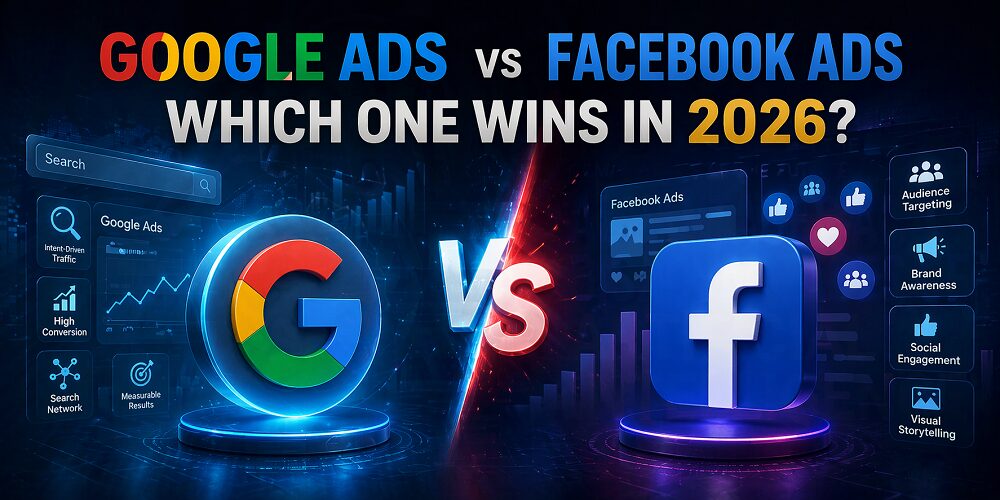
So you have money to spend on ads, but where should it actually go? That is the big question many business owners are asking this year. Digital advertising is now worth over $700 billion worldwide, which is approx. ₹60 trillion, so choosing the wrong platform can cost you a lot.
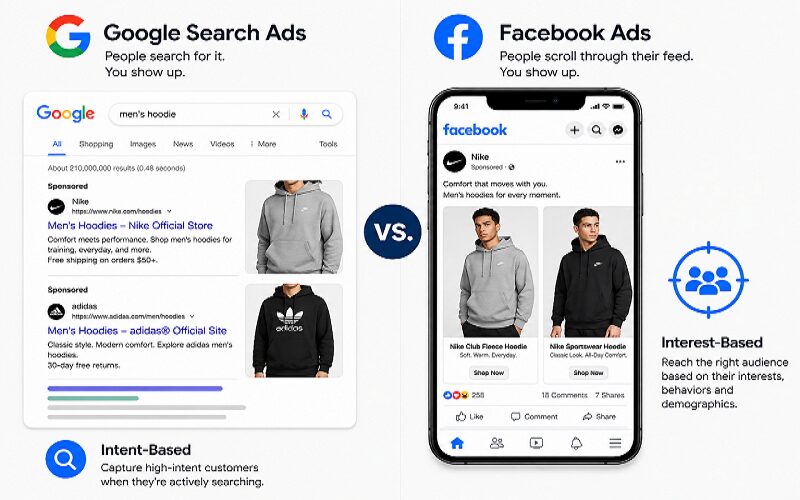
Here’s the thing about Google Ads vs Facebook Ads. They both help you find customers, but they work in very different ways. Google helps you reach people who are already searching for what you sell. Facebook helps you reach new customers based on what they like and do online.
This guide breaks down both platforms side by side. We will look at costs, targeting options, and what actually drives results. By the end, you will know which platform fits your business goals, audience, and budget. The right choice depends on your business model, not on which platform gets more hype.
By the time we are done, you will know where to put your ad money. Whether you run a local service, online store, or software company, this guide will help you make smarter choices that can grow your business.
Key Takeaways
- Google Ads works best when people are already searching for a solution.
- Facebook Ads works best when you want to reach people by their interests, behavior, and demographics.
- In 2026, Google Ads usually cost about ₹1 to ₹15 per click, while Facebook Ads often cost about ₹2 to ₹30 per click.
- Google Ads is often a strong fit for e-commerce, SaaS, and lead generation.
- Facebook Ads are often better for brand awareness, retargeting, and visual offers.
- Both platforms now rely heavily on AI, smart bidding, and automation.
- The right choice depends on your goals, budget, audience, and how quickly people usually buy.
The Quick Comparison Of Google Ads And Facebook Ads
Let us be honest, choosing between these platforms comes down to when you want to reach people. Think of it like this:
- Google Ads is like waiting at the store entrance for someone who is ready to buy right now.
- Facebook Ads is like meeting someone who did not know they needed your product until they saw it.
Quick Comparison
| What Matters | Google Ads | Facebook Ads |
| Main Strength | Finds people searching | Targets interests and behavior |
| Best For | Brand awareness & retargeting | Ready-to-buy customers |
| Average Cost | ₹1 to ₹15 per click | ₹2 to ₹30 per click |
| Works Best For | E-commerce, services, software, local business | B2C, e-commerce, direct-to-consumer |
| Learning Curve | Takes some time | Pretty easy to start |
| Tracking Conversions | Advanced | Advanced |
| Control Over Ads | Customizable | Limited customizable |
What This Actually Means
Okay, looking at that table, you are probably wondering which one is actually right for your business. Here is the real deal:
- Google Ads works best when someone already knows what they need. They type “women’s summer dresses” into Google, and your ad appears. At that point, they are ready to take action.
- Facebook Ads work differently. You are reaching people who may not even know they need something yet. Someone is scrolling through Instagram, sees your ad for affordable summer dresses for women, and starts thinking, this might be exactly what I need.
Neither one is better. They just solve different problems.
According to recent data from Adeffect’s 2026 platform comparison, Google handles over 8 billion searches every day, while Meta’s apps reach over 3 billion people monthly. Both are massive platforms, but they work at very different points in the buying process.
The bottom line? Your budget, your audience, and your goal should guide your choice. Most businesses that do well use both. But if you are just starting out, this comparison can help you decide where to begin.
How Google Ads Actually Works
The Basics
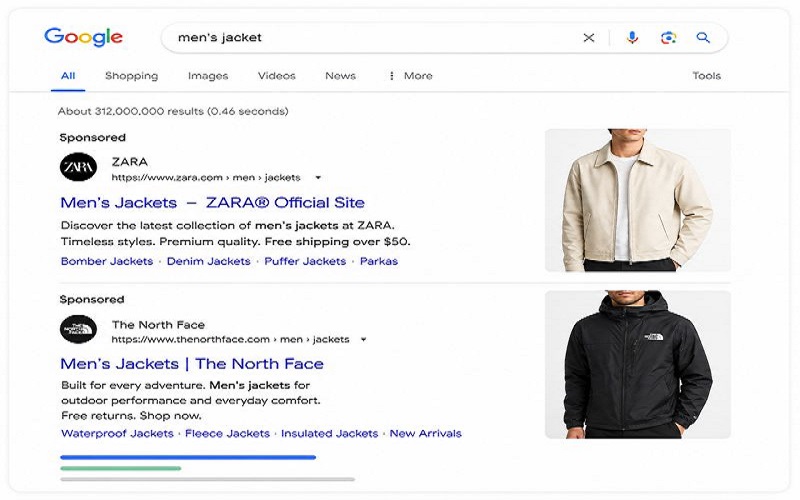
Google shows your ads across search results, websites in its network, YouTube, and even Gmail. The idea is simple. Your ads appear when people search for keywords related to what you offer.
It is all based on an auction system. When someone searches, Google checks everyone bidding on that keyword. It looks at your bid and your Quality Score, which measures how relevant your ad and landing page are. The best mix usually gets the top spot.
For example, someone searches for “women’s designer tops online.” Your Google Ad could appear at the top and put your product in front of someone who is already interested.
Key Features
Google offers different ad types:
- Search Ads: Text ads in search results
- Display Ads: Image banners on websites
- PMax Ads: Product listings with prices
- YouTube Ads: Video ads
- Video Ads: Video placements across platforms
- Location Ads: For local visits, calls, and direction requests
Keyword bidding is the main part of Google Ads. You choose the words and phrases you want to target, then bid against other businesses. Your Quality Score affects what you pay, so better relevance can lower your costs.
What It Costs
Google uses cost-per-click (CPC). You only pay when someone clicks your ad. CPC costs vary from industry to industry, from ₹1 to ₹15 per click for less competitive keywords and ₹20 to ₹50 per click for more competitive terms like lawyer or insurance.
Right now, the average Google Search CPC is approximately ₹5, but it can vary from industry to industry. You can set daily budgets as low as ₹3,000 to ₹5,000, and scale them up to lakhs. Many businesses also find that working with expert Google Ads management helps control costs through better keyword selection and smarter bidding strategies.
Ideal Use Cases
Google Ads works well for:
- E-commerce stores selling products people search for
- Service businesses like plumbers, lawyers, and dentists
- Software companies offering free trials
- Lead generation campaigns
- Time-sensitive promotions like holiday sales
If you want better performance, a thorough PPC competitive analysis guide can help you find competitor strategies, keyword gaps, and new opportunities.
How Facebook Ads Actually Works
The Basics
Facebook advertising reaches people across Meta’s apps, including Facebook, Instagram, Audience Network, and Messenger. Unlike search-based platforms, Facebook Ads work through discovery. Your ads show based on interests, demographics, and behavior, not because someone searched for them.
This approach is very visual. Your images, videos, or carousels need to grab attention while people scroll. For example, someone who follows fashion influencers might see your apparel collection or designer dress offer in their Facebook feed, even if they were not actively shopping for clothes.
Key Features
Facebook offers very specific targeting:
- Interest and Demographic Targeting: Reach people based on interests, hobbies, online behavior, age, gender, location, income, education, and more
- Lookalike and Custom Audiences: Find new people similar to your best customers, and retarget website visitors, app users, or past customers
- Budget Scheduling: Choose when your ads run and control spending based on your goals
- Automated Budgeting and Bidding: Use auction bidding for flexible ad delivery or reservation buying for fixed-price placements
- Advantage+ Ads Tools: Use AI-powered creative, automatic placements, catalog promotion, and lead forms to improve engagement, reach, and conversions with less manual work
- AI Creative and Translation Tools: Create ad visuals faster with AI-powered image and video generation, then translate video and audio content into different languages to reach more people naturally
- Lead Generation and Instant Experience Ads: Collect contact details through simple in-app forms and deliver full-screen, fast-loading mobile ads for a smoother browsing experience
The platform also supports many ad formats, including video ads, carousel ads, Stories, and Reels.
What It Costs
Facebook mainly uses cost-per-impression (CPM), which means you pay for every 1,000 ad views. It also offers cost-per-click (CPC) pricing. In general, Facebook Ads cost less than Google Ads, with average CPCs ranging from ₹2 to ₹30 per click, though costs vary from industry to industry.
You can set daily budgets as low as ₹2,500 to ₹5,000. CPM rates usually range from ₹25 to ₹500 for most industries, and they can vary from industry to industry. Whenever competition is high, CPM costs go up, and whenever competition is low, CPM costs stay lower. Many businesses also find that working with a specialized Facebook Ads management team helps improve results through better audience selection and creative optimization.
Ideal Use Cases
Facebook Ads work well for:
- Brand awareness campaigns: Introducing your business to new audiences
- Retargeting people who already know your brand
- B2C products that benefit from visual storytelling
- Content promotion: Blog posts, videos, or educational content
- App installs and mobile user acquisition
- Lead generation through built-in forms
- DTC brands that rely on direct customer relationships
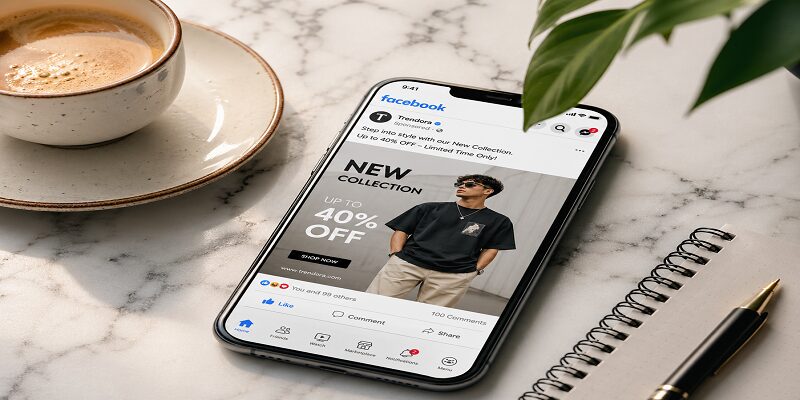
As explained in the AdsGo platform comparison, the big difference is user intent, Facebook reaches people during downtime, while Google catches them during active research. For businesses planning their approach, a comprehensive Facebook marketing strategy guide can help match these opportunities with business goals.
Google Ads Vs Facebook Ads – Detailed Comparison
Targeting Approach
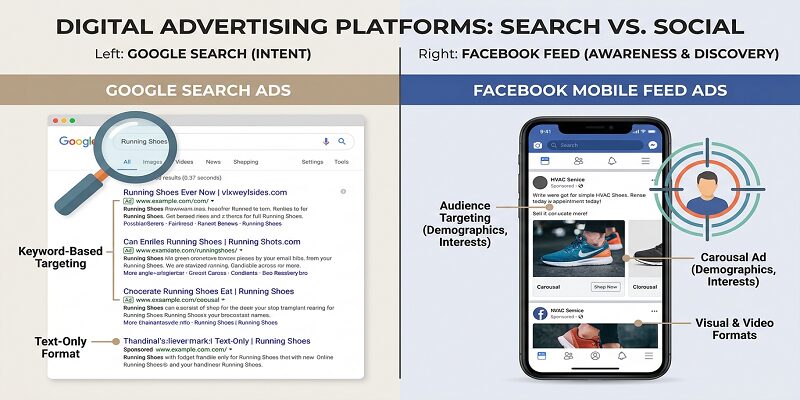
The main difference comes down to how they target.
Google Ads uses keyword-based targeting, focused on what people search for:
- Keyword Targeting: Bid on specific search terms that match what people are actively looking for
- Audience Segments: Add extra filtering based on interests, demographics, and browsing behavior
- Geographic Targeting: Show ads to people in specific cities, regions, or countries
- Device Targeting: Optimize ads for mobile, desktop, or tablet users
- Time-Based Scheduling: Run ads during certain days or hours when your audience is most active
- Custom Intent Audiences: Reach people who are researching topics, products, or services related to your offer
- Advanced Bid Adjustments: Fine-tune bids based on device, location, audience, or time to improve performance and control costs
Facebook Ads uses interest-based targeting, focused on who people are:
- Interest-Based Targeting: Reach people based on their interests, hobbies, and online activity
- Demographic Targeting: Target users by age, location, gender, language, and other profile details
- Behavioral Data: Reach people based on purchase habits, device usage, and activities
- Lookalike Audiences: Find new users similar to your existing customers
- Custom Audiences: Retarget website visitors, email lists, or past customers with relevant ads
- Detailed Positioning: Combine audience filters to narrow down your targeting more precisely
- Advantage+ Audience Optimization: Let Facebook automatically expand and refine targeting to find people more likely to convert
Easy way to remember it: Google targets the what, Facebook targets the who.
Cost & ROI Comparison
The cost difference between Google Ads and Facebook Ads is fairly clear.
- Google Ads: usually range from ₹1 to ₹15 per click
- Facebook Ads: often range from ₹2 to ₹30 per click
But cheaper clicks do not always mean better ROI. When it comes to money, costs vary from industry to industry, and the real value depends on how well the traffic converts after the click.
Google often delivers 200% to 500% ROI in high-intent industries because users are already searching for a solution. Facebook can also perform well, often reaching 150% to 400% ROI, but it usually takes more testing and optimization to get there.
For example, with a ₹1 lakh monthly budget:
- Google Ads may generate around 50 to 200 sales or 50 to 100 qualified leads
- Facebook Ads may generate around 100 to 300 sales or 20 to 80 qualified leads
And it all depends on the offer, audience, and creative.
For a clothing brand focused on awareness, Facebook can be very effective because its lower cost lets you reach more people and build multiple touchpoints. A person may see your ad once, notice it again later, and then finally decide to visit your store. That repeated exposure can help drive sales over time.
Industry differences matter a lot here. Legal and financial services often pay much higher rates on Google, sometimes ₹50 to ₹300 per click, because each conversion is highly valuable. E-commerce and software brands usually see more moderate costs on both platforms.
The main point is simple, do not judge the platform only by CPC. Look at conversion rate, customer lifetime value, and how each platform fits into your overall customer journey. In many cases, paying more for higher-intent traffic can actually cost less in the long run.
Audience Reach
Google reaches a smaller but more qualified audience, people who are actively searching. Facebook reaches over 2.9 billion monthly users, which means huge reach but lower immediate intent.
The choice depends on whether you want to catch fish that are already biting, Google, or cast a wide net to find interested fish, Facebook.
Ad Styles
Google works best with text-based ads and simple visuals that match search intent. Facebook needs stronger visual content, including video, carousels, Stories, and Reels.
Your creative resources often decide which platform fits better. Google needs strong copywriting, while Facebook needs visual content skills.
Tracking Results
Google offers advanced tracking and better multi-touch attribution through Analytics. Facebook provides solid tracking too, but it needs more setup and is affected by iOS privacy limits.
Google usually gives clearer ROI measurement, especially for longer sales cycles.
User Mindset
Core difference:
- Google users: High intent, actively searching
- Facebook users: Low to medium intent, discovering content while scrolling
That is why Google often converts better, even if it costs more.
Learning Curve & Platform Differences
Google Ads has a steeper learning curve because of its metrics, Quality Score system, and bidding strategies. It takes time to understand all the moving parts. Facebook Ads, on the other hand, has a more simple interface that beginners can usually learn faster.
But here is the important part, both platforms need ongoing optimization. You cannot just set them once and forget them. What works today may need changes next week as audience behavior shifts and algorithms update.
Businesses that understand these differences can use their budgets much more wisely. The best platform is not about which one is better overall. It depends on your goals, your audience, and what you are trying to achieve. As shown in our client results and testimonials, companies that match their platform choices to their needs usually see better returns on ad spend.
If you want faster leads, better sales, and smarter ad spend, the right platform matters. Google Ads and Facebook Ads both work, but they work in different ways. The best choice depends on your goals, audience, and budget.
If you are still unsure which one is right for your business, get expert help before you spend more on ads that do not convert. A clear strategy can save money and improve results.
Start with the platform that fits your business best, and turn clicks into real results.
Related Article: Google Ads Quality Score: The Ultimate Guide
Google Ads Vs Facebook Ads: Pros And Cons Breakdown
Google Ads Advantages
- High-intent audience: People actively searching usually convert better
- Strong ROI: Often delivers 200% to 500% returns
- Advanced targeting: Gives precise control over who sees ads
- Search visibility: Appears when people are ready to buy
- Excellent tracking: Clear conversion data
- Brand authority: Builds trust in search results
Google Ads Challenges
- Steep learning curve: Takes time to master
- Constant optimization needed: Requires regular work
- Quality Score building: Takes time to improve
- Competitive bidding: Prices can rise quickly
- Limited creative options: Less visual flexibility
Facebook Ads Advantages
- Brand awareness strength: Great for reaching new audiences
- Visual flexibility: Strong for creative storytelling
- Powerful retargeting: Good for past visitors
- Detailed insights: Helps you understand customer demographics
- Beginner-friendly: Easier to learn and launch
Facebook Ads Challenges
- Lower user intent: People are scrolling, not always buying
- Creative fatigue: Needs new content often
- Targeting accuracy issues: iOS privacy changes affect precision
- Lower conversion rates: Less effective for immediate sales
- Algorithm dependence: Changes can affect reach
- Attention competition: Competes with personal content
What Really Matters
The big difference is simple, Google catches existing demand, while Facebook creates new demand.
Google usually works better for businesses where customers already search for solutions. Facebook often performs better for visual products and brand building.
Many successful businesses use both platforms in a smart way, with budgets based on goals and customer journey stages.
Industry-Specific Platform Recommendations
E-Commerce Businesses
- Best combo: Use both Google and Facebook
- Why: Google catches product searches, Facebook is great for retargeting
- Budget split: 30% Google, 70% Facebook
- Key metrics: Return on ad spend, average order value, conversion rate
- Strategy: Google Shopping for product searches, Facebook dynamic ads for cart abandoners
SaaS Companies
- Main platform: Google Ads works best
- Reason: Buyers actively search for software solutions
- Core strategy: Keyword-targeted campaigns for demo requests
- Secondary platform: Consider LinkedIn over Facebook
- Important: Focus on bottom-funnel conversion terms
Service Businesses
- Best platform: Google Ads delivers strongest results
- Why: People search for things like “plumber near me” when they need help
- Key strategy: Local keywords with geographic targeting
- Secondary option: Facebook for local awareness
- Budget advice: 70 to 80% Facebook, 20 to 30% Google
B2B & Enterprise Companies
- Recommended: Google Ads + LinkedIn Ads
- Why: Decision-makers search on Google and network on LinkedIn
- Consideration: Facebook is less effective for B2B
- Strategy: Google for lead capture, LinkedIn for account-based marketing
- Targeting focus: Job titles, company size, industry keywords
- Budget advice: 70 to 80% Google, 20 to 30% Facebook
Direct-to-Consumer Brands
- Good mix: Facebook/Instagram + Google Shopping
- Why: Visual storytelling drives discovery, while Google catches search intent
- Strategy: Influencer partnerships + retargeting
- Creative emphasis: High-quality visuals and video
- Budget allocation: 50% social media, 30% Google Shopping, 20% testing
Brand Awareness & Content Marketing
- Best platform: Facebook and Instagram
- Strength: Huge reach and creative storytelling
- Strategy: Focus on video content, Stories, and Reels
- Measurement: Track reach, engagement, and brand lift
- Budget consideration: Put more toward top-funnel awareness
Getting Started Tips
Start with one main platform based on your industry. Add secondary options after you see some results. Watch results for 30 to 45 days before making big budget changes.
These are general guidelines, but your specific audience behavior should decide where you put your ad money.
Successful businesses test different platform combinations and adjust strategies based on what actually works, not just on industry norms.
Not sure which ad platform fits your business? Contact us and let’s figure it out together.
Which Platform Should You Choose?
After comparing Google Ads vs Facebook Ads across everything, the decision comes down to your specific business needs.
Choose Google Ads If:
If your apparel brand sells products that people search for before buying, Google Ads can be a strong choice. For example, when someone searches for “women’s designer tops online” or “latest ethnic wear for women,” your brand can appear right when they are already interested.
If ROI measurement matters most to your business, Google gives clearer conversion tracking and better quality leads. If you need qualified leads quickly, especially in B2B or professional services, Google usually delivers faster results.
Choose Facebook Ads If:
If your daily budget is between ₹2,500 – ₹5,000. Facebook’s lower costs make it easier to start with a smaller budget. If brand awareness is your main goal, Facebook’s huge reach can help build recognition.
If your products are visually appealing and work well with storytelling, Facebook is often a better fit. It is also a strong option for direct-to-consumer and B2C brands where retargeting past visitors can drive more sales.
Choose Both Platforms If:
You have a moderate budget of ₹6,000 or more per month. Using both platforms can increase your reach and conversion chances. If you have the time or support for proper management, a hybrid strategy often delivers the best overall results.
If your customer base includes different groups that behave differently, both platforms can help. If you want long-term growth instead of quick wins, using both creates a fuller marketing funnel, with Facebook at the top and Google at the bottom.
The Real Truth
The best platform is not the one that is objectively better. It is the one that fits your customers and how they buy.
Start by understanding your audience. Where do they search for solutions? What social platforms do they use every day? What problems are they trying to solve when they see your ads?
In 2026, most successful businesses use both platforms in a smart way. Google helps drive conversions, while Facebook builds the brand foundation that supports those conversions. The businesses that win are not the ones that pick one platform over the other. They are the ones that understand how to make both work together.
Your decision should start with a clear picture of your customers, then match platform strengths to their behavior. Test, measure, and adjust based on real data, not guesswork.
Frequently Asked Questions
Can I run both Google Ads and Facebook Ads together?
Yes, most businesses run both at the same time. Google catches people who are already searching for solutions, while Facebook builds brand awareness with new audiences. When you use them together well, they create a strong marketing system. The key is keeping your message consistent so people recognize your brand wherever they see it.
How hard is each platform to learn?
Facebook Ads are usually easier for beginners. You can launch your first campaign in about 30 minutes with basic targeting. Google Ads takes more time to understand, especially keywords, Quality Scores, and bidding strategies. If you are not fully confident, working with someone experienced can save money by avoiding beginner mistakes.
Which platform tracks conversions better?
Google Ads usually gives stronger conversion tracking. It connects well with Google Analytics and gives more detail about how people move through your sales process. Facebook’s tracking uses the Meta Pixel and has improved a lot, but it is not quite as complete. For e-commerce, Google often works better. For retargeting, Facebook does a good job.
How soon will I see results?
Google Ads usually shows useful results within 2 to 4 weeks after you optimize your campaigns. Facebook Ads can show awareness results like reach and engagement within 1 to 2 weeks. For real conversions and ROI, it is best to wait at least 30 days before making big decisions. Testing and patience matter.
What types of businesses work best on each platform?
Google Ads works well for e-commerce, software companies, professional services, and lead generation. Facebook Ads works well for direct-to-consumer brands, fashion, wellness products, and entertainment content. B2B companies often do better with Google Ads plus LinkedIn. The simple answer is this, know your audience first, then choose the platform where they spend their time.
Can small businesses compete against bigger companies?
Yes, they absolutely can. Smart targeting often beats big budgets. A well-targeted ₹6,000 monthly campaign can outperform a poorly managed ₹1 lakh campaign. The platforms reward relevance and quality as much as budget size. Small businesses can win by thinking smarter, not just spending more.
Your Action Plan: Getting Started
Step 1: Set Up Tracking Right
Install Google Analytics 4 and the Meta Pixel on your website before launching any campaigns. Define what counts as a conversion for your business, whether that is form submissions, purchases, or phone calls. Test everything to make sure your tracking works before spending money.
Step 2: Figure Out Your Goals
Get clear on what you want to achieve. Are you looking for leads, direct sales, or brand awareness? Set a budget that matches your goals. Identify your audience clearly. Decide what each conversion is worth so you can measure success properly.
Step 3: Understand Your Audience
Research where your customers spend time online. What terms are they searching for? What interests and behaviors do they have? Build a clear picture of your ideal customer, including their demographics, pain points, and buying habits.
Step 4: Pick Your Platforms
Based on your goals and audience, decide whether to start with Google Ads, Facebook Ads, or both. If you are not sure, begin with one platform and add the second after you have 30 days of data. That helps prevent spreading your budget too thin.
Step 5: Launch and Test
Start with a small daily budget of ₹3,000 to ₹5,000 to reduce risk. Let your campaigns run for 7 to 10 days before making major changes. Test different headlines, images, and targeting options to see what works. Increase spending on what performs well and stop what does not.
Step 6: Monitor and Optimize
Review your campaign performance every week. Use the data to make smart changes to your targeting, bids, and creative. Keep testing new audiences, ad formats, and keywords. Adjust your budget based on which platform gives you better ROI.
Remember, successful advertising takes patience and regular optimization. What works today may need changes next month as audience behavior and platform algorithms shift. The key is to stay involved and make data-based decisions, not emotional ones.
Conclusion
The Google Ads vs Facebook Ads decision comes down to understanding your business needs, not finding one perfect answer. Google is great at reaching ready-to-buy customers, while Facebook is strong for brand awareness and discovery. The most successful businesses do not choose one over the other. They use both platforms strategically to build a complete marketing funnel.
Your success depends less on the platform and more on how well you execute your strategy. Good targeting, strong creative, and steady optimization matter far more than the platform itself. The businesses that win are the ones that match their ad strategy to how their customers behave and buy.
If you are ready to stop guessing and start getting real results from your ads, getting expert help can make a big difference. The right strategy and proper execution can turn your ad spend into actual business growth.