OpenAI switched on ChatGPT Ads in India on August 27, 2026, and the timeline moves fast from here. Self-serve access for every advertiser opens September 4. WPP and Omnicom are running the first wave of campaigns, with more than 50 brands expected live in week one, according to BestMediaInfo’s reporting on the launch.
This guide breaks down what has actually launched, how ChatGPT Ads targeting works, what it costs, and something most coverage of this rollout is skipping over: buying an ad on ChatGPT does not mean ChatGPT will recommend your brand. Those are two different problems, and only one of them is solved by ad spend. If you are trying to figure out whether chatgpt ads in india is worth testing right now, here is everything confirmed so far.
Key Takeaways
- ChatGPT Ads launched in India on August 27, 2026, for Free and Go plan users.
- WPP and Omnicom are OpenAI’s first agency partners in India, and self-serve Ads Manager opens September 4.
- Minimum daily spend is ₹725, with CPC and CPM bidding available.
- Targeting runs on context hints, not exact-match keywords.
- Winning a sponsored placement does not mean ChatGPT recommends your brand organically. That is a separate challenge industry experts are now calling Generative Product Optimization, or GPO.
What Are ChatGPT Ads?
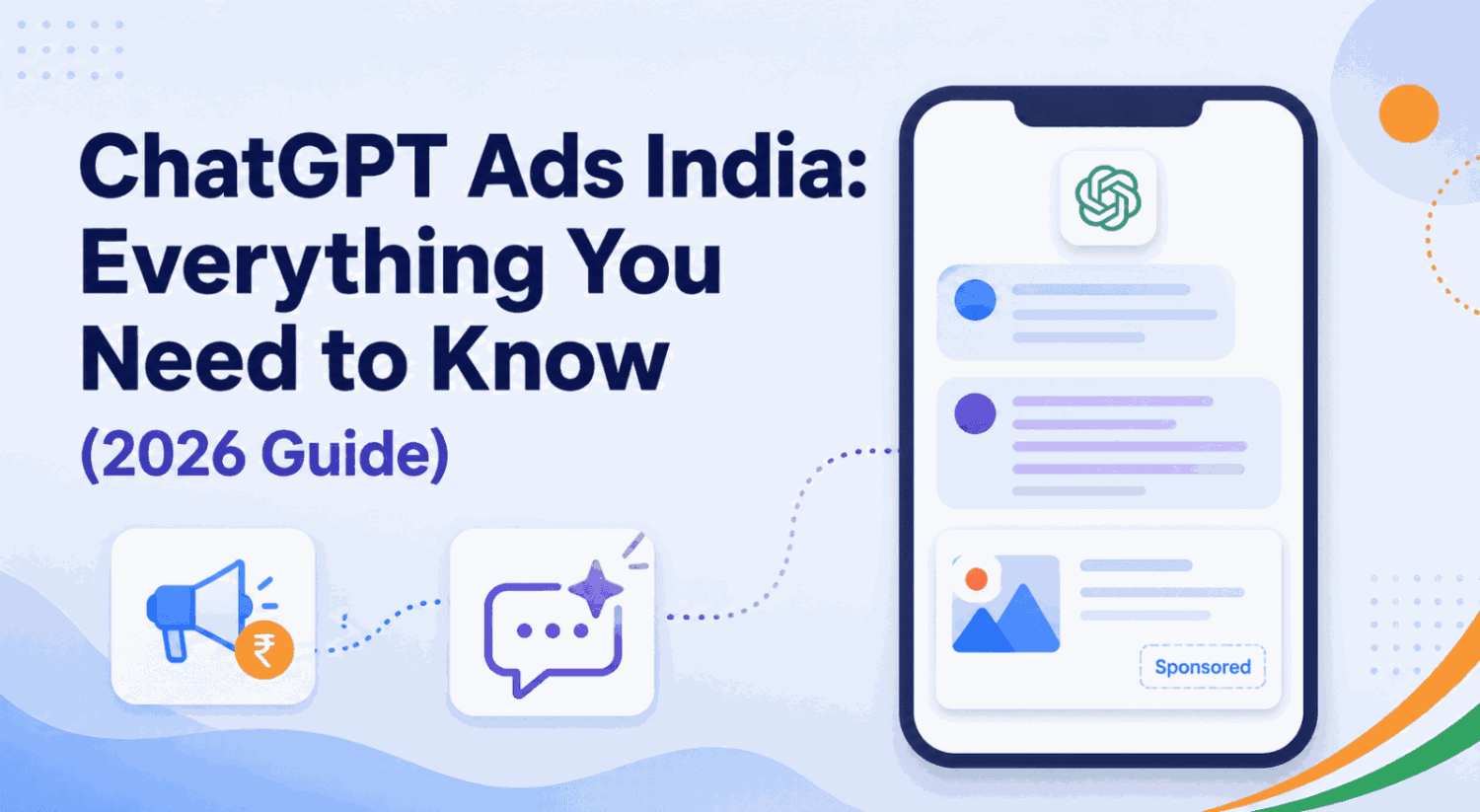
ChatGPT Ads are sponsored placements that can appear below a response inside a ChatGPT conversation. OpenAI is clear that the ad sits separately from the answer itself and is labeled “Sponsored,” so it never changes what ChatGPT actually tells the user.
This matters because it is a different mechanic from search advertising. On Google, an ad and an organic result both respond to the same query. On ChatGPT, the AI’s answer and the sponsored card come from separate systems. OpenAI has also confirmed that advertisers do not receive individual chat histories, memories, or personal information. What advertisers see is aggregated data like impressions and clicks, and OpenAI says it does not sell user data to advertisers.
For anyone evaluating openai chatgpt ads in india for the first time, that separation between the ad and the answer is the single most important thing to understand before setting a budget. It shapes everything from how you write ad copy to how you should think about targeting.
The India Launch: Key Facts
Here is exactly what the chatgpt ads launch india rollout includes, in plain terms.
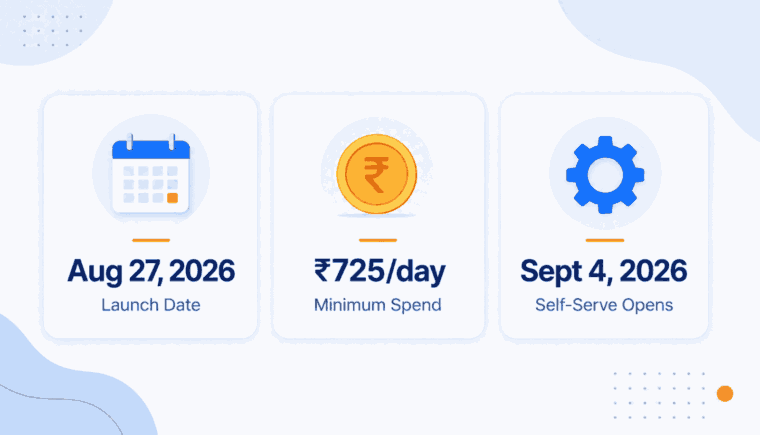
Launch date. ChatGPT Ads went live in India on August 27, 2026, for logged-in users on the Free and Go plans. Anyone on Plus, Pro, Business, Enterprise, or Education tiers does not see ads.
Agency partners. WPP and Omnicom are OpenAI’s first agency partners for the chatgpt ads wpp omnicom rollout in India. OpenAI has said it plans to bring in more agencies over time.
Scale. More than 50 brands were expected to be running campaigns in the first week, though OpenAI has not published the list of participating brands.
Self-serve access. From September 4, any business can set up its own account through the self-serve chatgpt ads manager, without going through an agency partner first.
Pricing. The chatgpt ads minimum spend in India is ₹725 per day, based on OpenAI’s own advertising documentation. Campaigns run on either cost-per-click or cost-per-thousand-impressions bidding.
Campaign types. OpenAI currently supports two objectives: a Reach campaign optimized for impressions and bought on CPM, and a Clicks campaign optimized for valid clicks and bought on CPC. Bids are set at the ad-group level.
This chatgpt ads pricing india structure is close to what advertisers already know from Google and Meta, which should make the learning curve shorter than the targeting model does.
How ChatGPT Ads Targeting Works
Chatgpt advertising in india does not run on exact-match keywords the way Google Search does. Instead, OpenAI’s system looks at the context and intent of the conversation itself, the advertiser’s landing page, headline, and ad copy, and something OpenAI calls chatgpt context hints.
A context hint is a short description an advertiser provides of the topics, situations, or product categories where their ad might be relevant. OpenAI is explicit that these are not exact-match keywords and do not guarantee an ad will appear against any particular conversation.
In practice, this means a user asking ChatGPT for help planning a trip, comparing skincare products, or researching a purchase could see a relevant sponsored card appear once the conversation has enough context. A single short query is less likely to trigger an ad than a longer back-and-forth where the user’s intent becomes clearer.
If users have advertising personalization turned on, OpenAI says select signals from their broader ChatGPT activity can also factor into which ad appears.
Why India Is a Big Deal for OpenAI
The timing of this launch is not random. OpenAI said in February that India had crossed 100 million weekly ChatGPT users, spanning students, teachers, developers, and entrepreneurs. Dave Dugan, OpenAI’s Vice President and Head of Global Ads Solutions, said the company’s weekly active users in India have doubled year on year.
According to BestMediaInfo‘s reporting, Dugan pointed to India’s fast-changing usage patterns, noting that people increasingly ask questions, compare options, and weigh decisions through conversation rather than through one-off searches.
That framing explains OpenAI’s pitch to advertisers. A user researching a purchase across several ChatGPT messages, specifying budget, preferences, and requirements along the way, hands OpenAI far more context than a single search query ever could.
Paid Ads vs Being Organically Recommended by ChatGPT
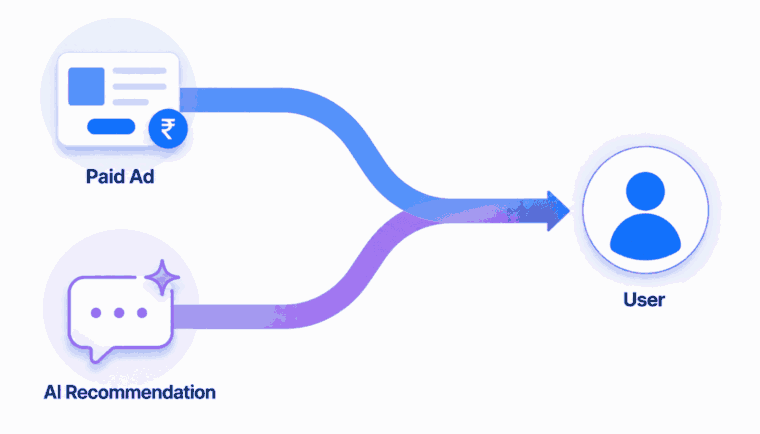
Buying a ChatGPT ad and getting recommended by ChatGPT are two different outcomes, and conflating them is probably the biggest mistake brands will make in this rollout.
Mandeep Malhotra, a digital media veteran who has been testing ChatGPT Ads for international clients ahead of the India launch, made this point directly to BestMediaInfo. He explained that a sponsored ad can appear below a ChatGPT response from one brand, while the AI’s actual answer recommends a completely different brand. His example: someone asking ChatGPT for the best oil-free skincare product might see an answer that names one set of products, while the sponsored card underneath comes from an unrelated advertiser. Paid placement does not fix that gap.
Malhotra uses the term Generative Product Optimization, or GPO, to describe the separate work of making sure a brand’s product data, claims, and content are structured well enough for AI systems to find and recommend them organically. That is a different discipline from running an ad campaign, and it sits close to what most people mean by AI SEO or generative engine optimization.
This is exactly the gap TechEasify’s AI SEO services are built to close. If ChatGPT cannot find accurate, structured information about your product, no amount of ad spend on chatgpt ads in india will make up for it. The two need to run together: paid placement to buy visibility now, and organic AI readiness to earn it long term.
Brands weighing whether to test this channel should treat ai readiness for chatgpt ads as step one, not an afterthought.
Should Your Brand Advertise on ChatGPT Right Now?
Malhotra’s advice, based on months of hands-on testing before the India launch, is to expect the first six to twelve months to involve real trial and error. Agencies are still working out how broad or narrow context hints should be, and category-specific ad inventory may stay limited for a while, similar to what some early US advertisers experienced when they struggled to spend their full committed budgets because of limited available placements.
He also expects a mixed reaction from users, since most people have used ChatGPT and other large language models without any commercial messaging mixed into their answers. That said, he does not think this makes ChatGPT Ads unattractive to marketers long term. He compares it to the early years of search advertising, when audiences gradually got used to sponsored results sitting next to organic ones.
The practical takeaway: treat your first chatgpt ads india budget as a test allocation, not a core spend replacement. Move a small, clearly bounded amount of your existing digital budget into a pilot campaign, or work with a dedicated chatgpt ads agency in india to manage that test properly, then scale only once you have real performance data specific to your category.
How to Get Started with ChatGPT Ads in India
If you want to move on chatgpt ads in india now, here is the practical path.
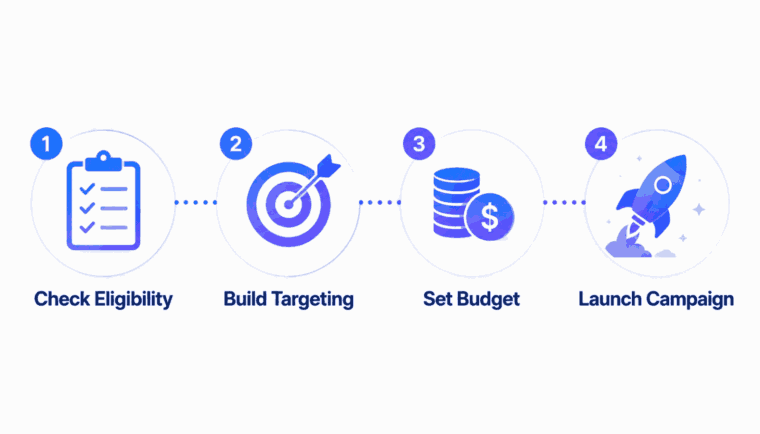
Check eligibility first. OpenAI restricts advertising around health, mental health, political content, and other sensitive categories. Confirm your category and product claims fall outside those restrictions before you plan anything else.
Decide your entry point. You can pursue early access through an agency partner now, or wait for the self-serve chatgpt ads manager india to open on September 4 and set up your own account directly.
Build your context hints. Write clear, honest descriptions of the topics and situations where your product genuinely fits. Vague or overly broad hints tend to waste budget on irrelevant placements.
Set a test budget. Start at or near the ₹725 daily minimum and treat the first few weeks as a learning period, not a performance benchmark.
Fix your organic AI visibility in parallel. Make sure your product pages, claims, and structured data are actually readable by AI systems, so you are not just buying visibility you have not earned organically.
If you want an experienced team handling strategy, setup, and reporting from day one, TechEasify’s ChatGPT ads agency India team can manage the entire process for you.
Ready to Test ChatGPT Ads the Right Way?
ChatGPT Ads India is still in an early, experimental phase, and that is exactly why the next few months matter. Brands that test carefully now, while also fixing their organic AI visibility, will be in a stronger position once the channel matures. Want help building a ChatGPT Ads strategy that actually gets your brand seen? Talk to TechEasify’s ChatGPT Ads agency team.
ChatGpt Advertising FAQ’s
When did ChatGPT Ads launch in India?
ChatGPT Ads launched in India on August 27, 2026, for logged-in users on the Free and Go plans. WPP and Omnicom ran the first campaigns as OpenAI’s initial agency partners.
How much do ChatGPT Ads cost in India?
The minimum daily spend is ₹725, based on OpenAI’s advertising documentation. Campaigns run on either cost-per-click or cost-per-thousand-impressions bidding, similar to auctions on Google and Meta.
Who are OpenAI’s agency partners for ChatGPT Ads in India?
WPP and Omnicom are the first agency partners named for the India rollout. OpenAI has said it plans to add more agencies to the program over time.
Does advertising on ChatGPT guarantee my brand gets recommended?
No. A sponsored ad and ChatGPT’s actual answer come from separate systems. Your brand can pay for a placement while ChatGPT’s organic response recommends a competitor, which is why organic AI readiness matters alongside paid spend.
When does self-serve ChatGPT Ads Manager open in India?
The self-serve ChatGPT Ads Manager opens to all Indian advertisers on September 4, 2026. Before that date, campaigns run through agency partners like WPP and Omnicom.