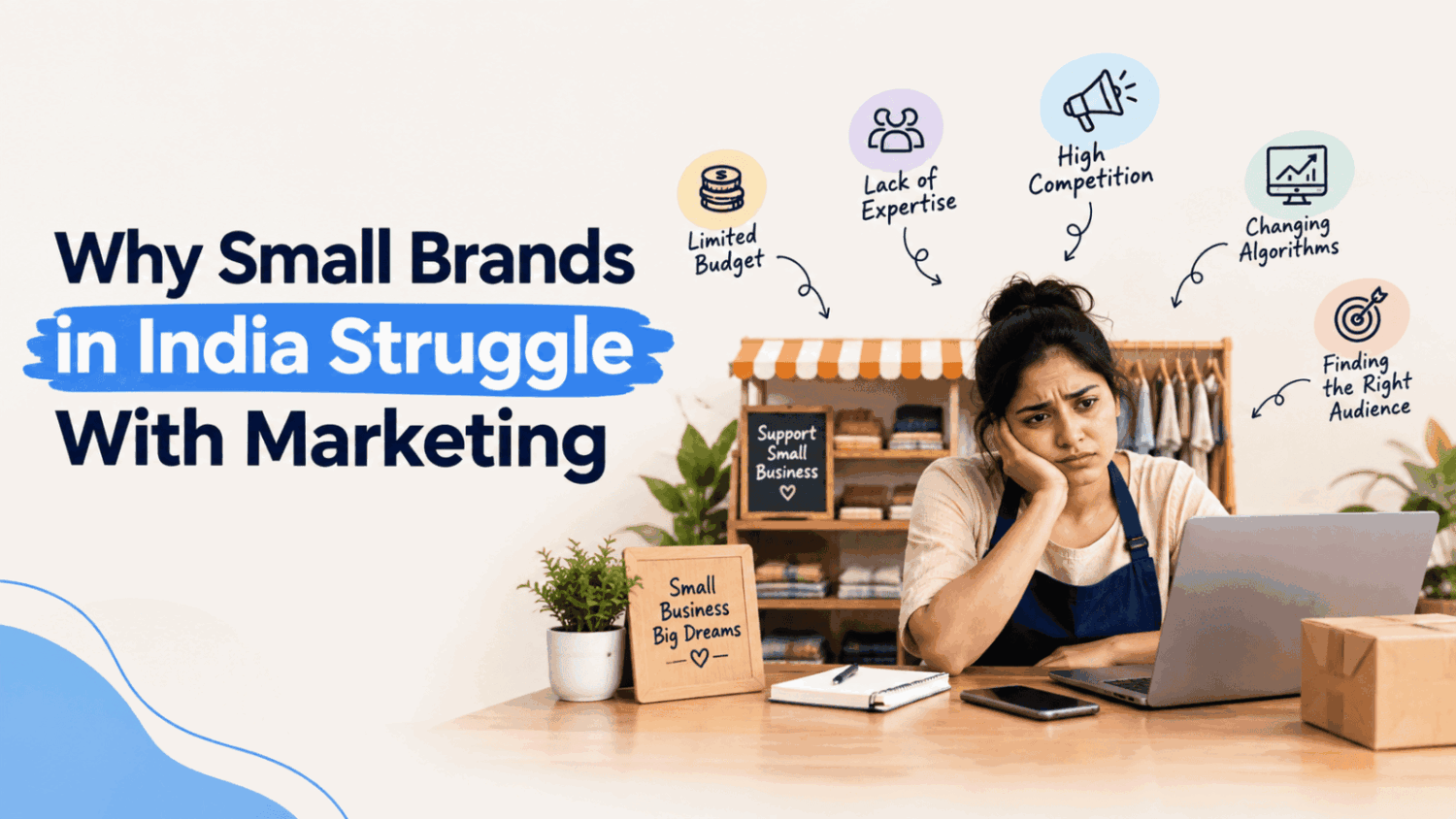
A Pune clinic can post health tips every week, reply to WhatsApp messages, accept UPI, and still have empty appointment slots. A D2C snack brand can get likes on Instagram but struggle to turn those likes into profitable orders.
The problem usually isn’t effort or demand. It’s scattered brand marketing and a disconnecteddigital marketing and branding strategy, where positioning, customer research, channels, website conversion, tracking, and follow-up don’t work together.
You don’t need to be active everywhere, and buying more digital advertising won’t fix weak positioning, conversion, or follow-up. You need a simple marketing system that helps the right target audience find you, trust you, and come back.
Key Takeaways
- Being active online doesn’t mean your small brand marketing system is working. Assign each channel a clear role.
- Clear brand positioning helps customers understand why they should choose your business.
- Local search, WhatsApp, websites, and social media platforms should guide customers toward specific actions.
- Track qualified leads, sales, margins, and repeat orders. Judge digital advertising by results, not reach alone.
- Retention can improve customer loyalty and often costs less than continually paying for new attention.
Why Small Brands in India Struggle With Marketing, Even When They Are Online
Instagram, WhatsApp, marketplaces, UPI, and Google Maps have made it easier to start selling. They haven’t made marketing automatic.
Many small businesses still depend on referrals, founder-led selling, rented marketplace profiles, or one social account. If that channel slows down, enquiries slow down too. A 2026 Vi Business MSME study placed India’s MSME Digital Maturity Index at 60.8, up from 55.9 in 2023. Progress is real, but maturity is uneven.
You may have limited time, a small team, and no one who owns the full customer journey. One person posts content. Another answers WhatsApp. Someone else handles sales. Nobody connects the work.
That is why a coherent marketing strategy matters. It gives every activity a job.

You Are Reaching Everyone Because You Have Not Chosen a Clear Position
A bakery, skincare brand, accounting firm, and industrial supplier can’t market to one broad target audience. Customers need to know who you help, what problem you solve, where you operate, and why they should trust you.
“Quality products at good prices” says nothing. “Fresh eggless celebration cakes delivered across South Delhi within four hours” gives buyers a reason to act. Clear brand positioning also makes digital advertising more efficient because your message reaches people who are more likely to respond.
Your logo and colors matter, but they can’t carry the whole message. A useful digital branding guide can help you build a digital branding strategy that keeps your voice, visuals, offer, and customer promise consistent.
You Are Guessing What Customers Want Instead of Researching It
You don’t need a large research budget. Speak with five recent customers. Read Google reviews. Save common WhatsApp questions. Ask every buyer how they found you and what almost stopped them from buying.
A salon may hear concerns about hygiene and appointment delays. A D2C food brand may see repeated questions about ingredients and delivery. A B2B packaging supplier may lose leads over minimum order quantities. A local consultant may find that buyers don’t understand the service scope.
Organize recurring questions and objections into simple buyer personas. Those details can improve your offer, landing page, content, and sales calls.
Your Brand Identity, Strategy, and Daily Marketing Are Pulling in Different Directions
Brand identity is how you look and sound. Your visual identity includes the logo, colors, and design system. Your brand voice shapes how the business sounds in posts, replies, and website copy.
Brand strategy is why you exist in a customer’s mind and how you plan to win. A Jaipur clothing brand may look premium on Instagram, show discount banners on its website, and send generic WhatsApp replies. A Bengaluru technology service may promise enterprise expertise but post only basic tips.
That inconsistency creates doubt. Brand consistency reduces confusion across Instagram, your website, and WhatsApp. Understanding brand identity versus brand strategy helps you put strategy first, then build an identity that supports it. Consistent promises and proof also strengthen brand trust, giving buyers fewer reasons to hesitate.
Build a Digital Marketing and Branding Strategy Around Channels You Can Manage
Don’t copy a large brand’s channel mix. Choose channels based on where buyers search, how long they take to decide, and how fast your team can respond across social media platforms and other channels.
UPI makes payment easy, but it doesn’t create discovery, trust, or repeat orders. Your channel mix should fit your business and your operating capacity.
- Local services need Google Maps visibility, strong reviews, calls, and directions.
- D2C brands need product education through content marketing, clear product pages, mobile checkout, delivery updates, and retention. Reviews, customer photos, and permission-based user-generated content can support trust.
- B2B firms need proof, specifications, and qualified decision-maker leads.
- Professional services need authority, clear packages, and quick follow-up.
Social media marketing can create demand, but it shouldn’t replace checkout, customer records, or consistent follow-up. A complete digital marketing guide can help you connect search engine optimization, paid advertising, email, and follow-up without treating every channel as a separate project.
Win Local Search Before You Spend More on Ads
A clinic in Pune, repair shop in Lucknow, tuition center in Indore, or restaurant in Surat can lose ready-to-buy customers because the Google Business Profile has old hours, a wrong category, weak photos, or no reviews.
Check your location pin, phone number, service areas, WhatsApp option, products, and operating hours. Ask for honest reviews after a real purchase or service.
Local search often captures stronger intent than a broad social post. Someone searching “AC repair near me” needs help now. Digital advertising should support proven demand, not compensate for inaccurate listings or weak offers.
Use WhatsApp as a Sales Process, Not an Untracked Inbox
WhatsApp can handle enquiries, catalogs, quotes, booking, payment reminders, and reorders. It can also become a messy shadow CRM.
Use labels for new leads, qualified leads, quotes sent, paid customers, and follow-ups. Keep saved replies for first contact and common questions. Record source, response time, next action, and result.
Use opt-in broadcasts only. WhatsApp should support your website, CRM, and customer records, not replace them.
Choose the Right Path for Your Business Type
Local businesses should focus on Maps, calls, directions, and reviews. D2C brands need product pages, delivery terms, returns, margins, and repeat orders.
Service businesses need proof, fast replies, and clear booking steps. B2B firms need catalogs, certifications, GST-ready details, case studies, and persistent follow-up.
GeM may suit businesses selling to government buyers. ONDC may suit sellers ready to manage cataloging, inventory, fulfillment, and support. The government’s MSME-TEAM and ONDC program is designed to help smaller firms access digital commerce, but it still requires operational discipline.
Fix the Leaks Between Visibility, Website Conversion, Measurement, and Retention
Followers, impressions, and clicks from social media platforms can look encouraging. They don’t pay salaries unless digital marketing activity turns them into enquiries, sales, and repeat customers. Brand awareness matters, but it isn’t revenue or a qualified lead.
You may be losing people through vague offers, slow mobile pages, weak trust signals, difficult quote forms, payment confusion, or no follow-up. Track a simple chain: source, enquiry, qualified lead, sale, margin, and repeat purchase.
Digital payments can provide useful transaction data, but only when you connect the purchase to customer identity, consent, and source. A study on Indian MSME digitalization found that 53.8% of businesses had adopted at least one digital tool. Using tools is a start. Connecting them to decisions is the harder part.
Attention is not the same as demand. A customer who calls, requests a quote, or reorders is more useful than a post with thousands of passive views.

Make Your Website Convert Interest Into Action
A website without a clear next step is an online brochure. Your mobile-first page should show a customer-focused headline, specific offer, service area, proof, FAQs, delivery or turnaround details, payment options, and visible call and WhatsApp buttons.
A local dentist needs appointment details and patient reviews. A snack brand needs ingredients, delivery information, and checkout. A B2B manufacturer needs specifications and quote forms. A consultant needs outcomes, packages, and a booking path.
Track form submissions, calls, WhatsApp taps, product views, and completed orders.
Measure Qualified Leads and Sales Instead of Vanity Metrics
Build a weekly spreadsheet around your core key performance indicators. Track local search calls and direction requests, WhatsApp response time, quote-to-close rate, website conversion rate, cost per qualified lead, sales conversion, average order value, margins, refunds, and 30-, 60-, and 90-day repeat rates.
Track each source separately, including digital advertising, organic search, referrals, and direct enquiries. Ask each customer how they found you. The answer won’t be perfect, but consistent tracking makes your decisions better.
Turn First-Time Buyers Into Repeat Customers
Retention is built through product value, delivery quality, support, and trust. These experiences create customer loyalty and encourage repeat buying. Discounts alone won’t fix a poor experience.
Send refill reminders for personal care or food products. Follow up after a clinic appointment or salon service. Check in after installation work. Prompt B2B buyers when their supplies may run low.
Use permission-based WhatsApp or email marketing messages. Both channels require consent and a relevant reason to contact the customer. Ask for reviews after a positive result, and request customer photos, reviews, or results as user-generated content with permission. Keep a simple recovery process for delayed orders, damaged goods, or missed expectations.
A Practical 90-Day Marketing Reset for Your Small Brand
You don’t need to launch every channel in one quarter. Build a measurable digital marketing system, then improve the parts that bring profitable customers.
Improve your brand marketing first by aligning your message, offer, proof, and follow-up before adding new channels.
Before collecting data or sending promotional messages, check consent, privacy, payment, and platform rules.
Days 1-30: Fix Discovery, Positioning, Trust, and Tracking
Choose one priority customer and one main offer. Update your message across your website, social profiles, Google Business Profile, and WhatsApp.
Correct categories, hours, service areas, contact details, photos, FAQs, and reviews. Build one landing page with a clear call, chat, quote, booking, or order path. Test payment links and UPI options on a phone.
Set up tracking for calls, forms, WhatsApp clicks, and sales. Review the data weekly.
Days 31-60: Improve Conversion and Follow-Up
Create two or three offer paths for your highest-intent services or products. Write short scripts for first replies, qualification, pricing questions, objections, and follow-ups after 24 and 72 hours.
Use a spreadsheet or lightweight CRM to record lead source, need, status, value, next action, and outcome. Publish relevant proof, including testimonials, case studies, demonstrations, comparisons, or permission-based user-generated content.
Test one focused set of marketing campaigns tied to one offer and one audience. Don’t add five more channels.
Days 61-90: Build Retention and Decide What to Scale
Start one repeat-purchase, referral, reactivation, or post-service flow through WhatsApp or email marketing. Ask satisfied customers for reviews and permission-based testimonials.
Review qualified-lead cost, response time, conversion rate, average order value, refund rate, and repeat purchases each week. Keep what brings profitable customers. Improve what shows promise. Stop work that produces attention without sales.
Then decide which channels to deepen after you can track and fulfill profitable demand, such as local search, WhatsApp marketing, SEO, marketplaces, ONDC, GeM, digital advertising, paid search, Meta ads, or B2B outreach.
Build a Marketing System You Can Sustain
You don’t need to be everywhere. You need a sustainable digital marketing system built around clear positioning, real customer insight, manageable channels, a page that converts, simple measurement, and reliable follow-up.
Local Search, WhatsApp, digital payments, and social media strengthen your online presence when they connect to trust and retention, rather than operate as isolated profiles. Trust grows throughbrand consistency, not scattered activity.
If you want help setting your branding and marketing priorities, contact Techeasify for a free consultation, and consider digital advertising only after the core system works.
Frequently Asked Questions
Should a small Indian brand hire an agency or handle marketing in-house?
It depends on your team’s skills, time, budget, and business complexity. Keep customer knowledge, positioning, and measurement ownership in-house, even when you outsource execution.
Start with a focused audit or project. Don’t hand over every channel without clear goals.
How much should a small business in India spend on marketing?
There is no safe universal percentage. Your budget must account for content, staff time, tools, sales capacity, margins, and customer lifetime value.
Start with a small digital advertising test tied to one offer and one measurable goal. Increase spend only when you can fulfill demand profitably.
Is social media enough for a small brand?
No. Social media can create reach, but you don’t control the platform or fully own the audience.
Pair social content with local search, a useful website or landing page, customer records, WhatsApp, email marketing, and a customer retention process.
What should you do first if your marketing budget is very small?
Start with positioning, your Google Business Profile, customer reviews, one clear landing page, fast lead responses, and basic tracking. These steps improve demand you already have before you spend on ads.
A local repair business can win more calls through accurate Maps details. A B2B supplier can win better enquiries through a clear catalog and quote path.