Whether you are a small-scale or large-scale business, PPC advertising can be a highly effective marketing strategy for businesses. It can boost your brand awareness, get you leads and drive traffic.
But with so many competitors, PPC marketing can be a daunting task for you. Consequently, doing a PPC competitive analysis is a must before you begin with your PPC. Competitor Ad analysis will help you to understand all strategies they are using.
But the question is- How to do a competitive analysis? Well, we have an answer. Go through this step-by-step guide and learn how to do Google Ads competitor analysis like a pro.
Doing the Google Ads competitor analysis is significant before starting with your PPC. it enables you to understand their point of difference in the market and compare strengths and weaknesses.
Here are the other reasons specifying why competitor ad analysis is important :
- Competitor analysis helps you to learn about the keywords your competitor is targeting and how much money they are investing in PPC.
- By doing the Google ads competitor analysis, you can help your agency in adjusting the digital marketing benchmarks to recognize the opportunities.
- It also reveals how to position your client’s business with the help of new trends, changes, and ideas.
- Besides this, it also gives you an insight into how much the competition is and how difficult it will be to take your ad to the top.
Steps To Do PPC Competitor Analysis
Now, it’s time to learn how to do the PPC competitor analysis. Here are the key steps involved in an effective PPC competitor analysis.
Know your competitors
The first step in doing the PPC competitor analysis is to know your competitors. Even if you have the basic know-how of your competitors, it is crucial to have an eye on your competition as new companies are coming every now and then.
You can make use of tools like Semrush to know your competitors. Depending on the insights you get, you can measure your ad, and analyze your performance against your competitors.
Review their PPC strategy
The next step is reviewing and analyzing your competitor’s PPC strategy. Figure out how your competitors are using SEO and PPC strategies to cover organic and paid channels. You can analyze the PPC strategy by doing keyword research.
Check the keywords for which your competitors are ranking with the help of tools like Semrush. Doing so will help you to identify the gaps in your keyword strategy and accordingly make adjustments.
See Also: Keyword Research – Why it’s Important in SEO?
You can also monitor their search results to get an idea of their ranking, the ad copy they are using, and also the amount they are investing. Consequently, you’ll get an insight into what’s working in their favor and can decide if it is worth implementing in your business or not.
Analyze ad copy and landing pages
Your target audience is not going to click on your ad unless the landing page content seems interesting and relevant to them. So, the next step is to analyze their ad copy and landing pages as well.
Go through their unique selling points, landing page content, and CTA’s as these are the ones that can help you the most in conversions.
Know their target audience
In addition to the ones mentioned above, you also need to understand the target audience of your competitor to figure out if you are going on the right track or not. Do extensive research and find out the channels they are using.
The tools like Ahrefs or Google Ads keywords planner can help you to identify the target audience of your competitors.
Analyze their investment
The next step is analyzing the investment and amount they are spending on their PPC ads. For this, you need to look at their online presence like social media networks, search engine rankings, and how often their ads appear.
Using these tactics will help you to get an insight into the paid industry and see what’s bringing them engagement.
Know their ROI
Lastly, analyze their performance and return on investment (ROI). You can make use of metrics like average positions, cost per click, click-through rates, impressions, customer acquisition cost, and conversions.
By analyzing these metrics, you can easily get to know their return on investment and accordingly plan your PPC ad campaign.
PPC Competitor Analysis Tools
With plenty of tools available on the internet, it can be difficult to decide which one to choose and which not to. Consequently, here are the top PPC competitor analysis tools you can use in your competitor ad analysis.
SpyFu
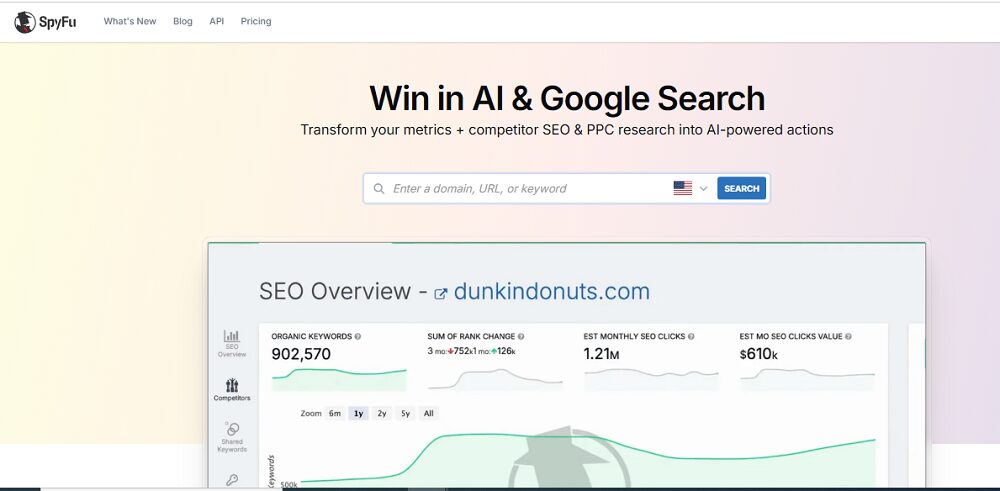
Using the SpyFu tool, you can get an insight into your competitor’s keywords, bidding, and ad strategies. You can also see the ad they are running and the keywords they are purchasing.
Semrush
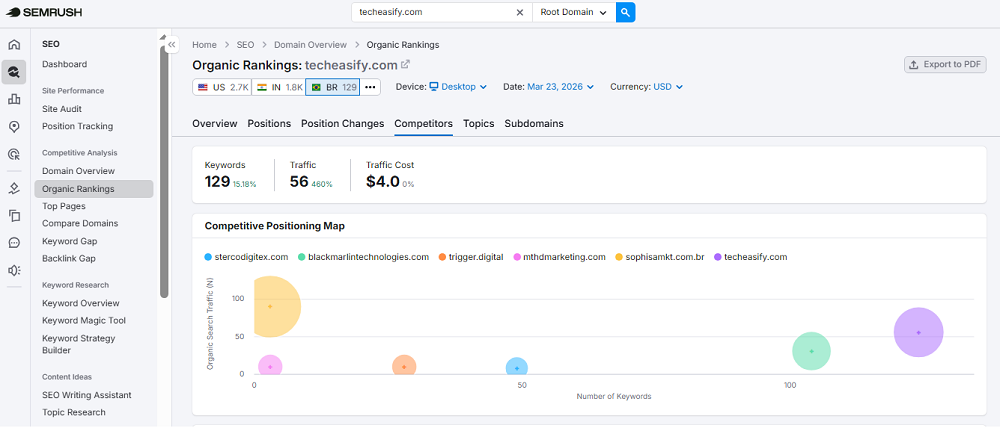
Semrush is also another tool to help you in planning, analyzing, and improving your Google Ad campaigns. It can help you in knowing the biggest competitors of your client, the keywords they are using, and plenty of other things.
Ahrefs
Ahrefs is an all-in-one tool that gives you access to multiple tools for link building, keyword research, competitor analysis, site audits, or rank tracking. You can discover countless keyword options and also calculate the traffic potential.
Wrapping Up
Following the above-stated steps, you’ll be able to do a PPC competitor analysis and accordingly plan your PPC ad campaign to stay ahead of your competitors. Implement the tactics mentioned above and increase your conversions.
Read about more information: The Potential of Lead Generation Through Social Media Advertising
FAQs
1. What is PPC competitive analysis?
PPC competitive analysis is the process of studying your competitors’ paid advertising strategies to understand their keywords, ad copy, landing pages, targeting, and overall campaign approach.
2. Why is PPC competitive analysis important?
PPC competitive analysis helps you identify keyword gaps, improve ad copy, refine targeting, and make better campaign decisions based on what is working in your market.
3. What should be included in a PPC competitive analysis?
A PPC competitive analysis should include competitor research, keyword analysis, ad copy review, landing page evaluation, audience targeting, budget insights, and performance metrics like CTR and ROI.
4. How can I find my PPC competitors?
You can find PPC competitors by searching your target keywords on Google and using tools like Semrush, Ahrefs, or Google Ads Keyword Planner to identify businesses bidding on similar terms.
5. Why should I analyze competitor ad copy and landing pages?
Analyzing competitor ad copy and landing pages helps you understand their offers, messaging, calls to action, and conversion strategy so you can improve your own campaign performance.
6. Which metrics matter most in PPC competitor analysis?
Important metrics include click-through rate, cost per click, impressions, average position, conversions, customer acquisition cost, and estimated return on investment.
Conclusion
PPC competitive analysis helps businesses understand what competitors are doing well and where new opportunities exist. By reviewing competitor keywords, ad copy, landing pages, audience targeting, and campaign performance, you can build a smarter PPC strategy and improve results over time. A detailed competitor analysis also helps you reduce wasted ad spend and make better decisions based on market insights.