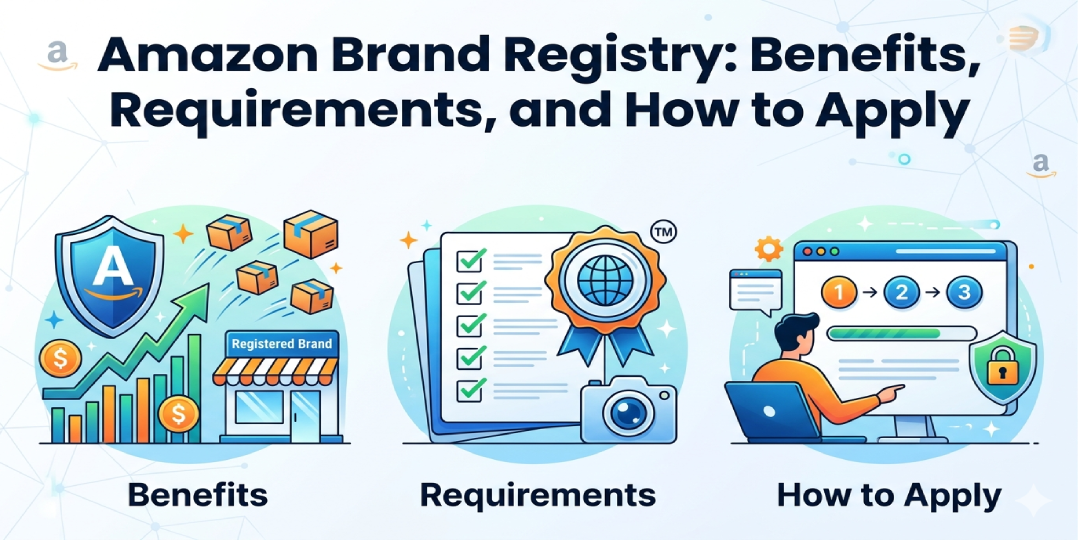
Losing control of your listing on Amazon can feel like finding someone else in your store, changing your signs, and confusing your customers. That is why Amazon Brand Registry matters. In simple terms, it is Amazon’s free program for brand owners that helps you prove you own your brand, protect your intellectual property, and control how it appears on the marketplace.
If you sell private-label products, this is not a nice extra. It is often the line between building a real brand with a registered trademark and spending months fixing damage from copycats, listing hijackers, or poor catalog edits. Amazon has reported major anti-counterfeit progress, including more than 15 million counterfeit products seized in 2024, plus large-scale fake listing prevention before many brands ever had to file a complaint.
The good news is that the process is manageable when your paperwork is in order. You only need to understand what the program does, who qualifies, what documents matter, and how to apply without common mistakes. That starts with one simple point for Amazon sellers: a normal seller account and Amazon Brand Registry are not the same thing.
Key Takeaways
- Amazon Brand Registry is a free program for trademark owners that provides stronger listing control, protection from counterfeits and hijackers, and exclusive tools like A+ Content, Brand Analytics, and Brand Stores—far beyond a standard seller account.
- Eligibility requires a registered trademark (or eligible pending application) from supported offices like USPTO or WIPO, with your brand name and logo permanently affixed to product packaging and matching across listings.
- Enrollment is straightforward and often fast (24-48 hours for clean applications): gather trademark details and product images, apply via the Brand Registry portal in Seller Central, and avoid delays by ensuring all details align perfectly.
- Essential for private label sellers building long-term brands, as it prevents listing edits, boosts visibility with better ads and insights, and is worth it even for small operations despite separate trademark costs.
What Amazon Brand Registry is, and how it is different from a regular seller account
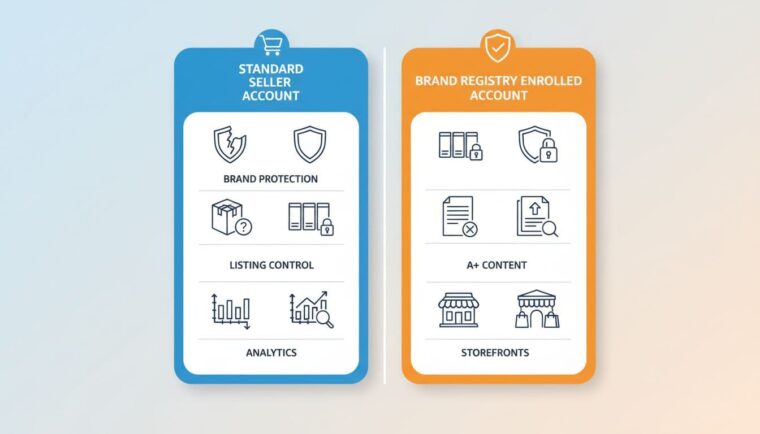
Amazon Brand Registry is a free brand-protection and brand-management program built for trademark owners. A regular seller account in Seller Central lets you list and sell products. Brand Registry goes further. It helps you claim your brand identity, protect your Product Detail Pages, and access extra tools that standard sellers do not get.
That difference matters because Amazon treats brand ownership and selling as two separate things. You can open a seller account and start selling without owning a trademark. However, that does not give you the same control if someone edits your listing, copies your images, or sells a fake version of your product.
A simple comparison makes it easier to see:
| Access | Standard seller account | Brand Registry |
|---|---|---|
| Basic selling | Yes | Yes |
| Stronger listing control | Limited | Yes |
| A+ Content | No | Yes |
| Brand Analytics | No | Yes |
| Brand Stores | No | Yes |
| Advanced brand protection tools | Limited | Yes |
As of 2026, Amazon also supports a global Amazon Brand Registry account. That means you can manage brands and add country-specific trademarks from one place. In many cases, Amazon may also accept a Pending Trademark Application from a supported Trademark Office, though approval still depends on review.
What you get with Brand Registry: Brand Building Tools you do not get with a standard seller account
Once enrolled, you can claim stronger control over titles, images, descriptions, and key attributes. You also unlock A+ Content, Brand Analytics, branded Brand Stores, and better ad options such as Sponsored Brands.
There is also a practical operations benefit in 2026. Enrolled brands can often use manufacturer barcodes on eligible FBA items. Sellers outside the program may still face more unit-labeling work.
Why this matters if you sell private label or want to build a long-term brand
If you sell private label, your listing is part shelf space, part sales rep, and part packaging. When someone else changes it, your brand takes the hit. Brand Registry helps you protect your product story, keep details consistent, and give shoppers a cleaner buying experience.
So while the setup is not hard, it pays to gather the right documents first.
The biggest benefits of Amazon Brand Registry for your business
The best part of Amazon Brand Registry is not the badge itself. It is the business control that comes with it. You get stronger protection, better pages, more trust, and access to data that helps you make smarter moves.
Protect your listings from counterfeit sellers and listing hijackers
Counterfeits and listing hijacks are not rare edge cases. They are part of selling on a huge marketplace. Brand Registry gives you better tools to Report a Violation, monitor misuse with Automated Protections, and act faster when someone copies your brand or product detail page. Advanced layers of defense include Project Zero and the Transparency program against Counterfeit Products.
Amazon has said it seized more than 15 million counterfeit products in 2024 and blocked large volumes of suspected fake listings before brands had to report them. That tells you two things. First, the problem is real. Second, Amazon is investing heavily in stopping it. Your trademark is the backbone of that protection, which is why offices like USPTO and WIPO matter so much.

Improve your product pages with A+ Content, brand assets, and better control
Brand Registry also helps you shape the Product Detail Pages customers see. You can use A+ Content to add branded visuals, comparison modules, and clearer product storytelling. You can also build a Storefront that feels more like a branded shop than a random product page.
That matters because buyers trust consistency. If your title, images, packaging, and brand story all match, the listing feels more reliable. Better control can also reduce bad edits that hurt conversion.
Gain more visibility with stronger branding, better ads, and brand insights
Protection is only part of the value. Brand Registry can also help you get found. You gain access to Brand Analytics and the Brand Protection Report, which give you useful search and shopper insights. You also open the door to stronger branded ad formats like Sponsored Brands and Sponsored Display, plus tools like Manage Your Experiments for page optimization and richer traffic paths.
If you want broader marketplace visibility beyond Amazon, Techeasify’s eCommerce SEO guide 2026 is a useful next read. If your next step is paid growth, our Amazon PPC management services can help you turn branded traffic into sales.
For official details on current tools and brand benefits, review the Amazon Brand Registry page and your account inside Amazon Seller Central.
Amazon Brand Registry requirements, eligibility, and the documents you should prepare
Before you apply, check the basics as the Rights Owner or authorized agent. Most delays happen because small details do not match.
The trademark rules that matter most before you apply
You usually need to be the Rights Owner or an authorized agent acting for the Rights Owner. Your Brand Name and Logo on Amazon should match the Registered Trademark details closely, and the Brand Name and Logo must be Permanently Affixed to the Product Packaging or the product itself. If your Registered Trademark says one thing and your Product Packaging says another, Amazon may stop the application.
Amazon accepts Registered Trademarks from supported Trademark Offices, including major offices such as the USPTO and systems tied to WIPO. In some cases, a Pending Trademark Application may qualify in 2026, but only if Amazon supports that Trademark Office and approves the submission. You can also review current rules on the official Brand Registry page.
GTINs or UPCs are still generally expected for most standard products. Some categories and special cases differ, but most sellers should plan around standard product identifiers.
A quick eligibility checklist to help you avoid delays
Use this quick self-check before you start:
- Your seller account is in good standing.
- Your Brand Name and Logo is Permanently Affixed to your Product Packaging, and it matches your Registered Trademark.
- You have your trademark number, or an accepted application number for your Pending Trademark Application.
- Your product photos or Product Packaging clearly show the Brand Name and Logo.
- Your catalog details and identifiers match what you plan to sell.
If the name on the trademark, Product Packaging, and Amazon listing do not line up, your application can stall fast.
Amazon Brand Registry Enrollment Process: Step by Step
The application is free. Your trademark is the part that may cost money, whether you file it yourself or use legal help.
What to gather before you start your application
Before you log in, gather your trademark number, or an accepted application number if Amazon supports your pending mark. If you do not yet have a Registered Trademark, consider Amazon’s IP Accelerator program. You should also have the brand owner details, an authorization letter if you apply for someone else, product images or packaging that show the mark, and your catalog basics. Being prepared saves time and cuts down on back-and-forth.
The Amazon Brand Registry Enrollment Process from sign in to approval
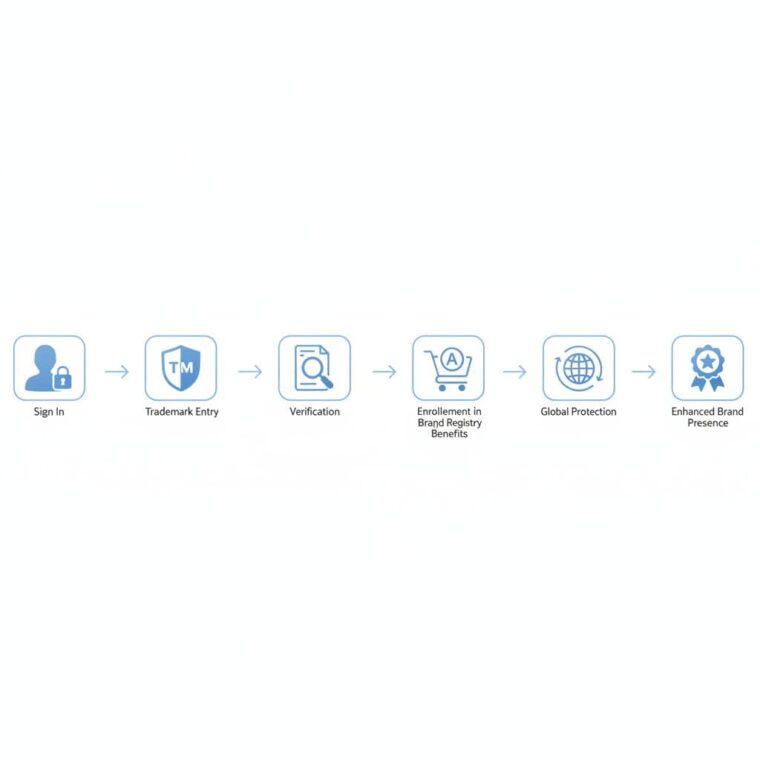
Start in Seller Central with the account tied to your selling activity, then go to the Amazon Brand Registry portal and begin a new enrollment.
- Sign in and choose to enroll a new brand.
- Select the trademark office and the region tied to your mark.
- Enter your brand name, trademark details, and owner information.
- Upload images of your Brand Name and Logo or Product Packaging that show the mark, and connect relevant catalog details.
- Submit the application and watch for a verification step.
- Enter the Verification Code promptly if Amazon sends one to the trademark contact.
- Wait for review, then set up your brand tools after approval.
In 2026, clean Enrollment Process applications often move fast. Many sellers report review in about 24 to 48 hours, while more complex cases can take around 5 business days or longer. Once approved, your global account can cover more countries, and you can add more trademarks later.
Common application problems, and how you can fix them fast
Rejected application? Recheck name matches first. Trademark mismatch? Make the brand details identical across documents and packaging. Delayed verification? Contact the trademark owner or attorney and confirm where the code was sent. Ownership proof issue? Add clearer authorization or owner records. GTIN or catalog mismatch? Clean up the product data before you reapply.
Common questions sellers sellers ask before joining Amazon Brand Registry
How much does it cost, how long does approval take, and is it worth it for small sellers?
How much does Amazon Brand Registry cost?
The enrollment itself is free. Your trademark filing is separate and may involve government or legal fees.
How long does approval take?
Straightforward cases often move within 24 to 48 hours, while some take about 5 business days. A few can take longer if details do not match.
Is it worth it for small sellers?
Yes, if you want real control, including access to Brand Building Tools and the Vine program to manage Customer Reviews. Small brands often feel the pain of listing edits and copycats more sharply because one bad listing can hurt the whole business.
Do you need a trademark, and what should you do if your application is rejected?
Do you need a trademark?
In most cases, yes. You generally need a registered trademark, or an eligible pending trademark from a supported office.
What if you get rejected?
Fix the mismatch, improve your proof, or resolve account issues first, then reapply. Once enrolled, you can file an Infringement Notice to protect your Intellectual Property. Most rejections come from paperwork problems, not because the program is out of reach.
Which trademark offices are accepted?
Amazon works with supported trademark offices by region, so check the current list during application rather than assuming every office qualifies.
Your brand deserves more than a basic seller login and hope. Amazon Brand Registry gives Amazon Sellers stronger control, better protection, and access to tools that help you grow with less friction.
If you qualify, the next step is simple: get your Registered Trademark details in order, submit the application, and set up your brand assets once Amazon approves you.
If you want expert help, Techeasify can review your eligibility, prepare your documents, and help you build better brand pages featuring your Brand Name and Logo after approval. For broader growth support, you can also explore our digital marketing tactics for eCommerce.