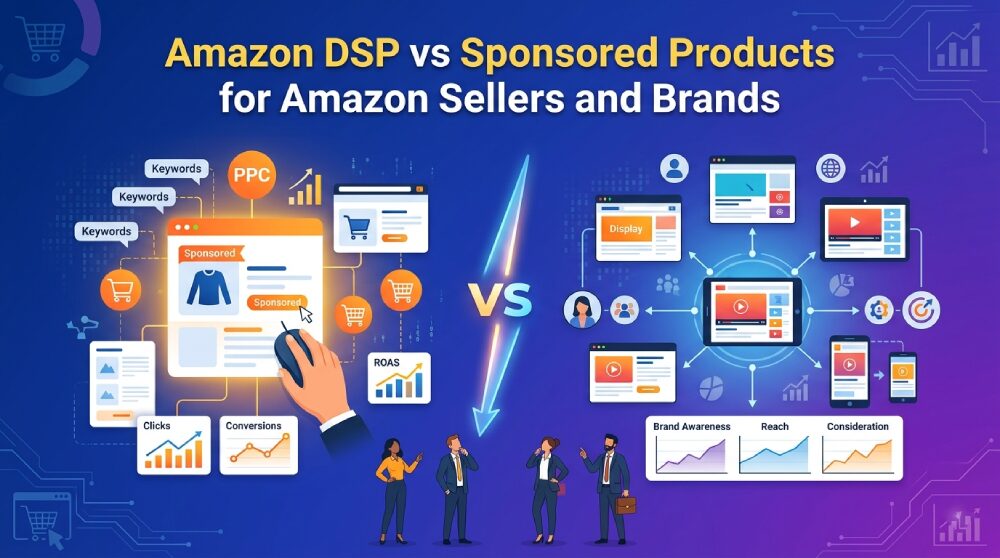





These two ad types live inside Amazon Ads, but they don’t do the same job. If you treat Amazon DSP and Sponsored Products like interchangeable tools, you’ll waste budget fast.
Your choice should come down to three things, your budget, your product, and what kind of result you need first. If you want a clear path to better ROI and fewer bad clicks, this comparison will help you sort it out, and if you need hands-on guidance, Techeasify Infotech is a trusted partner for Amazon ad strategy and growth.
What Amazon DSP does and when it fits your goals
Amazon DSP is built for audience targeting, not keyword chasing. Instead of waiting for someone to type a search into Amazon, you reach people based on shopping behavior, interests, and past actions.
That means your ads can show on Amazon, but also across other websites, apps, and streaming environments connected to Amazon’s ad network. This is why DSP is often used higher in the funnel. You’re not only catching demand, you’re helping create it.
If your brand needs wider reach, or you want to bring back shoppers who almost bought, DSP starts to make sense. It’s also useful when you’re selling products people don’t buy on impulse. Think premium skincare, big-ticket electronics, or products that need a few touchpoints before conversion.
That’s one reason many brands look at managed ecommerce marketplace management alongside ads. Reach matters, but your catalog, listings, and marketplace setup still shape the result.
How audience targeting and retargeting work in Amazon DSP
This is where DSP earns its keep. You can retarget shoppers who viewed your product, visited a related category, or showed signals that they may buy later.
Picture this. A shopper checks your coffee machine on Amazon on Monday. They don’t buy. Two days later, they see your ad again while browsing another site or app. That reminder can pull them back.
That’s the core difference. DSP is less about “which keyword did they type?” and more about “is this the right shopper to reach now?”
Sponsored Products catch active demand. Amazon DSP helps you stay visible after that moment passes.
Why larger brands often get more value from DSP
DSP usually works best when you have room to plan. Bigger budgets help. So does steady inventory and a clear goal beyond short-term sales.
If you’re launching a new product line, trying to build awareness, or running a full-funnel campaign, DSP gives you more range. It also fits brands that want to scale retargeting instead of relying only on search traffic.
The trade-off is simple. DSP needs more setup, more audience thinking, and more patience than Sponsored Products. You don’t usually turn it on today and judge it tomorrow.
What Sponsored Products ads do best inside Amazon search
Sponsored Products are the workhorse for direct response on Amazon. They place your products in search results and on product detail pages, right where shoppers are already looking.
This format is built for conversion. Someone searches, sees your ad, clicks, and buys. That’s why many sellers start here first. It’s simpler, faster to launch, and easier to control when your budget is tight.
If you’re an FBA seller trying to move inventory, improve visibility, or push a product higher in search, Sponsored Products often give you the clearest first step. You don’t need a giant budget to get useful data, either.
Why Sponsored Products usually win for quick sales and ranking
Search intent is the big advantage. When a shopper types “protein shaker bottle” or “dog joint supplement,” they’re not browsing for fun. They’re shopping.
That high intent is why Sponsored Products can generate faster sales than Amazon DSP in many accounts. They’re also useful for product launches, especially when you’re trying to build early click history and sales momentum.
For sellers watching ACoS closely, this format is easier to read. You can see which search terms bring clicks, which ones convert, and where money is leaking. That makes fast testing much easier.
The basics of keyword targeting and CPC bidding
Sponsored Products run on keywords and CPC, or cost-per-click. You bid on search terms, and you pay when someone clicks your ad.
That’s easier for many sellers to manage because the math feels direct. Spend creates clicks. Clicks create traffic. Traffic may create sales.
It’s not perfect, of course. Bad keywords burn money. Weak listings waste good traffic. Still, the model is easy to understand, which is why it’s often the first ad type sellers learn.
Amazon DSP vs Sponsored Products: the differences that matter most
Both belong to the Amazon Ads ecosystem, but they solve different problems. One is audience-first. The other is search-first.
This quick view makes the split easier to see:
| Factor | Amazon DSP | Sponsored Products |
| Targeting | Audience behavior, interests, remarketing | Keywords and product targeting |
| Placements | On Amazon and off Amazon | Mostly Amazon search and product pages |
| Pricing model | Usually CPM | CPC |
| Best funnel stage | Awareness, consideration, retargeting | Bottom-funnel conversion |
| Budget level | Higher | Lower and easier to start |
| Speed of feedback | Slower, needs more time | Faster, easier to test |
The short version is simple. DSP buys impressions to reach the right people. Sponsored Products buys clicks from people already shopping.
Audience targeting, placements, and buying model
Amazon DSP works like programmatic media buying. You define the audience, then Amazon helps place ads where those shoppers are likely to see them, both on and off Amazon.
Sponsored Products stays much tighter. Your ad appears when a shopper searches relevant keywords or lands on related product pages inside Amazon.
The buying models also change how you think. DSP usually uses CPM, so you’re paying for visibility. Sponsored Products uses CPC, so you’re paying for traffic. If you’re chasing immediate sales, CPC often feels more comfortable.
Budget, speed, and reporting differences
Sponsored Products is easier to test when you need answers fast. You can launch with a smaller budget, gather search term data, and adjust bids in a short cycle.
DSP usually asks for more patience. Budget needs are higher. Audience setup takes more thought. Results may include assisted sales, not only direct last-click conversions.
That’s why many brands judge DSP too early. They expect search-style feedback from an awareness and retargeting tool. It doesn’t work that way.
How to decide which ad type fits your brand right now
Don’t choose based on what sounds more advanced. Choose based on the problem you’re trying to fix.
If your main issue is low visibility in Amazon search, Sponsored Products is usually the better move. If your issue is weak remarketing, low brand recall, or not enough reach before the search happens, Amazon DSP is the better fit.
You also don’t need both on day one. Plenty of sellers do well by mastering Sponsored Products first, then adding DSP once traffic, listings, and budget are stronger.
Choose Amazon DSP when you want to grow demand and retarget shoppers
DSP fits best when you want to reach shoppers before they’re ready to search again. It also works well for higher-priced products, repeat purchase items, and brands that need more than one touchpoint.
Say you sell premium supplements. A shopper may compare options for a week before buying. DSP lets you stay in front of that person instead of disappearing after the first visit.
This is where brand-building and retargeting overlap. You stay visible, remind shoppers what they saw, and keep your product in the mix.
Choose Sponsored Products when you want faster conversion and tighter control
If you’re newer to Amazon Ads, this is usually the smarter starting point. You can launch faster, spend less, and connect ad spend to traffic and sales with less guesswork.
Sponsored Products also works well when your category already has clear search demand. If shoppers know what they want and are typing it into Amazon, your job is to show up at the right time.
For many sellers, that’s the first real win, more qualified clicks, better visibility, and a tighter handle on spend.
How to use both ad types together for a stronger Amazon strategy
The best setup isn’t always DSP or Sponsored Products. Sometimes it’s both, in the right order.
Use Sponsored Products to capture active shoppers inside search. Use Amazon DSP to build awareness earlier and retarget people who clicked, browsed, or bounced. One catches intent. The other extends the conversation.
If you need outside help building that mix, Techeasify Infotech’s Amazon advertising services can help you map budget, targeting, and campaign structure without wasting spend on the wrong format.
A simple full-funnel setup you can start with
Here’s the easy version. Run Sponsored Products on your main converting keywords. Then use DSP to retarget shoppers who viewed your product but didn’t buy.
A shopper searches for your blender, clicks your ad, compares a few options, and leaves. Later, they see your brand again through DSP. That second touch can be the nudge that closes the sale.
You don’t need a giant funnel diagram to understand it. Search brings them in. DSP brings them back.
Common mistakes to avoid when mixing DSP and Sponsored Products
The first mistake is spreading budget too thin. If both campaigns are underfunded, neither learns enough to perform well.
The second mistake is targeting the wrong audience. DSP only works when the audience logic is strong. Broad, lazy targeting burns impressions.
The third mistake is blaming the ad format for a weak offer. If your listing, price, reviews, or creative are off, both ad types will struggle. Ads can bring traffic. They can’t fix a bad product page.
The right Amazon ad mix depends on your next move
Amazon DSP is usually the better choice when you need reach, retargeting, and more brand growth room. Sponsored Products is usually better when you want direct sales, stronger search visibility, and tighter budget control.
The smart move is to match the tool to the job in front of you, not the one that sounds bigger. If you’re ready to build a cleaner Amazon Ads strategy, work with Techeasify Infotech for campaign planning, DSP support, and conversion-focused growth that fits where your brand is right now.
Frequently Asked Questions
What is Amazon DSP used for?
Amazon DSP is used for audience targeting, display advertising, and retargeting. It helps brands reach shoppers on and off Amazon.
Is Amazon DSP better than Sponsored Products?
Not always. Amazon DSP is better for awareness and retargeting. Sponsored Products are better for direct sales and keyword-driven conversions.
How much budget do I need for Amazon DSP?
DSP usually needs a larger budget than Sponsored Products. Exact spending depends on your goals, audience size, and campaign type.
Can small businesses use Amazon DSP?
Yes, but it is often more effective for brands with enough budget and sales data. Many small businesses start with Sponsored Products first.
Are Sponsored Products good for beginners?
Yes. Sponsored Products are one of the best starting points for new Amazon sellers because they are simple, flexible, and conversion-focused.
How can Techeasify Infotech help with Amazon Ads?
Techeasify Infotech can help you plan, launch, and optimize Amazon PPC and DSP campaigns. We focus on targeting, performance, and growth
Ready to Grow Your Amazon Sales?
If you want a smarter Amazon advertising strategy, Techeasify Infotech can help.
We offer:
- Amazon PPC management
- Amazon DSP management services
- Amazon campaign optimization
- Ecommerce growth support
- Full-funnel Amazon Ads strategy
Ready to scale your Amazon sales with smarter advertising?
Partner with Techeasify Infotech for high-performance Amazon Ads management, DSP campaigns, and conversion-focused ecommerce marketing solutions. Contact our team today to grow your brand faster.