Key Takeaways
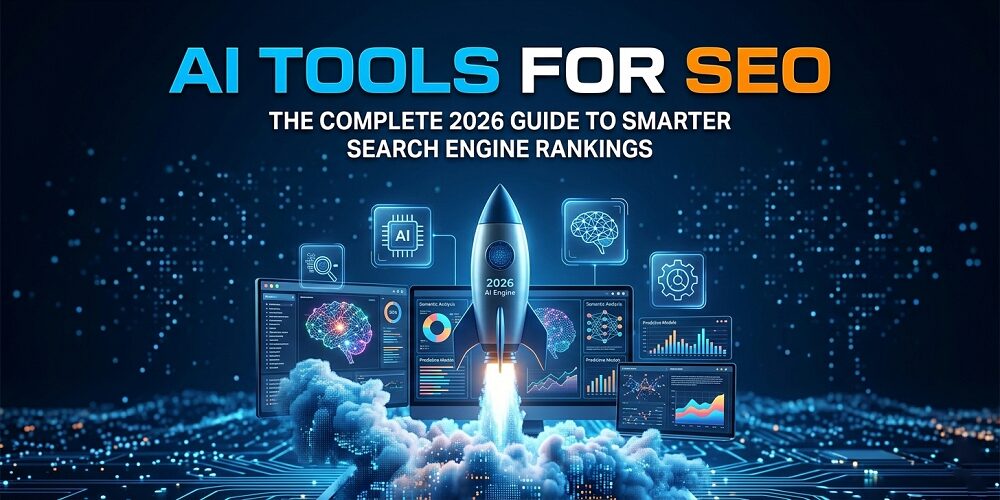
- AI Tools for SEO speed up research, briefs, on-page fixes, and reporting.
- In 2026, visibility often means getting cited in AI overviews, not just ranking first.
- The best results come from a hybrid workflow (AI drafts, you edit, you add proof).
- Pick tools based on your process, not hype, then measure time saved and lift per page.
- What they do: Turn messy SEO data into briefs, fixes, and content suggestions you can act on fast.
- Why they matter in 2026: AI Overviews and tougher spam filters reward clear structure and real help.
- Who should use them: SMBs, in-house marketers, agencies, and founders who need faster output.
- How to pick: Match the tool to your workflow (research, writing, audits, links, reporting).
- ROI to expect: Fewer wasted hours, faster testing, and stronger content quality at the same headcount.
- AI tools for SEO help recover organic traffic through targeted optimizations.
You’re not imagining it, search feels different in 2026. With the rise of generative engine optimization, AI Tools for SEO are apps that use machine learning to suggest what to write, how to structure it, and what to fix on your site. That matters because AI Overviews create more zero-click answers, while quality systems get stricter about spam and thin content.
Before you choose anything, ground yourself in the basics. This SEO beginner’s guide helps you keep the fundamentals straight.
In this guide, you’ll learn the main tool categories, quick pros and cons for top platforms, an AI SEO tools comparison table, how to choose, common mistakes, who wins fastest, and short FAQs.
What AI Tools For SEO Actually Do (And What They Do Not)

Classic SEO tools mostly give you reports and lists. You still interpret the data, decide priorities, and write the plan. In contrast, AI search engine optimization tools perform SERP analysis across top pages, your site, and competitor gaps, then suggest next actions like content optimization. Think “recommendations and drafts,” not just “metrics and exports.”
Most AI-powered SEO software uses machine learning in a simple way. It learns from large sets of pages and search results, then predicts what tends to work based on search intent. That can speed up topic clustering, content briefs, internal linking ideas, and refresh plans.
Still, keep the limits clear. AI doesn’t replace:
- Your strategy (what to target, and why).
- Expert review (compliance, accuracy, claims in AI-generated content).
- Real experience (examples, photos, results, pricing context).
- Final judgment (what’s helpful, and what’s fluff).
Use AI Tools for SEO as a helpful AI writing assistant and an analyst, not your boss.
Traditional SEO tools vs AI SEO software, the real difference in your day to day work
Traditional tools help you collect data
- Export keyword lists, rankings, and crawl errors.
- Compare domains and backlinks.
- Leave decisions and writing to you.
AI SEO software helps you produce decisions faster
- Group keywords by intent automatically.
- Draft outlines and content briefs in minutes.
- Suggest on-page fixes based on top pages.
- Flag pages to refresh before they drop.
Why AI matters now, because Google answers more questions for you
AI Overviews can answer the query before someone clicks. As a result, your goal shifts. You want clear structure, direct answers, and trust signals that make your page easy to cite. Short definitions, scannable headings, and “what it costs” sections now pull extra weight.
Why AI Tools For SEO Matter In 2026, Rankings, Visibility, And Speed
In 2026, the slow path hurts. AI answers push organic clicks down for many informational queries. At the same time, stricter spam systems punish generic content and templated pages. You need to publish faster, but you can’t publish sloppy.
That’s where AI Tools for SEO help most. They speed up:
- Intent mapping (what the searcher really wants).
- Structure (headings that match questions to build topical authority for trust).
- Refresh cycles (updating winners before they fade).
- Quality checks (readability, NLP terms, missing subtopics, thin sections).
You also need to be realistic about tradeoffs, like accuracy, bias, and brand risk. This breakdown of advantages and disadvantages of artificial intelligence is a useful reminder to keep humans in charge.
The new win is being cited and trusted, not just being number one
If an AI summary shows first, AI search visibility can mean a citation or a mention. For example, a local home renovation page can win even with fewer clicks by answering pricing ranges, timelines, permits, and warranty terms clearly. That content gets quoted, and the right buyers still reach you.
How automation saves hours each week without turning your site into AI fluff
Use automation to streamline the content creation process for repeatable work: content briefs, on-page suggestions, internal linking ideas, and weekly reporting. Then edit hard. Add a real example, a short case note, or a specific process you actually follow. That’s the part AI can’t fake well.
Types Of AI SEO Tools, And The Jobs Each One Should Handle
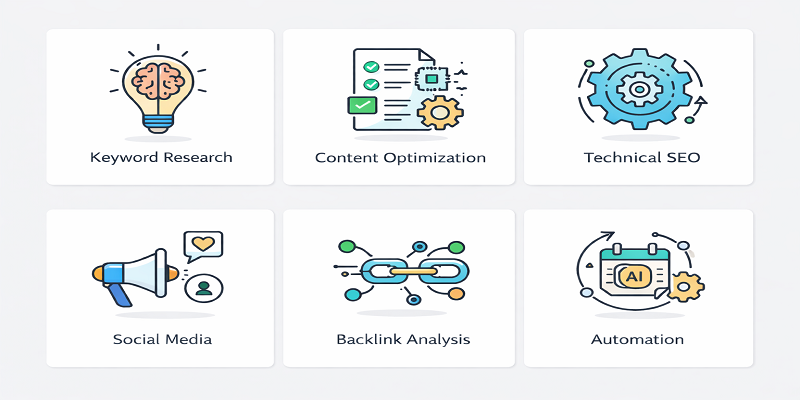
Start by matching tool type to task. You don’t need five platforms to begin, you need one that removes your biggest bottleneck. Also, keep your process grounded in solid research. This keyword research guide for SEO pairs well with AI assistance.
AI keyword research tools for intent, difficulty, and keyword gaps
Good ones group terms by intent and suggest gaps competitors cover. A seed like “running shoes” can turn into clusters such as “best for flat feet,” “trail vs road,” and “how to choose size.” That cluster map saves hours.
AI content optimization tools for on-page SEO fixes that match top pages
AI content optimization tools compare your draft to high-ranking pages, then suggest missing subtopics, headings, FAQs, and readability fixes. Use these as guardrails, not as a script. Your goal is “complete and clear,” not “same as everyone.”
AI technical SEO tools for audits, crawl issues, and schema checks
These tools spot crawl depth problems, redirect chains, index issues, and schema markup gaps. You still need to confirm priority with revenue pages first, but the detection work gets faster.
AI backlink analysis tools for cleaner backlink profiles and smarter outreach
AI can identify link gaps, likely outreach targets, and risky patterns. Keep one rule: don’t buy links just because a tool found a list. That shortcut still backfires.
AI SEO automation and workflow tools for reporting and tracking AI visibility
Automation helps with generating content briefs, internal linking suggestions, rank tracking, content refresh alerts, and reporting. Some platforms also track presence in AI answers where available, which matters for 2026 visibility.
Best AI Tools For SEO In 2026, Quick Reviews You Can Act On
If you want more options beyond SEO (ads, content, analytics), use this guide to AI tools to save marketing time.
1. Content And On Page Winners: Surfer SEO, Semrush Writing Assistant, Frase
Surfer SEO

- Overview: Surfer is an on-page SEO platform that helps you plan and improve pages using live SERP patterns. It is strongest when you want a repeatable workflow for writing and updating content.
- Key AI Features: SERP-based content scoring, NLP-style term and topic suggestions, outline guidance, and Surfer AI drafting (use it for a first pass, then edit).
- Best For: Content teams that publish or refresh pages every week and want a clear checklist to hit.
- Pros: Fast content briefs, strong on-page guardrails, helpful for content refreshes.
- Cons: Easy to chase the score and over-optimize, suggestions can feel “same-y” across sites.
- Pricing (starting): $99/mo.
- Who should buy it: SMBs and agencies that want faster on-page execution and simple training for writers.
Semrush SEO Writing Assistant (and Copilot)

- Overview: Semrush is an all-in-one SEO suite. The Writing Assistant helps while you draft, and Copilot highlights priorities across your projects (pages to fix, gaps, and quick wins).
- Key AI Features: Readability and tone checks, SEO recommendations inside the editor, template-based content guidance, and Copilot alerts that reduce “what should I do next?” time.
- Best For: Marketers who want one platform for keyword research, audits, reporting, and content QA.
- Pros: Broad toolkit, strong reporting, good for agencies and multi-page sites.
- Cons: Can feel heavy and pricey if you only need content optimization, learning curve for beginners.
- Pricing (starting): $139.95/mo (plans vary).
- Who should buy it: Teams that want an SEO command center, not just a writing tool.
Frase
- Overview: Frase is built around SERP research and content briefs. It is popular for turning a keyword into a clean outline fast, especially for informational posts.
- Key AI Features: Brief generation, topic/heading suggestions from top pages, content scoring, and AI-assisted drafts and rewrites.
- Best For: Writers and small teams that need faster research, outlines, and FAQ sections.
- Pros: Quick briefs, helpful for getting structure right, good for FAQ coverage.
- Cons: Thinner 2026 coverage in some sources, pricing and feature sets can vary by plan, still needs strong editing to avoid generic phrasing.
- Pricing (starting): Varies by plan.
- Who should buy it: Bloggers and lean marketing teams that need “briefs first” more than deep technical SEO.
2. Research, Links, And Visibility Tracking: Ahrefs, SE Ranking, Conductor
Ahrefs (AI features + Brand Radar)

- Overview: Ahrefs is known for backlink data, competitor research, and finding ranking opportunities. Its AI-related features help speed up insights and monitoring, rather than replacing strategy.
- Key AI Features: Faster keyword insight workflows, competitor gap discovery, link gap support, and Brand Radar style monitoring for brand mentions and visibility signals (including AI-related visibility tracking where available).
- Best For: Competitive SEO, link building strategy, and content planning based on what already performs in your space.
- Pros: Excellent link intelligence, strong competitor research, trusted dataset.
- Cons: Less “content editor” style AI compared to Surfer, and pricing can change by plan.
- Pricing (starting): Varies (not confirmed in your draft sources).
- Who should buy it: SEO pros and agencies that rely on backlink and competitor analysis every day.
SE Ranking

- Overview: SE Ranking is a cost-friendly SEO suite that covers rank tracking, audits, competitor research, and reporting. It is popular with SMBs and agencies that want value without losing core features.
- Key AI Features: AI support for content workflows (depending on plan), audit insights, reporting automation, and add-on style AI visibility tracking options (useful as AI answers grow).
- Best For: Budget-focused teams that still need an “all-rounder” platform.
- Pros: Great value, solid reporting, agency-friendly features like white-label reports.
- Cons: Some advanced features can sit behind add-ons, and you may outgrow it on very large sites.
- Pricing (starting): $65/mo.
- Who should buy it: SMBs, freelancers, and agencies looking for affordable AI SEO tools that still cover the basics well.
Conductor

- Overview: Conductor is an enterprise SEO platform focused on big websites, large teams, and cross-department workflows. It is built for governance, reporting, and scale.
- Key AI Features: Enterprise-level insight workflows, content and performance opportunities surfaced across large page sets, and integrations that help teams act on recommendations.
- Best For: Large organizations with many pages and multiple stakeholders (SEO, content, product, legal).
- Pros: Strong for scale, collaboration, and enterprise reporting.
- Cons: Custom pricing, usually too expensive and complex for most SMBs.
- Pricing (starting): Custom.
- Who should buy it: Enterprise SEO teams that need process control, not just tool features.
3. General AI Assistants For SEO Tasks: Chatgpt, Jasper, Claude, Perplexity
ChatGPT

- Overview: ChatGPT is a general AI assistant that helps with planning and writing. It works best as a “thinking partner” for SEO tasks, not as an SEO tool that replaces audits or rank tracking.
- Key AI Features: Keyword-to-outline help, content brief drafts, FAQ generation, content refresh suggestions, meta title and description drafts, and simple internal linking ideas.
- Best For: Drafting, rewriting, outlining, and speeding up repetitive content tasks.
- Pros: Flexible, fast, easy to use for many SEO workflows.
- Cons: Can hallucinate facts, needs human review, and needs your real experience to stand out.
- Pricing (starting): $20/mo (Plus).
- Who should buy it: Anyone who wants to move faster on writing and planning, especially SMBs and agencies.
Jasper.ai

- Overview: Jasper focuses on marketing copy and brand voice. It is often used for consistent tone across blogs, landing pages, email, and ads.
- Key AI Features: Brand voice and style control, reusable templates, team workflows, and draft generation for many formats.
- Best For: Brands that publish a lot and want consistency across writers and channels.
- Pros: Good for tone consistency and production, helpful for teams.
- Cons: Still needs strong inputs, can become generic if you do not feed it examples, proof points, and clear positioning.
- Pricing (starting): From $59/seat.
- Who should buy it: Marketing teams that care about brand consistency and want to scale content production.
Claude.ai

- Overview: Claude is a general AI assistant known for clean writing and longer-context editing. Many teams use it for rewriting, summarizing, and tightening drafts.
- Key AI Features: Long-form drafting, editing for clarity, summarizing research notes, turning messy notes into structured outlines, and improving readability.
- Best For: Editing and rewriting content to sound natural and helpful.
- Pros: Strong writing quality, good at structure and tone, helpful for long documents.
- Cons: Must fact-check and add real experience, pricing depends on plan and usage.
- Pricing: Varies by plan.
- Who should buy it: Writers and marketers who want a strong editor assistant for SEO pages and blog posts.
Perplexity.ai

- Overview: Perplexity is a research-first assistant. It is useful when you want quick background, sources, and summaries, then you write the final version yourself.
- Key AI Features: Fast research with citations, topic exploration, and quick summaries that help you build briefs and FAQs.
- Best For: Research and validation before you write or update content.
- Pros: Helpful citations, quick scanning of topics, good for early-stage research.
- Cons: Sources still need checking, and you should not paste research summaries as final content.
- Pricing (starting): Around $20/mo (Pro).
- Who should buy it: SEOs and writers who want faster research and better sourcing for higher-trust content.
Best Free AI SEO Tools
Free AI SEO tools can help you save time without increasing your budget. They are useful for keyword ideas, content planning, SEO writing, and simple audits. While free tools may have limits, they are still a good starting point for beginners, freelancers, and small businesses.
Why use free AI SEO tools?
- They help you get started with SEO at low cost
- They are useful for testing ideas before you pay for premium tools
- They can speed up simple SEO tasks like outlining and rewriting
- They work well for small blogs and new websites
What free AI SEO tools are good for
- Keyword suggestions
- Content outlines
- Meta title and description ideas
- Basic SEO audits
- Simple content rewrites
Things to keep in mind
Free tools are helpful, but they often have limited features, fewer searches, or weaker data accuracy. For better results, use them as support tools, not as your only SEO solution.
Sure. Here is a simple list of free AI SEO tools with short descriptions you can use in the article.
Free AI Tools For SEO
1. ChatGPT
A useful tool for keyword ideas, blog outlines, meta descriptions, FAQ ideas, and content rewrites. It works well as a writing assistant for SEO tasks.
2. Google Keyword Planner
A free Google tool that helps you discover keyword ideas and search demand. It is useful for basic keyword research and PPC planning.
3. Google Search Console
A free SEO tool from Google that shows how your site performs in search. You can use it to find clicks, impressions, queries, and indexing issues.
4. Google Trends
A free tool that helps you compare search interest over time. It is useful for spotting trending topics and seasonal keywords.
5. Grammarly
A writing tool that helps fix grammar, spelling, and readability issues. It is helpful when you want clean, polished SEO content.
6. Surfer SEO Free Tools
Surfer offers some free SEO tools that can help with content optimization and keyword insights. It is useful for quick checks and content planning.
7. Ubersuggest Free Version
Ubersuggest gives limited free access to keyword ideas, SEO analysis, and content suggestions. It is a good starter tool for beginners.
8. AnswerThePublic Free Search
This tool helps you find question-based keyword ideas and search intent topics. It is useful for FAQ sections and blog outlines.
Compare AI SEO Software Fast, A Simple Table And A Buying Checklist
Use this table to compare AI SEO software quickly, including SERP analysis capabilities:
| Tool | Best For | Key AI Features | Starting Price | Ideal User |
| Surfer SEO | On-page content optimization | SERP-based content scoring, outline help, NLP term suggestions, AI drafting for first-pass content | $99/mo | Content teams, SMBs, agencies publishing weekly |
| Frase | Briefs and SERP research | AI briefs, topic/heading extraction from top results, content scoring, FAQ generation | Varies | Bloggers, writers, lean marketing teams |
| Semrush SEO Writing Assistant (and Copilot) | All-in-one SEO + writing QA | Writing Assistant recommendations, readability/tone checks, Copilot task alerts and priority ideas, content templates | $139.95/mo | Marketers and agencies wanting one suite |
| Ahrefs (AI features + Brand Radar) | Backlinks + competitor research | Keyword and competitor insights, link gap help, brand/mention monitoring (Brand Radar style), visibility signals where available | Varies | SEO pros focused on links and competitive audits |
| SE Ranking | Affordable SEO suite | Audit insights, content support (plan-based), reporting automation, AI visibility tracking options/add-ons | $65/mo | SMBs, freelancers, small agencies on a budget |
| Writesonic | AI writing and repurposing | Draft generation, rewrites, expansions, meta/title drafts, tone controls and templates | Varies | SMB marketers needing faster content output |
| Conductor | Enterprise SEO workflows | Large-site insights, automation across page sets, team collaboration and reporting (plan-based) | Custom | Enterprise teams with many stakeholders |
| ChatGPT | Drafting + SEO task support | Outlines, briefs, FAQs, rewrites, content refresh ideas, internal link suggestions (needs human review) | $20/mo | Anyone needing speed for writing and planning |
| Jasper.ai | Brand voice marketing copy | Brand voice controls, templates, team workflows, scalable draft production | From $59/seat | Teams that need consistent voice at scale |
| Claude.ai | Long-form drafting + editing | Long-context editing, clarity rewrites, summarization, structured outlines, readability improvements | Varies | Writers and marketers editing long SEO pages |
| Perplexity.ai | Research with citations | Source-cited research summaries, topic exploration, quick brief building (not final copy) | Around $20/mo | SEOs and writers who want faster research and sourcing |
To buy AI SEO tools without regret, use a simple checklist. Set your monthly cap, pick the single workflow you’ll improve first, and confirm the tool fits your team size. Then test on 5 to 10 pages and measure lift.
Sure. Here is a clean comparison table you can use under the Best Free AI SEO Tools section.
Free AI SEO Tools Comparison Table
| Tool | Best For | Key Features | Free Plan |
|---|---|---|---|
| ChatGPT | Content creation | Keyword ideas, outlines, rewrites, FAQs | Yes |
| Google Keyword Planner | Keyword research | Search volume ideas, keyword discovery | Yes |
| Google Search Console | SEO performance tracking | Queries, clicks, impressions, indexing | Yes |
| Google Trends | Trend research | Topic trends, seasonal interest, comparisons | Yes |
| Grammarly | Writing improvement | Grammar checks, readability, polishing content | Yes |
| Surfer SEO Free Tools | Content optimization | Basic SEO checks, content suggestions | Limited |
| Ubersuggest Free Version | Keyword and SEO research | Keyword ideas, SEO overview, content ideas | Limited |
| AnswerThePublic | Question keywords | Search questions, content ideas, FAQ topics | Limited |
These free AI SEO tools are useful for beginners and small websites. They help with keyword research, content planning, writing, and basic optimization. However, most free versions have limits, so you may need a paid tool later if your SEO work grows.
If you want hands-on setup help, use a top SEO company in Surat to plug tools into a real process. Also, check real SEO results in case studies so you can set expectations.
Common mistakes that make AI SEO tools a waste of money
- Over-automation and publishing without edits
- Ignoring intent, then optimizing the wrong page
- Publishing generic drafts that could fit any site
- Skipping technical basics (indexing, speed, internal links)
- Not updating old content that already has traction
- Choosing tools without a plan, then never using them
- Ignoring core web vitals that affect user experience and rankings
- Neglecting meta descriptions that fail to entice clicks
Who gets the best results, industries and team types that win first
- E-commerce: Product FAQs, category copy, and refresh alerts
- SaaS: Comparison pages, alternatives pages, and feature explainers. Edit AI-generated content to ensure it aligns with your brand voice and drives organic traffic.
- Healthcare: Trust-first content (clear claims, careful wording)
- Local services: Pricing, timelines, and service area pages that get cited
- Agencies: Reporting, briefs, and faster on-page fixes across clients
FAQ, Quick Answers Before You Commit To A Tool
Are AI tools for SEO worth it?
Yes, if you use them to save time, improve quality, and help your site adapt to semantic search. You still need editing, proof, and a clear plan.
What does AI SEO software cost?
You can start near $20 per month for a general assistant. Full suites often run $65 to $140+ per month, and enterprise tools cost more.
Which AI SEO tools are best for small businesses?
Start with one affordable platform (often SE Ranking or Semrush) and one writing assistant if needed. Add specialized tools only after you see wins.
How long until you see results?
On-page updates can move pages in weeks. Strong gains usually take 2 to 4 months, depending on competition and site health. Search intent also dictates the timeline by determining how well your content aligns with user needs.
Can Techeasify help you run SEO plus social content?
Yes. Techeasify can help you pick the right tools, set up a practical workflow, and connect them to content planning, on-page optimization, reporting, and ongoing improvements. If you also want your best pages to get steady distribution, pair SEO with social scheduling using these AI social media manager tools.
Conclusion
AI tools for SEO work best when you treat them like a power tool, not an autopilot. A smart strategy lets you move faster on research, improve on-page quality, refresh content before it drops, track visibility in AI answers, and achieve better search engine rankings. At the same time, you protect your brand by editing, adding real examples, and keeping technical basics clean.
If you want a clear plan, bring your current tool stack and goals. You can also explore our guide on web 2.0 submission sites to support your off-page SEO efforts. Schedule a free consultation and get your free SEO audit that includes competitor analysis and a review of your existing content briefs. Contact us today, and you’ll leave with a practical setup you can run every week.