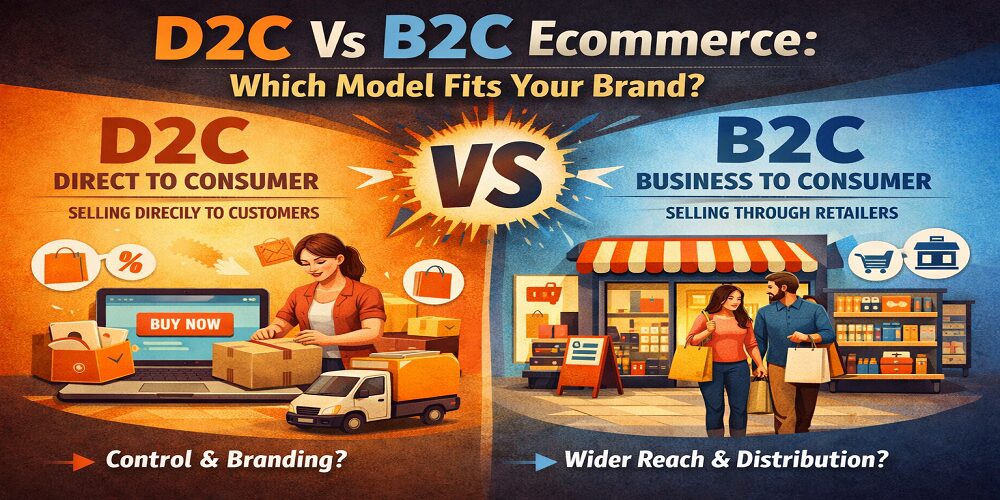
US D2C eCommerce sales hit about $239.75 billion in 2025, which shows why the D2C vs B2C choice matters more than ever. For many brands, this is not just a channel decision. It affects margins, customer data, brand control, and how fast you can grow.
Pick the wrong model, and you may end up spending more to acquire customers than you should, or giving away too much control to third parties. Pick the right one, and you can build a stronger business with a better fit for your goals.
In this guide, you will learn what D2C and B2C mean, how they compare, where each model works best, and what real brands are doing in 2026. By the end, you will have a clear path for choosing the model that fits your brand.
Key Takeaways
- D2C means selling directly to your customers, without retailers or other middlemen.
- B2C means selling through retailers, distributors, or third-party platforms.
- D2C gives you more control over customer data, pricing, margins, and the overall brand experience.
- B2C can help you reach more buyers faster, with less pressure on your team and operations.
- The best model depends on your goals, budget, product type, and how much of the customer relationship you want to own.
- In 2026, many brands, use a hybrid or omnichannel commerce model instead of choosing just one path.
What D2C And B2C Really Mean, And Why The Difference Matters
The short version is simple. D2C means brand to the customer. B2C often means brand to retailer, distributor, or marketplace, then customer. That flow changes your costs, your data, and how much control you keep.
Global retail eCommerce is expected to land around $6.42 trillion to $6.86 trillion in 2025, depending on the source, according to Shopify and other market trackers. So, this isn’t a small-channel debate. It shapes how you compete in a huge market.
What Is D2C?
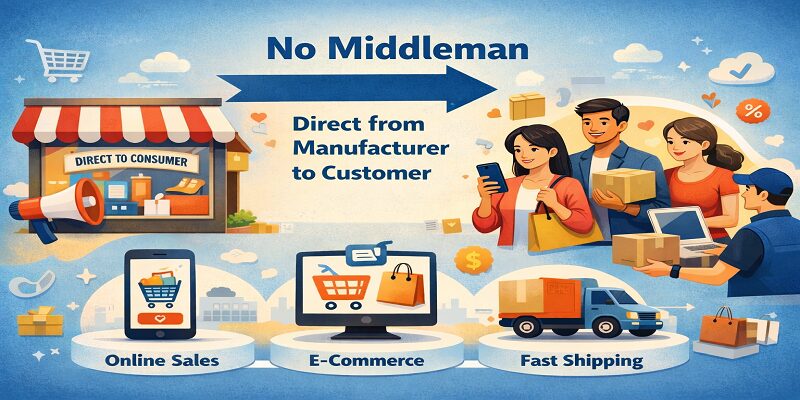
D2C, or Direct-to-Consumer, means a brand sells straight to the customer without going through a retailer or other middleman. In simple terms, the brand controls the full buying journey from start to finish.
Here’s how D2C eCommerce works: brand, website or app, customer. That direct path gives the brand more control over pricing, messaging, data, and the overall experience.
Warby Parker, Dollar Shave Club, and Gymshark helped make this model popular. Each brand used direct selling to build a closer relationship with buyers and grow a strong identity around its products.
More brands are moving to D2C in 2026 because they want better margins, first-party data, and more control over how customers see and buy from them. That said, it also means taking on more work in marketing, fulfillment, and support.
What Is B2C?
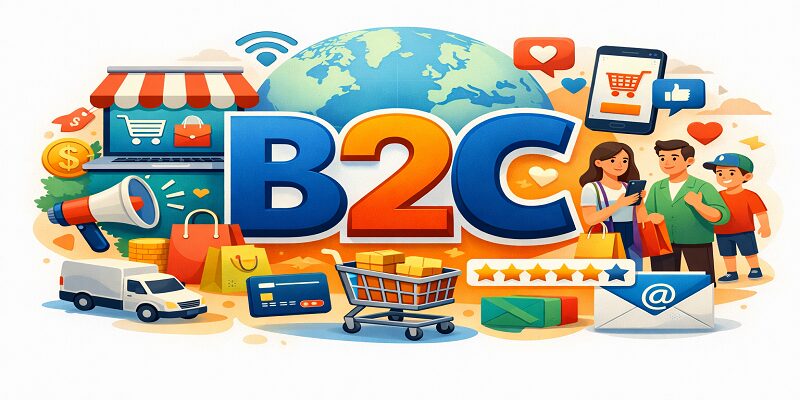
B2C, or Business-to-Consumer, means a business sells products or services directly to everyday shoppers, often through retailers, distributors, or online marketplaces. In simple terms, the brand sells to the consumer, but not always through its own site.
The usual path looks like this: brand, retailer or distributor, customer. That is why B2C e-commerce includes Amazon sellers, brands on Walmart.com, and large consumer goods companies that rely on established retail channels.
B2C is not dead. It is still the dominant model globally by volume, especially for mass-market products. Global retail eCommerce is expected to reach roughly $6.4 trillion to $6.9 trillion in 2025, which shows how big this channel still is for consumer brands.
D2C Vs B2C At A Glance, The Biggest Differences That Affect Growth
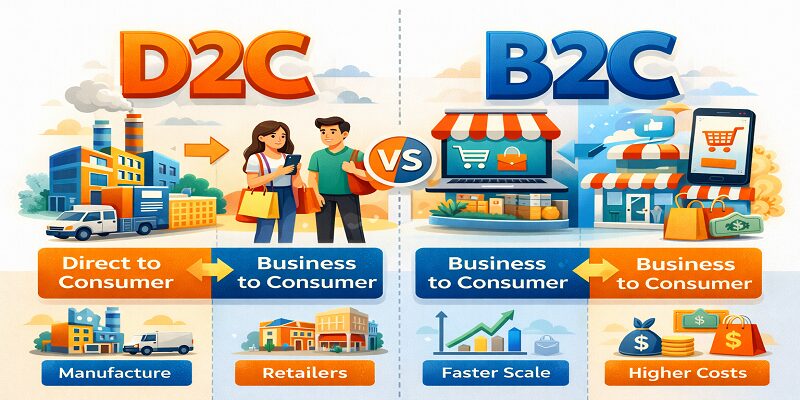
Here’s the simplest side-by-side view of b2c vs d2c.
| Factor | D2C | B2C |
| Sales channel | Brand-owned site, app, or store | Retailers, marketplaces, distributors |
| Customer relationship | Direct, with brand-owned data | Indirect, with data often owned by the channel |
| Profit margins | Usually higher | Usually lower because of middlemen |
| Brand control | Full control over messaging and experience | Less control over how products are shown or sold |
| Market reach | Slower to build at first | Faster through existing networks |
| Customer acquisition cost | Often higher upfront | Can be lower early on |
| Personalization | Strong, thanks to first-party data | More limited |
| Best fit | Niche, premium, or repeat-buy brands | Mass-market brands and volume-driven products |
The core difference between d2c and b2c is simple. D2C gives you more control over the customer relationship, while B2C gives you faster reach through existing sales channels. So, the right choice depends on whether your brand needs ownership and margins, or speed and scale.
The Pros And Cons Of Each Model Before You Commit
A premium skincare brand is a good example here. It may win with D2C because story, trust, and repeat orders matter.
Why D2C can be powerful, and where it gets hard
Advantages of D2C:
D2C can improve margins because you are not paying a retailer to sell for you. That extra control also lets you own customer data, build direct relationships, and shape the full brand story.
Another big advantage is speed of learning. When customers buy directly from you, you get faster feedback on products, pricing, and messaging. That makes D2C marketing easier to refine over time, especially when you use first-party data to personalize campaigns.
Disadvantages of D2C:
The tradeoff is that D2C usually costs more to start. You have to drive your own traffic, which often means higher upfront customer acquisition costs and a stronger need for paid ads, email, content, and SEO.
You also handle more of the workload. Logistics, returns, and customer support all sit with your team, and growth can be slower at the beginning than selling through established retail channels. That is why a strong D2C marketing strategy matters so much if you want the model to work well.
Why B2C can scale faster, and what you give up
Advantages of B2C
B2C can help you reach buyers faster because you plug into existing marketplaces, retailers, and distributor networks. That means less work building demand from zero, and often less pressure on your team in the early stages.
It can also build trust quickly. Shoppers already know platforms like Amazon or Walmart, so a product listed there may feel safer to buy. For brands that want to scale volume fast, B2C e-commerce can be a strong starting point.
Disadvantages of B2C
The tradeoff is lower margins. Retailers, distributors, and marketplace fees take a cut, which leaves you with less profit per sale.
You also give up control. Customer data is usually limited, product presentation depends on the channel, and your brand sits next to many similar products. That makes it harder to stand out, especially when price competition is high.
Real Brand Examples Show Why Many Businesses No Longer Choose Just ONE Path
At Techeasify, we’ve helped brands across both models scale profitably. That’s why d2c vs b2c rarely looks like a pure either-or choice in real life.
Brands that grew through D2C first
Warby Parker is a classic d2c ecommerce example. The brand built its name by selling eyewear directly through its website and stores, which gave it more control over pricing, service, and the customer experience.
Dollar Shave Club used a subscription model to sell directly to buyers and shake up a crowded category. Nike is another strong example, since it pushed hard into direct sales and made D2C a much bigger part of its business. That direct channel has become a major revenue driver for the brand.
The lesson is simple. If your brand wins on voice, retention, or feedback loops, D2C can work hard for you.
Brands that prove hybrid and B2C still win at scale
B2C business examples are everywhere. Procter & Gamble sells through Walmart, Amazon, and supermarkets around the world. Coca-Cola does the same through a massive retail and distributor network.
Apple is a good hybrid example. It sells directly through Apple.com and its own stores, but it also reaches shoppers through B2C retailers like Best Buy. Nike shows the same pattern — and its latest fiscal year results reflect just how much that dual-channel approach shapes its overall performance. In 2026, hybrid models are becoming the norm, not the exception.
D2C Marketing Strategy, How D2C Brands Win Customers
A strong D2C marketing strategy usually starts with owned channels. Email, SMS, social media, and SEO help you stay in direct contact with your audience without relying only on retail traffic.
Paid media also plays a big role. Meta Ads and Google Ads can help D2C brands find new buyers faster, while Google Shopping and Shopify support product discovery and conversion. For many brands, that first wave of traffic is what gets the flywheel moving.
Influencer marketing and community-building matter too. People often trust a creator recommendation more than a polished ad, especially in beauty, fashion, wellness, and lifestyle categories. Once you have first-party data, you can make campaigns more personal and improve retention over time.
That is why mature D2C brands care so much about LTV. In this model, keeping a customer is often more valuable than chasing a new one. Tools like Klaviyo, Shopify, Meta Ads, and Google Shopping often sit at the center of that growth stack.
Omnichannel Commerce, The Best Of Both Worlds?
Omnichannel commerce means selling across multiple channels in a way that feels connected for the customer. The goal is simple, no matter where someone shops, your brand should feel consistent.
In 2026, many leading brands blend D2C and B2C into one strategy instead of choosing just one. A brand might sell through its own website, list products on Amazon, and also run its own retail store. That setup gives it wider reach, stronger data ownership, and more control over the brand experience.
The tradeoff is that omnichannel is not a quick fix. It takes solid systems, inventory planning, and a clear strategy across every sales channel. Without that operational maturity, the model can create more confusion than growth.
Which Model Is Right For Your Brand? Use This Simple Decision Framework
The best choice depends on your stage, your budget, and how your customers buy. If you want more control, stronger data, and a direct relationship with buyers, D2C may be the better fit. If you need reach, faster distribution, and less operational complexity, B2C can make more sense.
Choose D2C if you want control, data, and a stronger brand experience
D2C fits niche, premium, custom, or subscription products. It also fits when lifetime value matters and you want to grow your online brand with owned channels. If platform choice is part of your eCommerce strategy, start with the right D2C eCommerce platform before you spend on traffic.
Choose B2C or hybrid if you need reach faster
B2C fits when you need speed, lower operational strain, or wider distribution. So, if your team is small or your product needs instant scale, this route may be smarter. A hybrid setup often works best because you keep some direct control without giving up reach.
Consider Hybrid or Omnichannel if:
A hybrid or omnichannel model works well if you already have a B2C base and want to add a direct revenue stream. It also helps when your customers shop across more than one platform. There is no universal winner, only the right fit for your resources, goals, and the way your audience actually shops.
FAQ, Common D2C Vs B2C Questions Brands Ask Techeasify
What is the main difference between D2C and B2C?
D2C means a brand sells directly to customers, without retailers in the middle. B2C usually involves third-party channels like Amazon or Walmart. The biggest difference is control, D2C gives the brand more ownership of the customer relationship.
Is D2C better than B2C for small businesses?
Not always. D2C can improve margins and give you better data, but it also takes more work in marketing, fulfillment, and support. B2C can be easier early on if you want faster reach and less operational pressure.
Can your brand use both D2C and B2C at the same time?
Yes. Many brands use both channels at once as part of an omnichannel commerce strategy. This helps them reach more buyers while reducing risk from relying on just one sales path.
What platforms are best for D2C eCommerce in 2026?
Shopify, WooCommerce, and BigCommerce are still popular D2C eCommerce platforms. With D2C sales on the rise, the best choice of platform depends on your catalog, budget, team size, and growth goals.
How can Techeasify help you choose between D2C and B2C?
Techeasify reviews your current setup, market, competitors, and customer journey to help you choose the right model. That may mean D2C, B2C, or a hybrid approach built around your goals.
Conclusion
The D2C vs B2C choice comes down to what your brand needs most right now. D2C gives you more control, better margins, and direct customer data. B2C gives you faster reach, simpler operations, and access to existing demand. In 2026, the smartest brands are not forcing a single answer. They are blending both models in a way that fits their goals, budget, and customers.
The D2C vs B2C debate does not have one right answer, it has the right answer for your brand.
If you are ready to build or scale your eCommerce brand, Techeasify can help. Whether you are starting a D2C store, improving your B2C strategy, or building a full omnichannel setup, our eCommerce specialists can help you choose the right path. Schedule a Free Consultation Today or explore our eCommerce services to see how we can support your growth.