Most small brands in India don’t fail because the product is weak. They fail because they never build a real digital marketing and branding strategy. They post on Instagram when someone remembers to. They boost a post here and there. They copy whatever a bigger competitor is doing, without knowing if that tactic even fits their budget or their audience.
This gap is common, and it is not a sign of a bad business. Small business owners already wear ten hats. Marketing becomes the eleventh hat, squeezed between production, sales calls, and vendor payments. There is rarely time to sit down and build a proper plan.
This guide breaks down why small brand marketing is so hard to plan in India. Then it gives you a clear, practical path to fix it: how to set goals, define your brand, pick the right channels, set a realistic budget, and track what actually works.
Key Takeaways
- Small brands in India struggle to plan digital marketing because of tight budgets, limited owner time, regional diversity, and a lack of any written strategy.
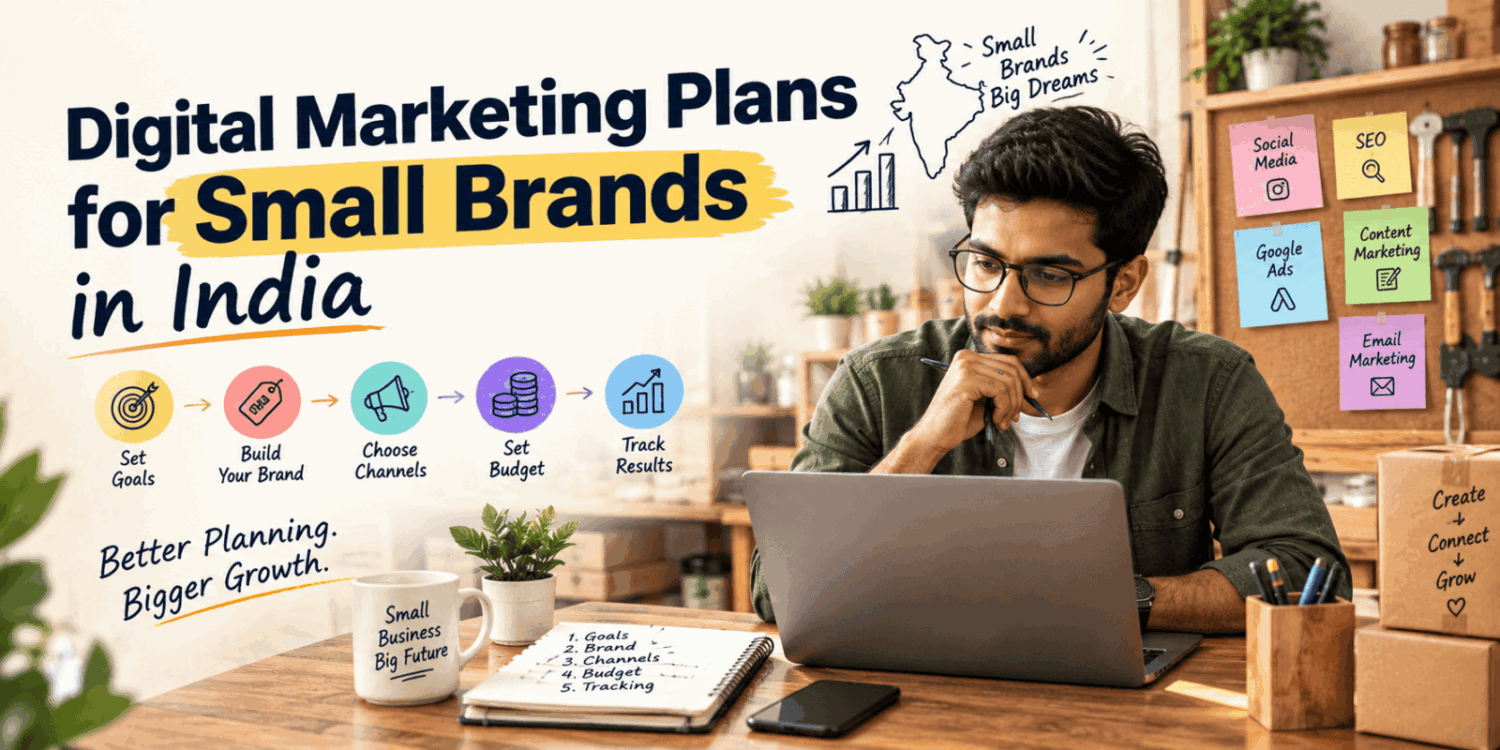
- A working digital marketing and branding strategy follows five steps: set measurable goals, build your brand identity first, choose channels based on your audience, set a realistic budget, and track results monthly.
- Budget 5 to 10 percent of monthly revenue for digital marketing, split across ads, content, social, tools, and creative.
- Brand strategy should come before ad spend. A consistent identity makes every other marketing rupee work harder.
- Start with a free Google Business Profile and one platform your customers actually use, then add paid ads once your message is proven.
- Review performance every 60 to 90 days and shift budget toward whatever channel brings real leads, not just likes.

Why Small Brand Marketing in India Is So Hard to Get Right
Small Indian brands face real, structural barriers, not just a lack of effort.
Budget does not stretch across every channel. A brand spending Rs 20,000 to Rs 30,000 a month cannot run paid ads, build a strong website, shoot fresh content, and hire a designer at the same time. Something gets cut, and small business branding is usually the first casualty, since it feels less urgent than a lead coming in tomorrow.
Owners run marketing themselves. Studies suggest that close to half of small business owners handle all their own marketing, and many spend under 10 hours a week on it. That is not enough time to build a proper marketing and branding plan, let alone run it well.
India’s diversity makes messaging harder. A brand selling in Chennai needs different language and cultural cues than one selling in Delhi or Surat. This raises content and production costs for teams that already have thin budgets.
Competition is intense and it is not local anymore. Small brands now compete with large domestic players and international sellers on the same Google results page and the same Instagram feed. That’s the reality of India marketing today: budgets are tight, but the online audience keeps growing.
Most small businesses still operate without a documented plan. Industry data points to a large share of India’s small and medium enterprises running digital activity without any written strategy behind it. They react to trends instead of planning ahead, so budget gets spent on tactics that do not match the brand or the customer.
What Happens When You Skip the Strategy
When a small brand skips this step, the damage shows up slowly. Ads run without a clear audience, so cost per lead climbs. Social posts look different from the website, so new visitors get confused about who the brand actually is. Budget gets spent on whatever channel a competitor used last month, not on what fits the brand’s own customers.
Without a plan, you cannot tell what is working. You only know that you spent money.
A Practical Framework to Build Your Digital Marketing and Branding Strategy
Here is a five-step framework that works for small brands with limited time and a limited budget.
Step 1: Set Goals You Can Actually Measure
Start with one clear business goal, not five vague ones. Do you need more leads, more repeat orders, or more brand awareness in a new city? Write the goal as a number, with a deadline. “Get 50 qualified leads a month by March” beats “grow our online presence.”
Your goal decides everything else in your digital marketing plan, from the channels you pick to how you spend your budget.
Step 2: Build Your Brand Strategy Before You Spend on Ads
Small business branding often gets skipped because it feels less urgent than an ad campaign that promises instant leads. But a brand strategy is not a logo. It is a decision about how you want people to see your brand, and it should come before any ad spend.
Use a simple positioning line: “For [your target customer], [your brand] is the [category] that [key benefit], because [reason to believe].” Write three or four versions and test them on real customers, not just your team.
Once positioning is set, lock down your brand identity: logo, tagline, color palette, tone of voice, and the overall customer experience. Keep it identical across your website, Instagram, WhatsApp, and Google Business Profile. If your marketing and your website send different signals, potential customers notice, even if they cannot explain why. This is why a digital marketing and web development plan should be built together, not as two separate projects.
After three to six months, ask a few customers to describe your brand in three words. If those words match what you intended, your brand strategy is working.
Step 3: Choose Channels Based on Your Audience, Not Trends

You do not need to be on every platform. You need to be where your specific customer already spends time.
Start with a free Google Business Profile. Businesses with a complete, active profile get far more clicks than those with an empty one, and it is the first thing many customers check before they call or visit.
Add local SEO if customers search for you by city or neighborhood, WhatsApp Business for direct follow-up (open rates on WhatsApp are far higher than email), and Instagram Reels if your product is visual. Layer in Google Ads or Meta Ads once you know your message works organically. If you are unsure which paid channel fits your budget, this breakdown on choosing a digital marketing agency in India walks through how to match channels to business goals.
Research from Salesforce’s small business marketing guide points to the same core SMB challenges everywhere: limited budgets, unclear channel choice, and difficulty measuring ROI. The fix is the same too: pick fewer channels, and do them well.
Step 4: Set a Realistic Budget for Your Digital Marketing Plan

A common rule of thumb is 5 to 10 percent of monthly revenue for digital marketing. If your revenue is Rs 2,00,000 a month, that puts your budget around Rs 15,000 to Rs 20,000 a month, which is workable if you are selective about channels.
A simple split that works for most small brands looks like this: 35 to 40 percent on paid ads, 20 to 25 percent on content and SEO, 10 to 15 percent on social media management, around 10 percent on tools like analytics or CRM, and the rest on creative and brand assets.
For context, GoDaddy’s guide to small business marketing in India notes that limited budget is the top barrier small Indian businesses report, ahead of even competition and cultural complexity. Planning your split in advance, instead of spending reactively, is what keeps a small budget from disappearing into one loud, underperforming campaign.
Step 5: Track What Matters, and Adjust Every Month
Set up Google Analytics and Search Console before you spend a rupee on ads. Track leads, cost per lead, and repeat customers, not just likes or page views.
Review your numbers every month. Cut what is not working after 60 to 90 days. Put more budget behind whatever channel brings in real leads or sales, not the channel that feels the most exciting.
Common Mistakes Small Indian Brands Make
- Spending on ads before the brand strategy or website is ready
- Trying to run five platforms instead of doing two platforms well
- Copying a competitor’s tactics without checking if the audience matches
- Ignoring regional language and local context in content
- Treating the website as an afterthought instead of part of the marketing plan
- Skipping tracking, so no one knows what actually worked
When to Bring in Expert Help
DIY marketing works fine in the early months, when you are testing your message and learning your audience. It gets harder to manage once you are running paid ads across multiple channels, or once leads start coming in faster than you can follow up.
At that point, working with a team that understands India marketing, from language and local search to platform-specific ad rules, saves time and budget. TechEasify works with small and growing Indian brands on exactly this: aligningbranding, website, and paid channels into one digital marketing and branding strategy instead of a pile of disconnected tactics. If you want to see how SEO fits into that plan, this list of top SEO companies in India explains what good SEO work actually looks like.
Ready to Build a Strategy That Actually Works?
A digital marketing and branding strategy does not need a huge budget. It needs a clear goal, a defined brand, the right channels for your audience, and honest tracking. That combination beats a bigger budget spent without a plan.
If you want help putting this together for your brand, contact TechEasify today for a free consultation. We will look at your current marketing, your website, and your budget, and show you where the real gaps are.
FAQs
Why is it difficult to create a digital marketing and branding plan for small brands in India?
Small brands in India usually run on tight budgets that cannot cover ads, content, design, and tools at once. Owners often manage marketing themselves with little time to spare, India’s regional diversity raises content costs, and most small businesses never write down a plan in the first place. All four factors combine to make planning, not just execution, the hardest part.
How much should a small business in India spend on digital marketing?
A common range is 5 to 10 percent of monthly revenue. Many small brands start with Rs 15,000 to Rs 35,000 a month and expand the budget once specific channels start showing results.
What is the difference between a digital marketing plan and a brand strategy?
A brand strategy defines who you are: your positioning, identity, and voice. A digital marketing plan defines how you reach people: which channels, what budget, and what goals. You need both, and the brand strategy should come first.
Which digital channel should small Indian brands start with?
Start with a free, fully completed Google Business Profile and one social platform where your customers already spend time. Add paid ads only after your organic message is working.
How long does it take to see results from a good digital marketing plan?
Local SEO and organic content usually show early signs in two to four months. Paid ads can bring traffic immediately, but meaningful, low-cost leads usually take 60 to 90 days of testing and adjustment.