Facebook Lead Ads can fill your pipeline fast. That’s why so many businesses love them. But if those leads don’t turn into booked calls, purchases, or signed deals, the low CPL doesn’t mean much.
When setting up your lead generation strategy, deciding between facebook lead ads and website conversion ads is the most critical step. When you run Meta ads, you usually choose your campaign objective: collect the lead inside Facebook or send the click to your website. One feels easier. One often filters better. And the easier option is not always the more profitable one. If you care about ROI, you need to look past lead volume and ask a harder question, which path brings you better buyers?
Key Takeaways
- Facebook Lead Ads deliver fast volume and low CPL with seamless in-app forms, but often attract casual interest—ideal for real estate, insurance, or quick callbacks where speed trumps deep qualification.
- Website Conversion Ads filter for stronger buyer intent via landing pages that build trust, leading to better sales despite higher CPL; best for SaaS, eCommerce, or high-ticket offers needing context and proof.
- Judge ROI by cost per qualified lead, booked calls, and sales revenue, not lead count alone—cheap leads can cost more if they don’t close.
- Test both formats with the same audience and offer, track full-funnel results in your CRM, and prioritize fast follow-up to reveal the true winner for your goals.
What Facebook Lead Ads do, and why they feel so easy
Facebook Lead Ads, also called meta lead ads or lead generation ads, use instant forms inside Facebook or Instagram. A person taps your ad, an instant form opens, and their contact details can auto-fill. They never have to leave the app.
That one detail matters a lot on mobile. Less friction usually means more submissions. The lead capture process is seamless because mobile optimization is built into the format.
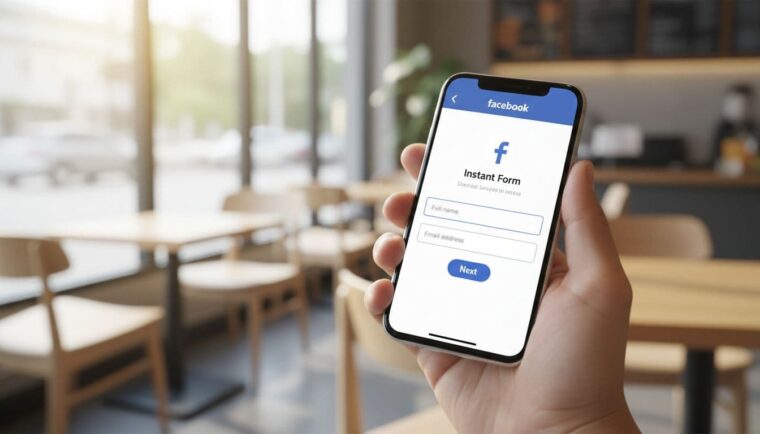
The upside is obvious. Setup is quick. Instant forms are simple, with options for custom questions. You can get names, emails, phone numbers, and appointment requests without building a landing page first. If you need fast response leads, event signups, quote requests, or quick callbacks, Facebook Lead Ads are hard to ignore.
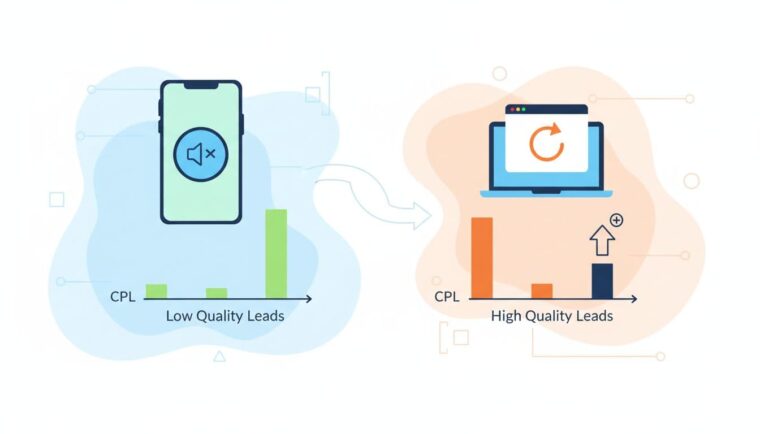
The downside is just as real. Easy forms attract casual interest. Some people tap because they’re curious. Some submit because the form is pre-filled. Some forget they even did it five minutes later. That means lead volume can rise while lead quality drops.
This is why Facebook Lead Ads often work best when speed matters more than deep qualification. Real estate inquiries, education counseling, local service requests, insurance quotes, and consultation bookings are common fits.
What website conversion ads do, and why they often create stronger buyers
Conversion ads send people to your landing page instead of an in-app form. You track actions with the Meta Pixel, the Conversions API, or both using tracking parameters. That setup takes more work, but it gives you more control over what happens next.
You control the headline, page layout, offer details, trust signals, form questions, and the full path to conversion. That matters when your offer needs more explanation.

A good landing page can warm people up before they convert. By directing traffic to a dedicated landing page, you can significantly improve conversion rates by providing more context before the lead capture happens. They read. They compare. They see pricing, proof, FAQs, or case studies. By the time they fill out your form, they often know what they’re signing up for. That extra step cuts volume, but it also filters out weak clicks.
Of course, this format has its own risks. A slow page kills momentum. A weak call to action hurts conversion rate. Bad tracking breaks optimization. If your conversion event is sloppy, Meta learns from messy signals.
Still, when you sell eCommerce products, SaaS demos, high-ticket services, or anything that needs trust, conversion ads often create stronger buyers. Fewer leads, better intent, cleaner sales conversations.
The biggest differences that change ROI between the two formats
Here’s the quick side-by-side view.
| Factor | Facebook Lead Ads | Website Conversion Ads |
| CPL | Usually lower | Usually higher |
| Lead quality | Mixed, more casual leads | Stronger intent |
| Setup time | Fast | Slower |
| User experience | Stays in-app | Requires site visit |
| Tracking depth | Simple lead capture | Better full-funnel tracking |
| ROI potential | Strong for speed and volume | Strong for qualified sales |
Lead Ads usually win on speed. Website conversion ads often win on what happens after the lead.
Cost per lead is only the first number you should look at
Across 2026 benchmark data, Facebook Lead Ads often land around $27 to $45 per lead. Website conversion campaigns can run 20% to 60% higher. That scares people off.
It shouldn’t, at least not by itself.
A lower cost per lead in Meta Ads Manager doesn’t always translate to profit; you must consider the lead nurturing effort required to close the deal.
Cheap leads can be expensive customers.
If one campaign gives you 100 leads at $30 and only two buy, that isn’t a bargain. If another gives you 40 leads at $45 and six buy, that second campaign is doing the real work. Look at cost per qualified lead, cost per sale, and customer lifetime value, not cost per lead alone.
Lead quality is where website conversion ads often pull ahead
The website click acts like a small filter. People have to wait for the page, read a bit, and choose to keep going. That sounds minor, but it changes intent for your target audience.
Website leads often spend more time with your offer before converting. They self-educate. They see proof. They reveal more serious interest. That tends to lead to better sales calls and stronger close rates, especially in B2B, SaaS, and premium services.
Follow-up speed and sales process can decide the winner
Both formats need fast follow-up. Lead Ads need it even more.
If your team calls within five minutes, many instant-form leads can still convert well. If your team waits until tomorrow, those cheap leads go cold. CRM sync, auto-responses, and lead nurturing can change ROI more than people expect.
Which one generates better ROI for your business goals?
If you want a straight answer, here it is: facebook lead ads often win when you need speed, reach, and lower friction. Conversion ads usually win when you care more about qualified leads and long-term revenue.
A lead generation campaign built for volume is not the same as a lead campaign built for purchase intent. That’s the split most advertisers miss.
Your offer, audience, and sales cycle decide the better choice. Your choice of campaign objective should align with your target audience’s journey. A plumber offering same-day service doesn’t need the same funnel as a SaaS brand selling annual contracts.
When Facebook Lead Ads make the most sense
Lead Ads usually fit businesses that need fast contact details and quick callbacks. Think real estate, education, insurance, local services, and B2B consultations with a strong sales team.
If your offer is a compelling lead magnet that’s easy to understand and your team responds fast, this format can work well. It also makes sense when you need appointment requests, webinar signups, or short buying-cycle leads at scale.
When website conversion ads are the better bet
Website conversion ads often outperform when your buyer needs more trust before taking action. That’s common in eCommerce, SaaS, coaching, high-ticket services, and brands that need tighter lead qualification.
High-friction offers might need a landing page to explain the value proposition. If your offer needs explanation, proof, pricing context, or a stronger buying signal, your landing page does the heavy lifting. The lead count may drop. The sales quality often improves.
How to compare results the right way before you decide
Don’t judge either format by lead count alone. Judge them by what your sales team sees after the form fill.
Watch cost per qualified lead, booked calls, close rate, sales closed, landing page conversion rates, and customer lifetime value. If one campaign brings fewer leads but more revenue, that’s the winner.

Use a simple test plan so your data stays honest
Run both formats with the same offer, similar creative, the same audience, and a fair budget split. To find the true winner, test both formats against the same target audience. Use a custom audience of previous visitors or a lookalike audience to ensure you are reaching high-intent users. Track the same time window for both.
Then go past Meta Ads Manager. Match every lead to your CRM and look at who booked, who showed up, and who paid. That’s how you stop guessing.
Watch for hidden problems that can distort ROI
A slow site can make website conversion ads look worse than they are. Weak form questions can make Lead Ads look worse than they are. Bad targeting can ruin both.
You can also fool yourself with soft metrics. The cheapest lead isn’t always the cheapest customer. And view-through reporting can flatter results that your sales pipeline never feels.
Common mistakes that make both campaign types look worse than they are
A lot of businesses blame the format when the real problem sits somewhere else. Often, the failure of website conversion ads isn’t the traffic, but the lack of mobile optimization on the landing page or a weak call to action that fails to inspire movement.
Maybe the landing page loads like it’s stuck in 2018. Maybe the form asks for too much. Maybe nobody retargets the people who clicked but didn’t convert. Maybe leads come in, then nobody follows up.
That’s why landing page work matters. A stronger offer and better page flow can change results fast. If you want a deeper look at page fixes, Techeasify’s guide on Conversion Rate Optimization is a useful next read.
How to handle Facebook lead data, compliance, and follow-up the right way
Once a lead comes in, speed matters. So does basic compliance.
Managing your lead data requires a clear privacy policy to maintain GDPR compliance. For efficiency, set up a CRM integration via the Meta Business Suite or check the Leads Center for recent submissions.
If you’re wondering how to download leads from Facebook Ads Manager, open the campaign at the ad level, go to the instant form or lead results area, and export the leads as a CSV. Better yet, connect your CRM so leads reach your team right away.
You also need to respect Facebook’s lead generation terms of service. That means clear consent, a visible privacy policy, and using lead data only for the purpose you stated. No sloppy list sharing. No vague data handling. Clean lead routing is good for trust, and it’s good for ROI because faster access means faster follow-up.
Should you work with a Facebook Ads agency to improve ROI?
If you’re searching for a “facebook ad agency near me” or a “Facebook Ads Agency in India,” don’t focus on promises first. Ask how they test creatives, track qualified leads, improve landing pages, and tighten retargeting.
A strong agency can help if your team is stuck between too many cheap leads and not enough sales. A professional agency will often implement marketing automation using tools like Zapier or LeadsBridge to create automated workflows that connect your ads directly to your sales pipeline. You can review Facebook Ads services by Techeasify Infotech or look at their Meta Ads management strategies to see what that work should include. If you want proof beyond pitch language, this Doeraa Facebook Campaign Case Study shows how better funnel work can lift ROAS. It also helps to understand what a Meta Business Partner Agency should bring to the table.
Frequently asked questions about Facebook Lead Ads and ROI
Are Facebook Lead Ads better than website conversion ads?
Facebook lead ads deliver better speed and volume. Website conversion ads are often superior for lead quality and downstream revenue.
What average ROI can you expect from Meta lead ads?
There isn’t one universal number. ROI depends on your close rate, follow-up speed, and average customer value more than the ad format alone.
How do you download leads from Meta Ads Manager?
Go to the ad or instant form area in Meta Ads Manager, then export your leads as a CSV. A CRM integration is faster.
Which industries benefit most from Lead Ads?
Real estate, education, insurance, local services, and consultation-based businesses often do well with lead generation because they need fast inquiry capture.
Do website conversion ads generate higher-quality leads?
Often, yes. The extra step filters casual clicks and usually produces stronger buying intent.
When does it make sense to hire a Facebook Ads agency in India?
It makes sense when you need better tracking, automated data management, cleaner testing, stronger creative, or help turning leads into sales, not just more form fills.
Conclusion
Facebook Lead Ads vs conversion ads isn’t a debate about which button is better. It’s a decision about intent.
If you want quick, low-friction lead volume, Lead Ads are often the smarter play. If you want stronger buyers and better long-term ROI, website conversion ads usually pull ahead. Test both, measure qualified leads and sales, then back the format that makes you more money, not the one that only looks cheaper in the dashboard.
Ultimately, whether you prioritize instant forms for volume or conversion ads for intent, your lead generation success depends on continuous testing and optimization.