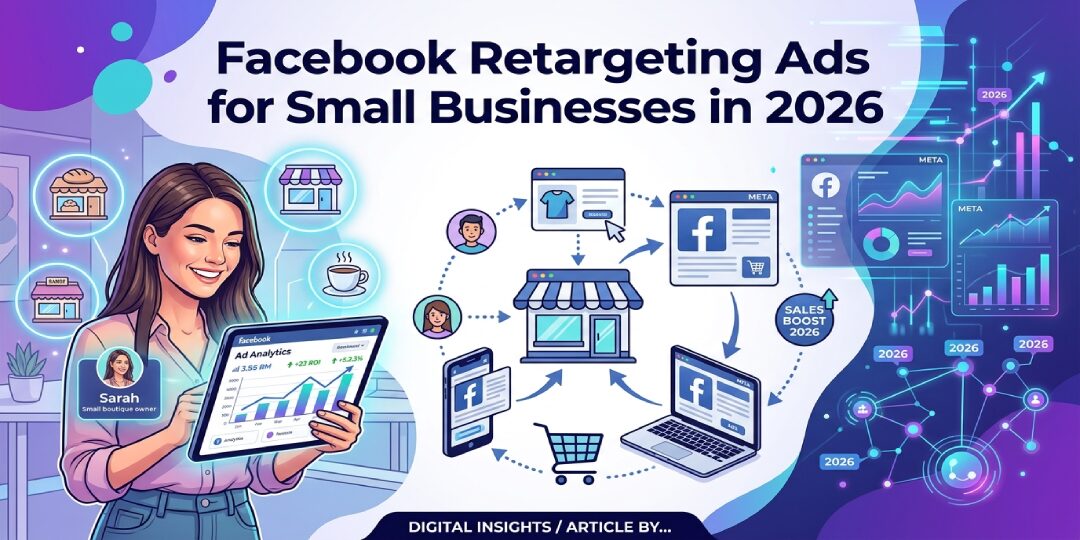
People visit your store, read a service page, even add something to cart, then leave. That doesn’t always mean they said no. It usually means they got distracted, needed more trust, or weren’t ready on the first click.
That’s why facebook retargeting ads matter so much. They help you follow up with warm visitors who already know your business, instead of paying again to interrupt strangers. In 2026, with ad costs up and attention split across more placements, that second chance is worth more than ever.
If your traffic looks decent but sales feel stuck, retargeting is often the missing piece.
What Facebook retargeting ads are, and why they work so well
What are Facebook retargeting ads? They are follow-up Meta ads shown to people who already visited your site, watched a video, started checkout, joined your email list, or engaged with your Facebook or Instagram content. Instead of chasing cold traffic, you remind warm prospects to come back and finish the action they already started.
Think of facebook ads retargeting like a smart follow-up. Not a first hello, a second nudge.
This quick comparison makes the difference clear:
| Cold ads | Retargeting ads |
| Shown to people who don’t know you | Shown to people who already interacted |
| Need more education and trust | Need less explanation, more reason to act |
| Usually broader and less efficient | Usually tighter and more conversion-focused |
That is why small businesses often get better conversion rates and less wasted spend from warm audiences.
How retargeting reaches people who already showed interest
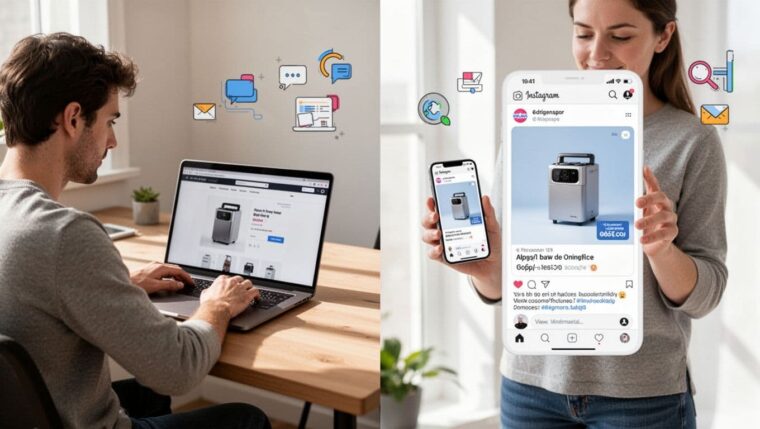
Someone visits your website, views a product, checks a pricing page, watches your video, or likes an Instagram post. Meta records that signal through the Pixel, engagement data, or your customer list. Later, you show that person a related ad in Facebook or Instagram.
Your audience sources can include website visits, cart activity, video views, email lists, and people who engaged with your ads or page.
Why warm traffic usually converts better than cold traffic
Warm traffic already knows your name. That changes everything.
A cold audience needs proof, context, and patience. A retargeted audience often needs a reminder, a better offer, or a clearer next step. That’s why retargeting usually brings stronger ROI than broad awareness ads, especially when your budget is tight.
You already paid for the first click. Retargeting helps you get more from it.
Why Facebook retargeting ads matter more in 2026
Retargeting isn’t new. What’s changed is the pressure on your budget.
How higher ad costs push you toward smarter retargeting
As of May 2026, benchmark collections put average Facebook Feed CPM around $11.54, while many Meta datasets land between $10 and $17. In competitive markets and sales-focused campaigns, CPMs can run closer to $20 to $45.
At the same time, ecommerce brands still lose about 65% to 75% of carts before checkout. For a small business, that’s painful. You already paid to get those visitors. Retargeting helps you recover missed revenue without starting from zero.
How Meta’s AI and privacy updates change the game
Privacy limits, including iOS tracking changes, made audience data less complete. In some cases, retargeting pools shrank by 20% to 50%. So yes, tracking got harder.
The fix is better signal quality. Use the Meta Pixel, Conversions API, and clean event setup. Then let Meta’s newer AI tools do their job. Advantage+ options have shown lower CPA in many campaigns, and simpler structures often beat messy account setups with too many tiny ad sets.
For Small business Facebook ads, that matters. You need efficiency, not chaos.
How do you retarget on Facebook?
How do you retarget on Facebook? Install the Meta Pixel, track key actions, build Custom Audiences from visitors and engagers, split those audiences by intent, then launch a campaign with the right objective. Better event setup gives Meta cleaner signals, and it gives you cleaner reporting too.
Install the Meta Pixel and track the right actions
Page views aren’t enough. You also want to track add-to-cart actions, checkout starts, form submits, key button clicks, time on page, and scroll depth where it makes sense.
Meta’s Pixel documentation is the starting point. Strong tracking is the backbone of good retargeting campaign management.
Build custom audiences from website visitors and engagement
Start with people who visited your site in the last 7, 14, or 30 days. Then build separate audiences for cart abandoners, email subscribers, video viewers, and people who engaged with your page or ads.
If the setup menu feels clunky, Meta’s Custom Audiences guide helps you find the right paths faster.
Segment audiences by intent so your message feels personal
Not every warm visitor is equally warm. Someone who viewed your pricing page is closer to buying than someone who watched 10 seconds of a video.
A salon can split appointment-page visitors from Instagram engagers. A local gym can separate class-page visitors from people who watched a trainer video. An ecommerce store can split product viewers from cart abandoners.
Launch your retargeting campaign with one clear goal
Pick the outcome first, sales, leads, bookings, or purchases. Then match the campaign objective to that goal.
If you want booked calls, optimize for completed leads. If you want online sales, optimize for purchases. Don’t muddy the signal with three different goals in one campaign.
How to create retargeting ads on Facebook that actually convert
How to create retargeting ads on Facebook: Pick one conversion goal, choose the warm audience, match the offer to their behavior, use simple creative and one CTA, then watch CTR, CPA, frequency, and ROAS. Start small, test a few messages, and scale only when results stay steady.
Choose an offer that fits the stage of the buyer
A first-time visitor may need proof. A cart abandoner may need urgency.
For ecommerce, that could mean a product reminder, free shipping, or a time-sensitive discount. For a gym, it might be a free trial class. For a salon, a first-visit offer works well. For local services, lead with a quote, consultation, or fast callback.
Write ad copy that feels personal, not pushy
Your copy should sound like a helpful follow-up, not a hard sell.
Keep headlines short. Focus on one benefit. Address one objection. Then give one clear next step. If someone already viewed your pricing page, you don’t need a long brand story. You need a reason to come back.
Use visuals that match the exact thing people saw before
This is where many ads fail. The visitor saw one product or service, then your ad shows something generic.
Use dynamic product ads, carousels, or simple before-and-after visuals. If someone viewed dining chairs, show those chairs. If they checked your roofing page, show a roofing job, not a random brand graphic.
Set a smart budget and watch the right metrics
You don’t need a huge budget to start. Many small businesses begin with $10 to $20 per day per audience or a test pool of $500 to $1,500 overall.
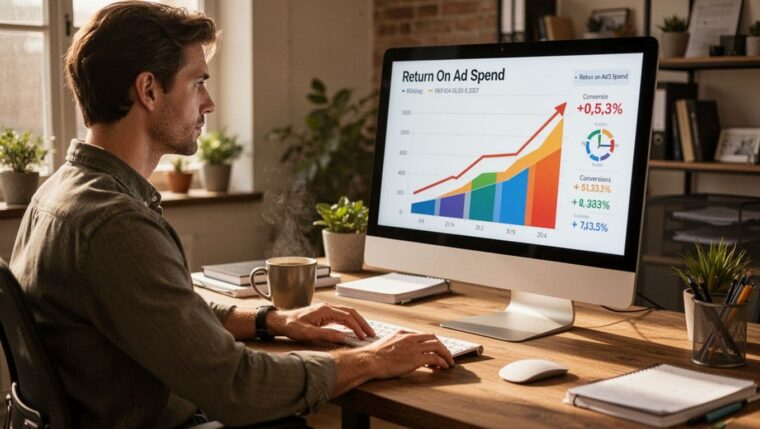
Watch CTR, CPA, ROAS, conversion rate, and frequency. A healthy CTR often starts above 1.5% for warm audiences. If frequency rises fast and results slip, refresh the creative before the audience tunes out.
The retargeting plays that work best for small businesses
You don’t need ten campaign types. You need a few plays that match how people buy from you.
Bring back abandoned carts with the exact product they left
This is the cleanest win for Shopify and WooCommerce stores. Show the same product, a review, a shipping reminder, or a small offer. Keep the window short, often 1 to 7 days, while the intent is still fresh.
Turn video viewers and social engagers into buyers
Video views and post engagement are low-cost signals. They don’t always mean buying intent, but they do show interest.
Retarget those people with testimonials, product demos, or a simple offer. It’s a smart way to build trust before you ask for the sale.
Use lead retargeting for services, appointments, and consultations
Service businesses miss leads all the time. Someone opens your quote form, checks pricing, or visits your contact page, then disappears.
That’s where lead generation through Facebook ads gets stronger. You retarget those visitors with proof, urgency, and a clearer next step. It works well for salons, dentists, consultants, home services, and agencies.
Keep local business ads focused on one clear next step
Local campaigns work best when the ask is simple. Call now. Book today. Get a quote. Visit this week.
Use location-aware copy and keep the landing page tight. A nearby visitor doesn’t need five options. They need one obvious action.
What to avoid if you want your retargeting budget to work harder
A good retargeting setup can still waste money if the basics are off.
Stop repeating the same ad until people tune it out
Ad fatigue is real. If people see the same message too many times, response drops.
Watch frequency closely. If it climbs into the 2 to 3 range fast and CTR falls, rotate creative. Keep 3 to 5 variations ready so you don’t burn the audience.
Make sure your landing page matches your retargeting promise
If the ad promises a discount, testimonial, or free consult, the landing page should continue that story. No detours. No mixed message.
And yes, mobile matters. Most clicks happen there. If the page is slow or confusing, fix the experience, not only the ad. Strong digital marketing and web development services help here because retargeting can’t rescue a weak page.
Do not target everyone with the same message
Homepage visitors, cart abandoners, and past buyers should not get the same ad. Exclude recent customers. Split audiences by behavior. Fix broken events before you scale.
A broad retargeting bucket feels easy. It usually performs worse.
How much you should spend, and when to scale
Most businesses don’t need a giant budget to start. They need a clean test.
Start small and test one audience at a time
Begin with one or two focused audiences, not every warm group mashed together. A common starting point is $10 to $20 per day per audience.
That gives you enough data to learn without burning cash.
Scale only after your numbers stay stable
When CTR, CPA, and ROAS stay healthy for several days, then increase spend in small jumps. Ten to twenty percent at a time is safer than doubling overnight.
You can also keep a simple split, around 70% prospecting and 30% retargeting, once both sides of the account are working.
Conclusion
Facebook retargeting ads work because they bring back people who already raised their hand. When ad costs rise, that matters even more. Smart segmentation, stronger tracking, and better creative help you turn warm interest into real sales instead of more wasted clicks.
Start by auditing your audiences, events, and offers. Then fix the weak spots first.
If you want help building conversion-focused ad campaigns, Techeasify Infotech offers Facebook ads agency experts for Meta ads management services, Facebook advertising services, and practical support from a performance marketing agency that understands what a small business needs. If you’re looking for a Facebook marketing company that cares about leads, bookings, and revenue, not vanity metrics, that’s the right next step.