Key Takeaways
- You’re a digital creator if you publish content online with a clear purpose and a real audience in mind.
- Pick platforms based on format, YouTube for depth, TikTok for speed, Instagram for saves.
- “Digital creator” and “content creator” overlap, but your goal (brand and community vs briefs) changes how you work.
- Most creators are nano or micro, so consistency and clarity beat “big production.”
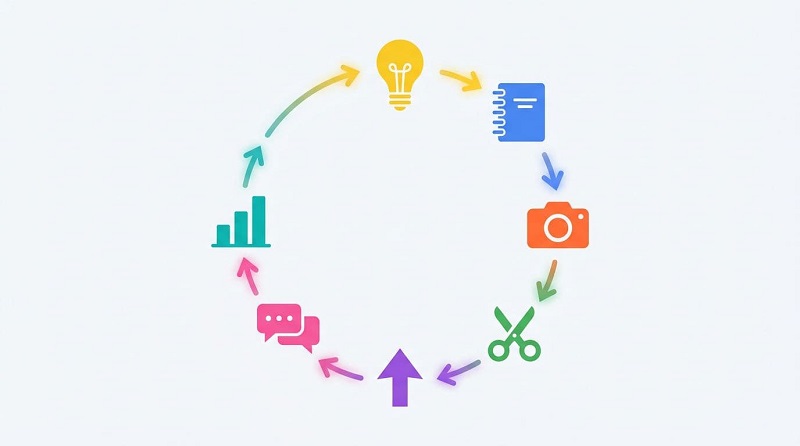
- Start with a simple loop: plan, create, publish, repurpose, engage, review.
You see creators everywhere. Still, the job title can feel fuzzy.
What is Digital Creator ? It’s someone who makes content for the internet, grows an audience, and often builds a personal brand over time.
In 2026, the real question is simple: can you turn what you know (or what you’re learning) into content people choose to watch, read, save, or share?
The space is big and still growing. Estimates put the creator economy at around $203.6B in 2026, with over 207 million content creators worldwide. You are not late. You just need a clear lane and a repeatable plan.
This guide covers the definition, real examples, where to publish, what the daily work looks like, how creators earn, tools to use, and a beginner-friendly 8-step start plan.
What Is A Digital Creator In 2026 (Simple Definition, Real Examples)

A digital creator makes online content that’s useful or entertaining, then builds trust and attention over time.
That content can be video, images, audio, text, or a mix. You do not need perfect gear. You need a clear topic, a simple workflow, and the habit of posting.
Three quick examples:
- A YouTube creator who teaches home repairs with simple demos.
- An Instagram designer who shares logo breakdowns and brand tips.
- A blogger who writes search-friendly guides and sends a weekly newsletter.
You can work solo, get hired by a brand, or do both. Many digital content creator roles look like “in-house creator” during the day and a personal channel at night. If you want the career view, this is a helpful overview: digital creator role and skills overview.
Where digital creators publish and how people find you now
In 2026, your platform choice is also your format choice.
- YouTube rewards watch time and strong packaging (titles and thumbnails).
- TikTok rewards speed, hooks, and volume.
- Instagram rewards Reels, carousels, and saves.
- Substack rewards writing and email.
- LinkedIn rewards practical posts and credibility.
- Podcasts reward consistency and clear positioning.
- Blogs reward search intent, depth, and structure.
One big shift: social platforms act like search engines now. People type questions into TikTok, Instagram, and YouTube the same way they search Google. That’s why “answer content” can grow steadily without a viral moment.
If Instagram Reels are part of your plan, keep your discovery basics tight. Use simple captions, clear hooks, and smart hashtags. Here are two quick internal reads you can use right away:
- Hashtags (short guide): How to Use Instagram Viral Hashtags to Boost Your Reels
- Captions (short list): 250+ Best Caption for Instagram Ideas to Boost Likes & Engagement
Digital creator vs content creator, what’s actually different
Most people use the terms interchangeably. That is not wrong. But the split can help when you’re choosing your path.
| Topic | Digital creator | Content creator |
| Scope | Often builds a personal brand plus audience | Often produces content for a brand or channel |
| Monetization | Often builds multiple income streams | Often paid per project or role |
| Platform focus | Usually platform-led (YouTube, TikTok, IG) | Can be platform-agnostic (blogs, web, ads) |
| Main goal | Trust and repeat attention | Deliver content that meets a brief |
Rule of thumb: if people follow you for your voice and style, “digital creator” fits. If you mainly create assets for someone else, “content creator” may fit better.
What You Actually Do As A Digital Creator (Daily Work, Skills, And Income Paths)
Most days are not a creative sprint. They are a routine.
You choose a topic, outline it, create the content, edit it, publish it, then talk to people who respond. After that, you check what worked and repeat the best parts.
It also helps to know where you fit. Most creators are small. Many industry breakdowns show roughly 67% nano creators and about 19.81% micro creators. So if you have 500 to 10,000 followers, you are not behind. You are normal.
To keep expectations realistic, think of the job as three lanes:
- Production: writing, filming, editing, design
- Distribution: SEO, hooks, titles, hashtags, timing
- Community: comments, DMs, email list, collaborations
Your core workflow from idea to post to community
A repeatable loop beats motivation.
- Pick a question: choose something people ask often.
- Outline fast: hook, main points, simple payoff.
- Create: record, write, or design. Keep it focused.
- Edit: remove extra words. Make the “point” clearer.
- Publish: ship it. You can improve the next one.
- Repurpose: one long piece can become two or three short pieces.
- Engage: reply to comments and save questions for later posts.
- Review: watch time, saves, clicks, replies.
Small tasks matter more than they look. Thumbnails, captions, basic SEO, and your email list can move results faster than better gear.
How creators make money in 2026
If you’re asking how to make money as a digital creator, you’re asking which income paths fit your content and your audience. Common options include:
- ads
- brand deals
- affiliate links
- digital products (templates, mini-courses)
- services (editing, design, coaching)
- subscriptions
- merch
In many creator economy surveys, sponsored content leads (about 59%), followed by platform payouts (about 24.4%), then affiliate marketing (about 8.2%).
One practical rule: do not rely on one platform or one sponsor. Build at least two income paths as soon as you can. For a deeper look at monetization, this is a useful reference: how creators monetize in 2026.
How To Become A Digital Creator In 2026, The Tools To Use, And What You Can Earn

Step-by-step, how to start (HowTo section for beginners)
- Choose a niche you can repeat: pick a topic you can stick with for months.
- Pick 1 to 2 platforms: one home platform plus one discovery platform works well.
- Set up your online home: a simple site or portfolio helps you own your work.
- Plan in batches: list 10 ideas, then outline 3 this week.
- Publish consistently: start with 2 posts per week.
- Grow with SEO and community: use search-friendly titles and reply like a human.
- Monetize after you prove value: start with affiliate offers, simple services, or a small digital product.
- Track and improve: keep what works, cut what does not, repeat.
Optional validation tools can help when you feel stuck. Google Trends and AnswerThePublic can show demand and real questions. If you want another angle on building a space you control, this guide is useful: digital creator communities and memberships.
Best tools for digital creators in 2026 (simple table by category)
| Category | Examples you can start with |
| Writing + scripting | Google Docs, Grammarly (freemium) |
| Design | Canva |
| Short-form video | CapCut |
| Long-form video | DaVinci Resolve, Adobe Premiere Pro |
| Audio + podcast editing | Descript |
| Automation + scheduling | Zapier (plus a scheduler you like) |
| Analytics | YouTube Analytics, platform insights |
RightBlogger comes up in some creator circles, but it isn’t showing up in many top 2026 tool roundups from the research used here. Notion can help with planning, but it is optional.
How much digital creators earn in 2026 (realistic ranges and a quick table)
Income varies a lot. “Creator” can mean freelance, in-house, part-time, or full-time. Earnings can also swing month to month, especially early on.
Here’s a practical snapshot using common creator income bands (these overlap with content creator roles):
| Experience level | Typical annual range | Typical monthly range |
| Beginner (0 to 1 year) | $0 to $15,000 | $0 to $1,250 |
| Intermediate (1 to 6 years) | $15,000 to $100,000 | $1,250 to $8,333 |
| Established (10+ years) | $100,000+ | $8,333+ |
If you work in-house, pay tends to be steadier. If you are solo, sponsorships often become the biggest income line once you build trust.
2026 Trends To Watch (For Digital Creators)
1) Social search keeps growing (TikTok, YouTube, Instagram)
More people search inside apps instead of Google. They type full questions like “best budget mic” or “how to edit reels.”
What to do: Use question-style titles, say the keyword out loud in videos, and add clear on-screen topic text (short, not cluttered).
2) “Series content” beats one-off posts
Creators who win in 2026 build repeatable formats. Think “3 tips every Monday” or “Fix this in 60 seconds.”
What to do: Create 2 to 3 content series and rotate them. It makes planning easier and helps people binge your posts.
3) Micro and nano creators get more brand attention
Brands keep shifting budget toward smaller creators because audiences trust them more. That fits the reality that most creators are nano or micro.
What to do: Build a small media kit, track saves and replies (not just likes), and pitch brands with one clear offer.
4) Short-form is still king, but long-form is the asset
Short clips bring discovery. Long videos, podcasts, newsletters, and blogs build trust and bring better conversions.
What to do: Use short-form to pull people in, then point them to one “home base” (newsletter, blog, YouTube).
5) Repurposing becomes the default workflow
Creators who grow fast do not “start from zero” every day. They turn one idea into multiple posts across platforms.
What to do: Build a repurpose ladder: 1 long piece → 3 shorts → 1 carousel → 1 email → 1 blog update.
6) AI becomes a helper, not the voice
Audiences can spot generic, same-sounding content. In 2026, creators win by being specific: real opinions, real examples, real stories.
What to do: Use AI for outlines, captions, hooks, and editing support. Keep the final voice yours.
7) Community signals matter more than follower count
Platforms and brands care about deeper signals: saves, shares, comments, watch time, and DMs.
What to do: Ask better questions in your content. Invite replies. Make “save this” posts that are actually worth saving.
8) Simple monetization offers outperform complex funnels
Many creators do better with one clear offer than with five random links.
What to do: Start with one: affiliate link for a tool you use, a small digital product, or a simple service package.
9) Authentic “proof content” becomes the trust builder
People want to see results, process, and behind-the-scenes. This includes mini case studies, before/after, or “here’s what I’d do.”
What to do: Share small wins and lessons learned. Screenshots, steps, and outcomes beat hype.
10) Creators build an owned audience sooner (email + site)
Algorithms change. Accounts get limited. Owned channels (email list, blog, community) protect you.
What to do: Add one simple opt-in (free checklist, template, or weekly tips email). Link it everywhere.
FAQ
1. What is a digital creator on Instagram or Facebook?
It usually means you are using a Creator account. That can unlock extra analytics, profile options, and sometimes monetization access. You still need consistent posting and a clear topic.
2. Do you need a degree to become a digital creator?
No. Skills matter more than credentials. Consistency, practice, and audience value beat a resume line.
3. Digital creator vs influencer, are they the same thing?
Not exactly. A digital creator focuses on making content as the main product. An influencer focuses more on promotions. Many people are both, but the intent is different.
4. What are the best free tools to start with?
Good free or freemium starters include Canva, CapCut, Google Docs, Google Search Console, and DaVinci Resolve. These cover design, editing, writing, and basic tracking.
5. How can Techeasify help you learn faster?
Techeasify shares plain-English guidance and tool comparisons for beginners. If you want to post more consistently, check out this roundup of the best AI social media manager tools.
Conclusion
A digital creator is someone who makes online content with intent, then earns attention through consistency and trust. You now know what the role looks like in 2026, where to publish, what the daily work includes, which tools to start with, and what earnings can look like at different stages.
Most importantly, you have a plan you can follow. When you catch yourself stuck in research mode, return to basics and publish the next piece.
What is Digital Creator comes down to action, not labels.
This week, do one thing:
Pick your niche, publish one piece, and set a simple two-post schedule.
Keep it small, keep it steady, and let momentum build.