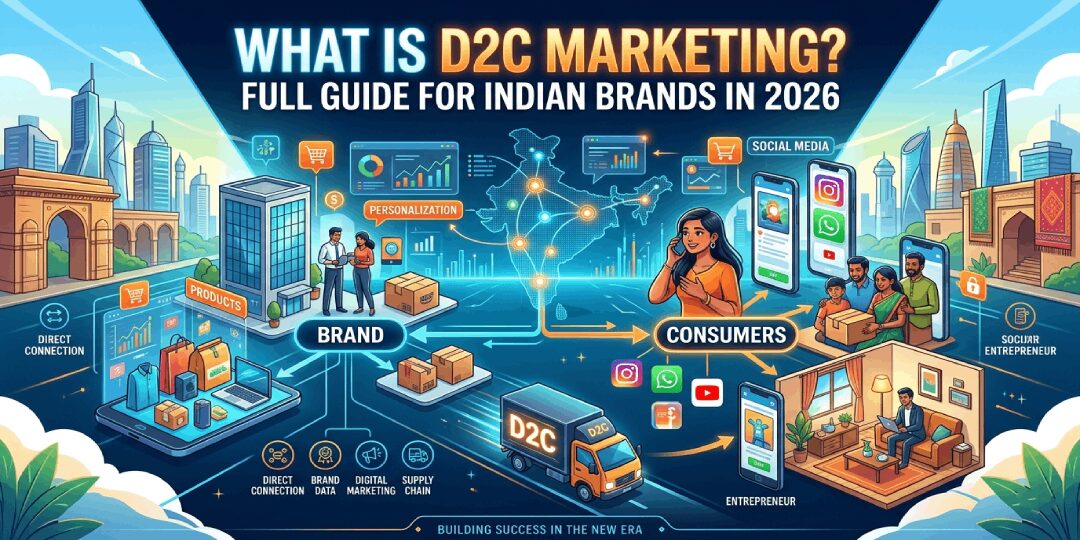
More Indian brands now sell directly from Instagram, WhatsApp, and their own e-commerce sites, skipping the wait for shelf space in big stores. What is D2C marketing? It is the strategy brands use to attract, convert, and retain customers by selling straight to them.
D2C stands for direct-to-consumer, meaning your brand makes or sources a product and sells it directly to the buyer, with no distributor or retailer in between. India’s D2C market is growing fast, with FY2024 estimates ranging from the low $40 billion (narrow definitions) to over $80 billion (broader ones).
This guide covers the full D2C business model, Indian success stories, top channels and strategies, how to build from scratch, common pitfalls, and quick FAQs.
Key Takeaways
- D2C means direct-to-consumer: Brands sell straight to buyers via their own sites, apps, social, or WhatsApp, skipping middlemen for full control over pricing, customer relationships, and first-party data.
- India’s D2C boom: Market hitting $40-80 billion in FY2024 and growing fast, fueled by mobile shopping, UPI payments, social commerce, and tools like Shopify for easy launches from cities like Surat or Jaipur.
- Winning marketing channels: Use Instagram Reels, paid ads, SEO for discovery; email, WhatsApp, influencers, and loyalty programs for repeat sales and retention.
- Build smart, avoid pitfalls: Start with clear buyer, sharp offer, converting store; track ROAS, LTV, and focus on post-purchase experience—traffic alone won’t save a weak setup.
What does D2C mean, and how is it different from traditional retail?
In plain English, D2C means your brand sells straight to the customer. You own the website, the store, the customer experience, the offers, and the post-purchase journey.
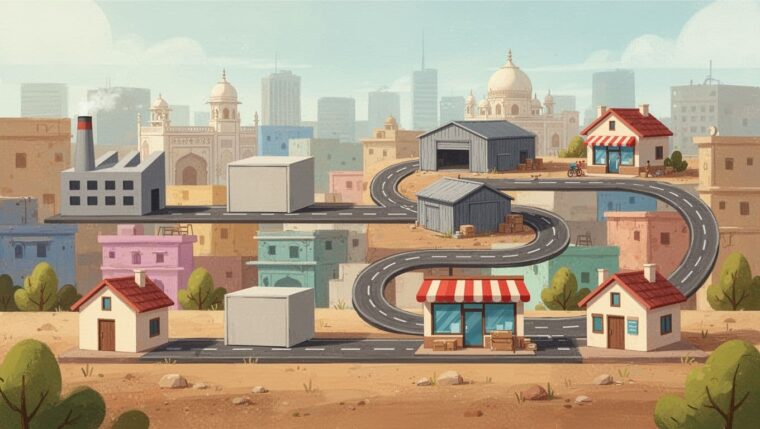
Traditional retail works differently. The product often moves through the supply chain from manufacturer to wholesalers and retailers, then customer. That chain of middlemen and intermediaries adds cost, delays feedback, and reduces your control.
Think of a Surat skincare brand selling handmade soap. In a retail setup, it may wait for a store chain to list the product. In D2C, the brand can sell it on its own site and ship it to your home the same week.
D2C full form and meaning in simple words
The D2C full form is Direct-to-Consumer. If you’re still wondering what is d2c, picture a brand selling face wash on its own website instead of relying on a supermarket shelf.
That is the core contrast. In D2C, the brand talks to you directly. In retail, someone else often owns that relationship.
What is a D2C business model, and why do brands want it?
When people ask what is d2c business in practice, the answer is this, you do not only sell online, you own the full customer journey. That matters because growth becomes easier when you control the message, pricing, and experience.
Brands such as Mamaearth, boAt, Licious, Sugar Cosmetics, and WOW Skin Science helped popularize this model in India. Many also sell on marketplaces, but their direct channels give them more control.
The three things a D2C brand controls better
First, you own the customer relationship. You decide how your site looks, what messages buyers get, and how support feels.
Next, you control pricing and margins. You can test bundles, limited offers, subscriptions, and festive packs without waiting for retail partners.
Then comes first-party data. That means you see what people buy, when they return, what they click, and where they drop off. That data helps you improve products and repeat sales.
Here’s the simplest way to compare the models:
| Model | Buyer relationship | Pricing control | Data ownership | Main sales channels |
|---|---|---|---|---|
| D2C | Direct | High | High | Own site, app, social, WhatsApp |
| B2C | Usually indirect or mixed | Medium | Limited to mixed | Retail, marketplaces, own channels |
| B2B | Business buyer | Negotiated | High, but account-based | Sales teams, distributors, contracts |
D2C vs B2C vs B2B, the differences that matter
D2C is often a type of business-to-consumer, because you still sell to a consumer. The difference is simple, D2C means the brand sells direct-to-consumer and owns more of the experience.
B2B is different again. There, you sell to another business, not an end user.
Why D2C marketing is growing so fast in India
India gave D2C the right conditions at the right time. More people shop on mobile, payments got easier, and store setup became much cheaper with tools like Shopify and WooCommerce. Brands must handle GST registration and follow consumer protection guidelines for Indian e-commerce, which keeps things accessible even for startups.
COVID pushed many buyers online, but the habit stayed. According to Statista’s D2C market overview for India, the segment has shown strong expansion. Reports also differ in scope. Some FY2024 estimates sit around $42.6 billion, while Statista places the broader 2024 market above $80 billion. One 2026 estimate from Mordor Intelligence puts the market even higher, which shows the same thing, the direction is strong growth.
The big shifts pushing Indian brands toward D2C
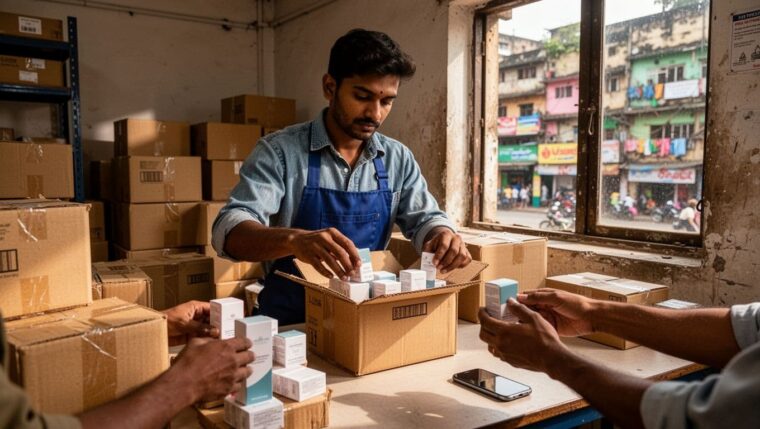
Smartphones brought millions of buyers online. Social commerce made product discovery feel natural while boosting brand awareness. Better UPI adoption reduced payment friction. Meanwhile, easier store setup helped even small founders launch from cities like Surat, Jaipur, and Kochi.
What is changing in 2026 for Indian D2C brands
Quick commerce is shaping fast-buy categories. AI-assisted discovery is changing how shoppers find products. Local language content matters more, especially outside metros, to connect with the target audience. Also, many founders now care less about vanity growth and more about repeat purchase and lifetime value, a shift covered in Economic Times reporting on India’s D2C maturity phase.
Key benefits of the D2C model for Indian brands
The biggest win is control. You decide your brand storytelling, your pricing, and how buyers move from first visit to repeat order.
Better margins and more control over how you sell
Without too many middlemen, you can protect profit margins and test smarter offers. A snack brand, for example, can sell trial packs, family bundles, or a subscription service on its own site. But this only works if you manage shipping, returns, and ad costs well.
Stronger customer relationships through data and feedback
First-party data sounds technical, but it is simple. You collect customer data like email IDs, order history, product preferences, reviews, and repeat purchase behavior.
That helps you improve faster. If buyers in Pune keep reordering one serum and complaining about the pump, you can fix the product and your messaging without waiting months for retailer feedback.
What Is D2C Marketing Strategy: Channels That Work in India
A good D2C marketing strategy does not depend on one channel. It uses discovery, conversion, and customer retention together.
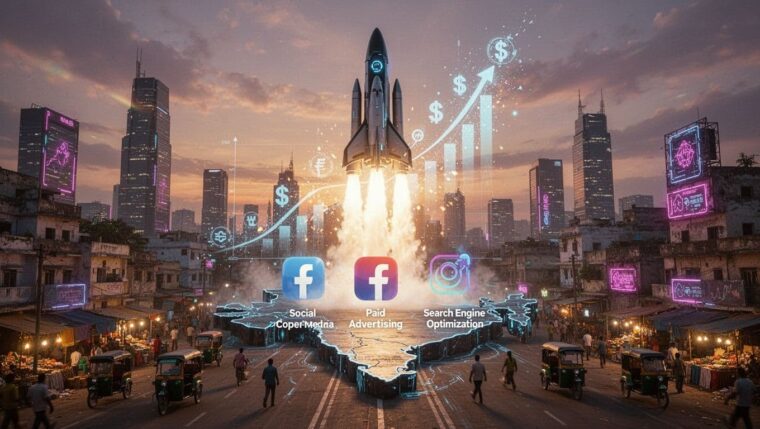
Social media, paid advertising, and search engine optimization: your main growth engines
Instagram Reels and YouTube Shorts help people discover your brand fast. For many categories, especially beauty, fashion, food, and wellness, a strong social media strategy builds trust before the first click.
Paid advertising brings intent and speed. Meta Ads work well for creative-led demand, while Google Ads catch people already searching. If you want to understand that model better, this guide to a performance marketing agency in India explains the basics.
Search engine optimization takes longer, but it compounds. When buyers search for category terms, problem-based queries, or brand comparisons, good content and product pages can keep bringing traffic. That’s why many growing brands invest in SEO services in India.
Email marketing, WhatsApp, content, and creators that bring buyers back
Owned channels lower your dependence on ads over time. Email marketing flows like welcome series, abandoned cart reminders, order updates, and post-purchase nudges keep the relationship alive. In India, buyers often respond well to WhatsApp updates, especially for restocks, COD confirmation, and festive offers.
Helpful blog content supports trust and search traffic. Influencer marketing adds social proof. User-generated content, referrals, and loyalty programs help too, because people trust people more than polished brand claims.
Need help choosing the right channels? Techeasify Infotech supports Indian brands with digital marketing services, from social media and paid ads to search engine optimization, email marketing, and retention tools. Focus on channel fit over hype when picking a partner for your D2C growth.
How to build a D2C marketing strategy from scratch
Start with your customer, offer, and storefront
Your first job is clarity. Build around a clear buyer, a sharp offer, and a store that converts.
- Define your buyer, pain point, and price range.
- Choose your main sales channel; while your own site should lead, brands often sell across multiple touchpoints in an omnichannel strategy.
- Build a clean brand identity, not only a logo.
- Set up content, product pages, and SEO basics.
- Launch paid campaigns for customer acquisition with small tests, not huge budgets.
- Create email and WhatsApp flows for recovery and repeat sales.
- Track performance every month and improve what matters.
If your store is weak, everything else gets expensive. Strong ecommerce website development, with a focus on conversion rate optimization, gives your ads and SEO a better chance to convert.
Launch, measure, and improve every month
Track ROAS, CAC, conversion rate, repeat purchase rate, and LTV. Leverage this data for personalized experiences that drive retention. Then test creatives, landing pages, offers, and retention flows every month. One winning ad is never a business plan.
Common D2C marketing mistakes that waste time and money
Traffic can’t save a weak store.
Why getting traffic is not enough if your website does not convert
Many brands run ads before fixing basics. Slow mobile pages, weak product photos, poor trust signals, confusing checkout, and inventory management issues can burn your budget fast.
What Indian brands often miss after the first sale
A lot of brands obsess over acquisition and ignore retention. Returns, customer support, fulfillment delays, reviews, loyalty nudges, and regional buying behavior matter more than most founders expect.
If buyers love the first order but hate the support, you lose the second sale. And that second sale is often where profit starts, especially when building customer loyalty.
Quick answers to common D2C questions
What is D2C marketing?
It is the marketing system a brand uses to sell directly to customers. It includes acquisition, conversion, retention, and customer experience.
What is the full form of D2C?
D2C stands for direct-to-consumer. It means the brand sells to the end buyer without a retailer in the middle.
What is the difference between D2C and B2C?
D2C is usually a kind of B2C. The key difference is that D2C brands sell directly and own more of the buyer relationship.
What are the best D2C marketing strategies for Indian brands?
Start with social media, paid ads, SEO, email, and WhatsApp. Then add creator content, referrals, and retention flows to build customer loyalty as your store grows.
Is D2C marketing expensive for small businesses?
It doesn’t have to be. You can start lean with a focused product, a simple store, basic content, small test budgets, and a subscription service.
How can a digital marketing agency help my D2C brand grow?
A good agency helps you pick channels, fix tracking, improve your store, run ads, and grow repeat sales. That saves time and reduces expensive trial and error.
Now you know what D2C marketing is and why it matters for Indian brands in 2026. The big takeaway is simple: D2C means direct selling, India is giving brands strong growth conditions, and the winning channels are the ones that build both demand and repeat purchase through customer retention.
If you’re a founder or marketing team ready to launch or scale, get expert help before you waste budget. Techeasify Infotech can help you plan the right channels, build a stronger store, and grow with a clear D2C roadmap. Book a consultation and move from guessing to growth.