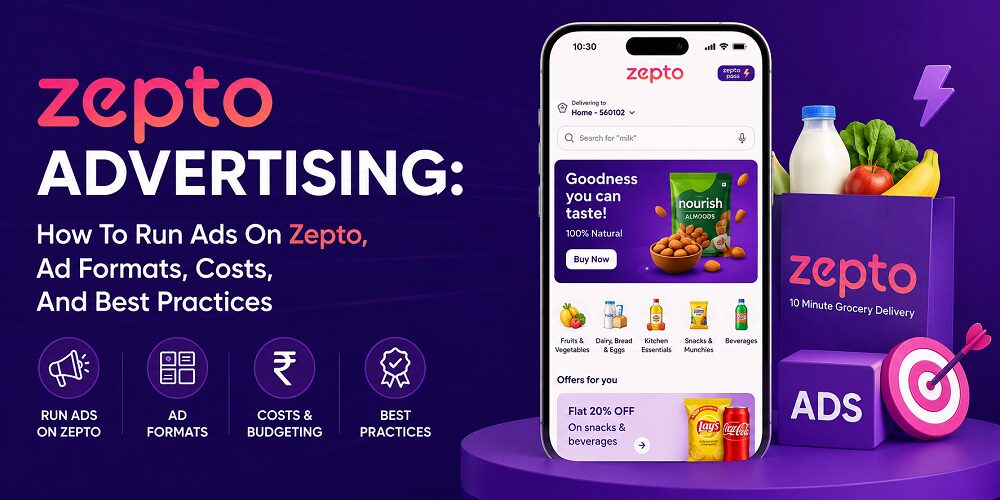
Zepto has become one of the most important quick commerce platforms in India. For brands that want faster visibility, stronger conversions, and better reach in high-intent buying moments, Zepto Advertising can be a smart channel.
It works well for D2C brands, FMCG products, personal care, food and beverage, snacks, household essentials, and other fast-moving categories. But to get real results, you need more than just a basic campaign. You need the right targeting, the right ad format, the right budget, and a clear plan to improve return on ad spend.
This guide explains how Zepto Ads work, the best targeting options, the benefits and costs, the best industries to use them, and the best practices to improve ROI. It also covers how Techeasify supports Zepto Advertising and quick commerce growth for brands.
Key Takeaways
- Zepto Advertising works best for high-intent, fast-moving categories like FMCG, D2C, snacks, personal care, and household essentials.
- Targeting matters a lot on Zepto, especially city, pin code, category, and time-slot targeting.
- The right ad format depends on your goal, with sponsored products, banners, video, and checkout ads serving different funnel stages.
- ROI improves when brands track performance closely, watch stock levels, and optimize creatives, bids, and placements regularly.
- Techeasify helps brands plan and manage quick commerce campaigns with a practical focus on Zepto Ads and broader retail media growth.

What Is Zepto Advertising?
Zepto Advertising is a retail media solution that lets brands promote products inside the Zepto app. The goal is to help brands appear in front of shoppers when they are browsing categories, searching for products, or ready to buy.
Unlike broad awareness ads, Zepto Ads reach users close to the purchase moment. That makes them useful for:
- driving product sales
- increasing brand visibility
- launching new SKUs
- supporting repeat purchases
- improving share of shelf in quick commerce
For brands selling everyday items or impulse-buy products, Zepto can be a strong performance channel.
If you want to see how Zepto presents its brand and ecosystem, you can also explore the official platform here: Zepto.
Why Brands Use Zepto Ads
Zepto Ads can be useful for brands that want to reach buyers with strong purchase intent. People using Zepto are often shopping with a clear need in mind. That makes it different from broader social media advertising.
Here are some common reasons brands use Zepto Advertising:
- To launch a new product
- To improve visibility in crowded categories
- To push sales during peak demand
- To promote high-margin or fast-moving items
- To support FMCG and D2C growth
- To stay top of mind in key delivery areas
- To improve conversion near the checkout stage
If your products are impulse-friendly, repeat-purchase, or category-based, Zepto can be a strong channel.
Best Industries For Zepto Advertising
Zepto Ads are not for every business. They work best for categories that sell quickly, repeat often, or fit impulse buying.
Best industries include:
| Industry | Why it fits Zepto Ads |
| FMCG | Frequent purchases, strong category demand |
| D2C brands | Good for product discovery and conversion |
| Snacks and beverages | Impulse buying and repeat purchases |
| Personal care | High frequency and strong category search |
| Household essentials | Local buying and regular replenishment |
| Health and wellness | Useful for repeat and routine purchases |
| Baby care | Need-based buying with high intent |
Best use cases by brand type
FMCG brands: improve local visibility and sales
D2C brands: drive awareness plus direct conversion
New launches: build early traction
High-repeat products: improve repeat orders
Category leaders: defend market share
If your product needs a long explanation before purchase, Zepto may still work, but the campaign has to be planned carefully.
Zepto Ad Formats
Zepto can offer different ad placements depending on the account, campaign type, and platform availability. The exact options may vary, but the most common and useful formats include the following.
1. Sponsored product ads
These are product listings that appear in relevant search results or category pages.
Best for:
- direct conversions
- high-intent shoppers
- promoting one SKU or a small set of SKUs
Why they work: They blend into the shopping journey and catch users when they are already looking for similar items.
2. Banner ads
Banner ads usually appear at prominent spots in the app.
Best for:
- awareness
- launch campaigns
- brand promotion
- category-wide visibility
Why they work: They help you get noticed quickly, especially if you want to build recall.
3. Video ads
Video ads are good for showing product benefits, use cases, or brand stories.
Best for:
- awareness
- product storytelling
- new launches
- premium positioning
Why they work: Video can explain more than a static image, which helps when the product has a clear benefit or differentiator.
4. Roadblock ads
Roadblock placements give a brand strong visibility across key app surfaces for a limited period.
Best for:
- big launches
- campaign bursts
- festive promotions
- high-share-of-voice goals
Why they work: They dominate attention for a short time and can create a strong launch effect.
5. Brand storefronts
A storefront lets shoppers see a brand’s products in one place.
Best for:
- brands with multiple SKUs
- cross-sell and upsell
- catalog discovery
Why they work: They help users browse more products from the same brand, which can lift average order value.
6. Checkout or cart-stage ads
These ads appear close to purchase moments.
Best for:
- conversion
- impulse buys
- last-minute add-ons
Why they work: They reach users right before checkout, when purchase intent is highest.
7. Interactive or special placements
Some platforms may also offer interactive placements such as scratch cards, map integrations, delivery bag ads, or post-order placements.
These can be useful for:
- engagement
- brand recall
- local visibility
- repeat exposure
If these formats are available in your account, test them carefully. Not every format will fit every category.
Which Ad Format Should You Choose?
The right format depends on your goal.
| Goal | Best formats |
| Awareness | Banner ads, video ads, roadblocks |
| Consideration | Video ads, brand storefronts, category placements |
| Conversion | Sponsored products, checkout ads |
| New product launch | Banner ads, video ads, sponsored products |
| Repeat sales | Sponsored products, checkout-stage placements |
A simple rule helps here:
- Use banner or video to create awareness
- Use sponsored listings to capture demand
- Use checkout placements to drive final conversion
Targeting Options In Zepto Advertising
Targeting is one of the biggest reasons Zepto Ads can perform well. If you choose the wrong audience or location, your budget can disappear quickly. If you choose the right targeting, your ads can reach the right people at the right time.
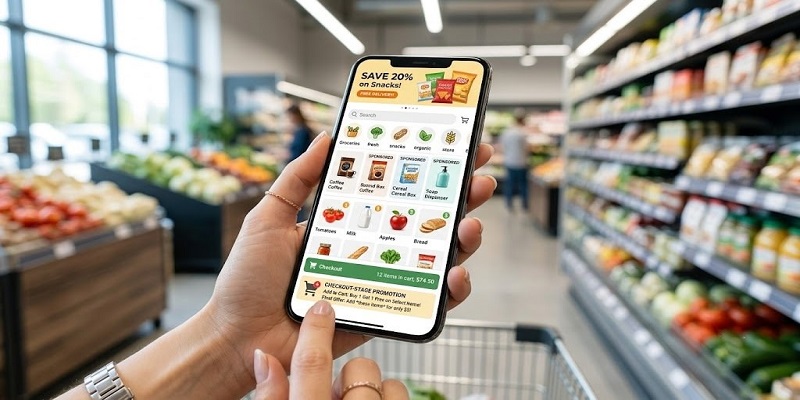
1. City Targeting
City targeting helps brands focus on places where demand is stronger.
Benefits:
- better budget control
- easier performance tracking
- useful for city-specific launches
Best for:
- FMCG
- regional brands
- urban-first D2C brands
2. Pin code Targeting
Pin code targeting is one of the most useful quick commerce options because delivery behavior is local.
Benefits:
- tighter audience reach
- better relevance
- reduced wasted spend
Best for:
- neighborhood-level launches
- local promos
- availability-based campaigns
3. Category Targeting
Category targeting lets you reach shoppers browsing related product groups.
Benefits:
- stronger purchase intent
- better conversion potential
- useful for new SKUs
Best for:
- snacks
- beverages
- personal care
- home care
- wellness products
4. Time-slot Targeting
Some products perform better during specific parts of the day.
Benefits:
- better match with buying habits
- higher relevance
- more efficient spend
Best for:
- breakfast products
- evening snacks
- meal add-ons
- late-night essentials
5. Product-level Targeting
This helps brands promote specific SKUs.
Benefits:
- focused spending
- easier optimization
- better control over hero products
Best for:
- launches
- top-selling SKUs
- seasonal items
6. Audience and Intent-based Targeting
If the platform or partner setup supports audience signals, brands can refine who sees the ad based on shopping behavior or category interest.
Benefits:
- better match with intent
- more efficient performance
- stronger funnel alignment
Best for:
- D2C brands
- premium products
- repeat purchase items
Benefits Of Zepto Advertising
Zepto Ads can help brands in several ways.
- Strong visibility: Your products appear closer to the shopping decision.
- Better conversion potential: Because users are already shopping, intent is often higher.
- Faster launch support: New brands can gain traction faster than with organic discovery alone.
- Better local reach: Pin code and city targeting help brands focus on delivery zones that matter.
- Useful for multiple goals: You can use Zepto for awareness, consideration, and conversion.
- Good for category competition: If your competitors are already active, ads can help you keep shelf presence.
- Supports quick commerce growth: For brands investing in the fast delivery model, Zepto is part of a larger quick commerce strategy.
Costs Of Zepto Advertising
The cost of Zepto Advertising depends on the campaign type, placement, competition, category, and targeting.
Common cost factors include:
- CPC, or cost per click
- CPM, or cost per thousand impressions
- format type
- bidding pressure
- city or pin code competition
- creative quality
- campaign duration
- product category
What affects cost the most?
- High competition categories: Popular categories often cost more because more brands are bidding.
- Prime locations: Top delivery zones may have higher competition.
- High-visibility formats: Banner, video, and roadblock placements can cost more than standard sponsored listings.
- Campaign timing: Running ads during peak demand or festive periods can raise costs.
How to control cost
- start with a focused budget
- test one or two core formats
- use strong creatives
- keep stock available
- pause weak campaigns fast
- optimize based on results
The goal is not just to spend less. The goal is to spend smarter.
How To Run Zepto Ads Step By Step
Step 1: Get access to the Zepto Ads platform
You usually need account access before you can launch campaigns. This may happen through:
- a direct brand login
- a Zepto sales or account team
- a retail media partner or agency
If you are a brand owner, ask what access is available for your account and who will manage approvals.
Step 2: Prepare your product catalog
Before launch, make sure your products are ready to sell.
Check the following:
- product images are clear
- titles are accurate
- product descriptions are complete
- pricing is competitive
- stock is available in target locations
- the right SKUs are mapped in the platform
A weak product page can hurt even a good campaign.
Step 3: Define your campaign goal
Choose one clear objective first. Common objectives include:
- awareness
- engagement
- conversions
- new product launch
- category share growth
Do not try to make one campaign do everything. Start with a single goal.
Step 4: Choose the right ad format
Pick the format based on your goal.
Examples:
- want visibility, use banner or video ads
- want sales, use sponsored products
- want stronger brand presence, use a storefront or roadblock
- want last-mile conversion, use checkout placements
Step 5: Set targeting
Targeting on Zepto can often include things like:
- city
- pin code
- category
- time of day
- product relevance
For FMCG, location and category targeting often matter a lot.
For new launches, category targeting can help you reach users who are already shopping in the right space.
Step 6: Set budget and bids
Decide how much you want to spend and how aggressive you want to be. A smart way to start is:
- test with a controlled budget
- watch results for a few days
- raise spend only on formats that perform well
If competition is high, CPC can rise fast. That is why budget control matters.
Step 7: Upload creatives
Your creative should be simple and clear. Good creative usually shows:
- the product
- the key benefit
- the pack size
- the offer, if there is one
- a strong reason to click
Keep it easy to understand. Zepto users move fast.
Step 8: Submit for approval
Some campaigns may need review before they go live. Approval time can vary by account, format, and creative quality.
To avoid delays:
- follow creative rules
- use clean assets
- avoid misleading claims
- make sure pricing and product details are correct
Step 9: Launch and monitor
Once live, do not set and forget. Check early performance such as:
- impressions
- clicks
- CTR
- CPC
- conversions
- ROAS
- revenue
Look for issues quickly. Low stock, weak creative, or bad targeting can waste budget fast.
Step 10: Optimize weekly
Optimization should be ongoing. You can:
- pause weak SKUs
- raise bids on top performers
- refresh banners and video
- shift budget to better formats
- test new city or pin code groups
- adjust timing if one slot performs better
What You Need Before Launch
Before running Zepto Ads, make sure you have the basics ready.
Brand assets
- logo
- product images
- banner creatives
- short video, if using video ads
- offer copy
- campaign landing or product page links
Business setup
- account access
- approval contact
- budget owner
- internal or agency campaign manager
Product readiness
- inventory
- correct pricing
- active listings
- SKUs mapped properly
- enough stock in target areas
If stock keeps running out, ad spend becomes wasted spend.
How Zepto Ads Support The Funnel
A strong campaign plan should not rely only on one stage of the funnel.
Awareness
Use:
- banner ads
- video ads
- roadblocks
These help introduce your brand and product.
Consideration
Use:
- video ads
- brand storefronts
- category placements
These help users compare and learn more.
Conversion
Use:
- sponsored products
- checkout placements
These are better for users who are ready to buy.
Retention
Use:
- repeat promotions
- category retargeting, if available
- strong SKU visibility
This helps with repeat purchase and basket growth. A full-funnel approach is often stronger than running only one ad format.
Common Challenges In Zepto Ads And How To Fix Them
Many campaigns do not fail because Zepto does not work. They fail because the setup is weak. Here are the most common issues.
1. Low visibility in crowded categories
Problem: Too many brands are bidding for the same space.
Fix:
- improve bids on priority SKUs
- focus on top cities or pin codes first
- use stronger creatives
- test less competitive time slots
2. Weak CTR
Problem: Users see the ad but do not click.
Fix:
- use a clearer image
- show the main product benefit
- keep messaging short
- test different offers or pack sizes
3. Conversion drops after clicks
Problem: People click, but they do not buy.
Fix:
- check stock
- verify pricing
- improve product page content
- make sure the SKU matches the ad promise
4. High CPC
Problem: Cost per click is too high.
Fix:
- narrow targeting
- reduce bidding on low-performing placements
- move budget to better formats
- test less competitive categories or locations
5. Creative compliance issues
Problem: The ad gets delayed or rejected.
Fix:
- follow platform rules
- avoid unsupported claims
- use clean, accurate visuals
- keep text simple and factual
6. Reporting feels confusing
Problem: Multiple campaigns and formats are hard to track.
Fix:
- report by objective
- keep naming consistent
- group SKUs by goal
- review one metric set at a time
How To Measure Performance On Zepto Ads
To know whether your campaign is working, track metrics that match your goal.
For awareness
Watch:
- impressions
- reach
- view rate
- CPM
For traffic
Watch:
- clicks
- CTR
- CPC
For sales
Watch:
- conversions
- revenue
- ROAS
- cost per acquisition
For product growth
Watch:
- units sold
- share of sales by SKU
- repeat orders
- new buyer performance
How often should you check performance?
A practical schedule is:
- daily: check for stock issues and major drops
- weekly: review CTR, CPC, conversions, and spend
- monthly: compare campaign types, cities, and product groups
When should you pause or change a campaign?
Consider a change if:
- CTR stays weak after testing
- CPC keeps rising
- conversions are low despite traffic
- stock is unstable
- the creative is not getting attention
Budget Planning Tips For Zepto Ads
There is no single perfect budget. It depends on your category, city coverage, and goal. A simple way to think about budget:
For awareness campaigns
Spend more on:
- banners
- video
- roadblocks
These are usually better for reach and visibility.
For performance campaigns
Spend more on:
- sponsored products
- checkout placements
These usually help more with direct sales.
For product launches
Split budget across:
- visibility formats
- conversion formats
This gives the launch both reach and sales support.
For multiple SKUs
Do not spread budget too thin. Instead:
- push your hero SKUs first
- keep weaker SKUs in smaller tests
- scale only after data is clear
How Zepto Compares With Other Quick Commerce Platforms
Zepto is often a strong fit when you want:
- fast purchase intent
- high visibility in key delivery zones
- category-based sales
- strong FMCG and D2C performance
It may be better than other platforms when:
- your target audience shops fast and frequently
- you have a product with repeat purchase potential
- your brand needs quick conversion, not just awareness
A good strategy is not to rely on one platform only. Many brands split budget across multiple quick commerce apps based on category performance and city demand.
Best Practices to Maximize ROI from Ads
Here are the practical habits that help brands get better results from Zepto Ads.
- Keep creatives clean and simple: Users move fast. Your message should be easy to understand in one glance.
- Run category-specific campaigns: A snack brand should not use the same plan as a skincare brand.
- Use time-based targeting where it makes sense: Some products perform better in the morning, some in the evening.
- Keep an eye on ROAS: If ROAS is weak after testing, adjust format, targeting, or creative.
- Split campaigns by objective: Do not mix brand awareness and conversion in the same setup unless you have a very clear structure.
- Refresh ads often: Creative fatigue can reduce clicks and conversions.
- Use local demand patterns: If a product sells better in one city, scale there first.
- Review performance at the SKU level: One product may be carrying the campaign while others underperform.
Best Practices For D2C And FMCG Brands
For D2C brands
- focus on hero SKUs first
- use simple benefit-led creative
- test video if your product needs explanation
- keep landing or listing pages clean and clear
For FMCG brands
- use city and pin code targeting
- push category-relevant SKUs
- watch stock carefully
- adjust bids based on demand and competition
For new launches
- start with awareness and conversion together
- use a mix of banner and sponsored listings
- keep messaging focused on one clear benefit
For seasonal products
- plan around peak demand
- start early
- refresh creative often
- watch inventory closely
Common Mistakes To Avoid
Here are a few mistakes that can waste money fast:
- launching without enough stock
- using weak product images
- running too many SKUs at once
- ignoring CTR and only watching sales
- choosing the wrong format for the goal
- spreading budget across too many cities too early
- not testing creatives
- failing to optimize after launch
Techeasify’s Role In Zepto Advertising And Quick Commerce Growth

Techeasify helps brands plan, launch, and improve quick commerce advertising with a practical, performance-focused approach. If your brand wants support with Zepto Ads, Techeasify can help with:
- campaign planning
- ad format selection
- targeting strategy
- creative direction
- budget planning
- performance tracking
- optimization
- quick commerce growth strategy
This matters because Zepto Advertising is not just about running ads. It is about making sure the right product, in the right market, reaches the right shopper at the right time.
Techeasify also supports broader quick commerce ad strategy through services like Quick Commerce Ads Agency. If you are also comparing platforms, the Blinkit advertisement guide is a useful next read.
FAQ
How do I start advertising on Zepto?
You usually need platform access through Zepto, a sales contact, or a partner agency. After that, you can choose a campaign goal, select formats, upload creatives, set targeting, and launch.
Which Zepto ad formats are best for D2C brands?
Sponsored products, video ads, and brand storefronts are often strong starting points for D2C brands. The best choice depends on whether your goal is awareness or sales.
What campaign objective should I choose first?
If you are new, start with one clear goal, usually conversions or product visibility. Do not mix too many goals in the first campaign.
How long does it take for a campaign to go live?
That depends on approval, creative quality, and account setup. Some campaigns can go live quickly, while others need review before activation.
What are the most common reasons Zepto ads underperform?
The biggest reasons are weak creatives, stock issues, poor targeting, high competition, and unclear product pages.
Final Thoughts
Zepto Advertising can be a strong growth channel when it is planned the right way. The brands that win usually do three things well:
- They choose the right targeting.
- They match the ad format to the campaign goal.
- They track performance and improve often.
If you want to grow in quick commerce, Zepto should be part of the plan. And if you need help building a stronger retail media strategy, Techeasify can support your brand with practical quick commerce advertising services. You can contact Techeasify here.